The best instant cameras for travel
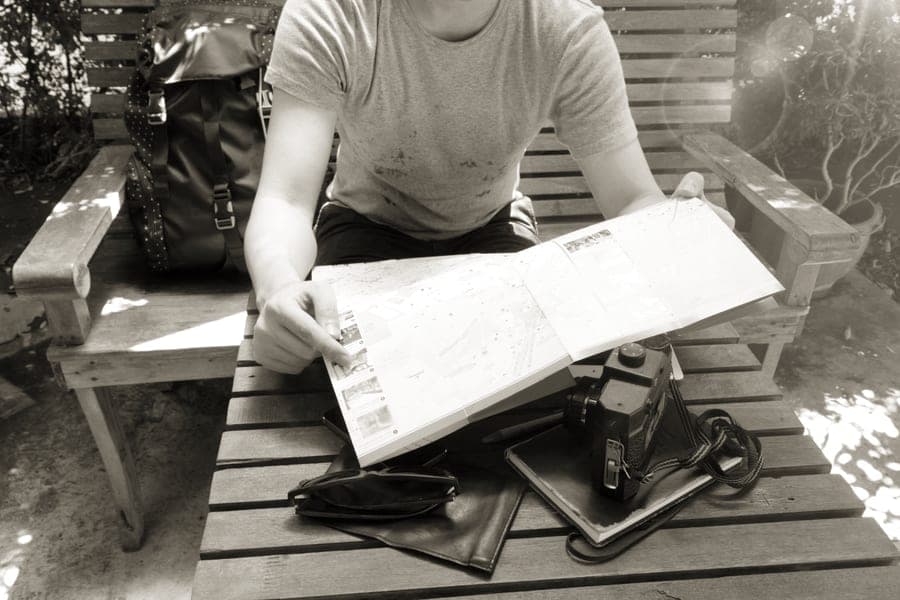
Travel changes the specification list completely. Weight matters, battery type matters enormously, and whether you can buy film in another country matters most of all.
For travel, the instax mini 12 or mini 13 is the best choice: 306 to 327 g, AA batteries you can buy anywhere in the world, and the only instant film stocked in ordinary shops internationally. Avoid anything with a built-in battery or CR2 cells if you are going somewhere remote.
How this page is funded. Shake & Print earns a commission when you buy through our links, at no extra cost to you. It does not change which products we pick or the order we rank them in, and we do not state prices we have not verified — the buy buttons send you to the current listing instead. Full disclosure.
| # | Product | Best for | Cost per shot | Price |
|---|---|---|---|---|
| 1 | 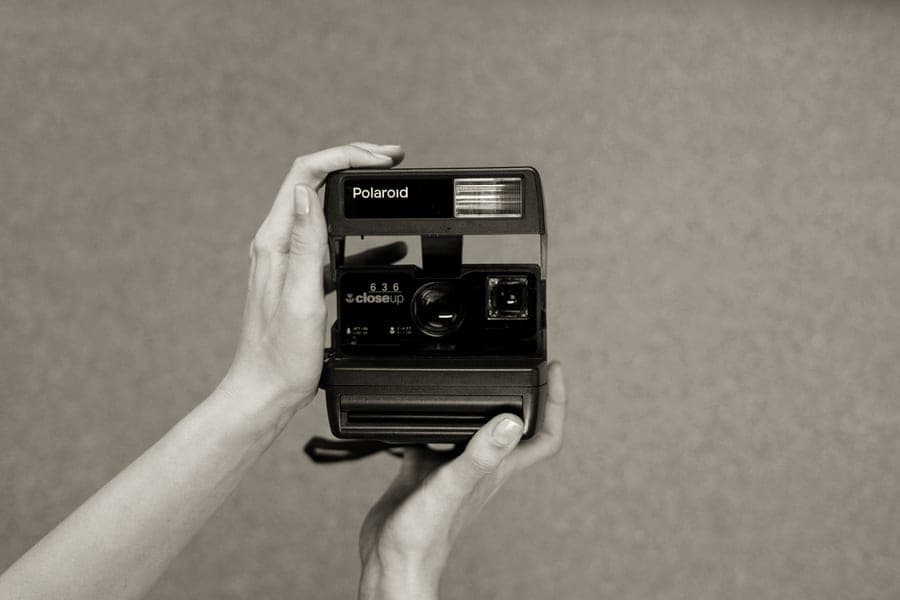 Fujifilm instax mini 12Light, cheap, and powered by batteries you can buy at any airport shop in the world. Fujifilm instax mini 12Light, cheap, and powered by batteries you can buy at any airport shop in the world. | Best travel camera | $0.85 | Check price |
| 2 | 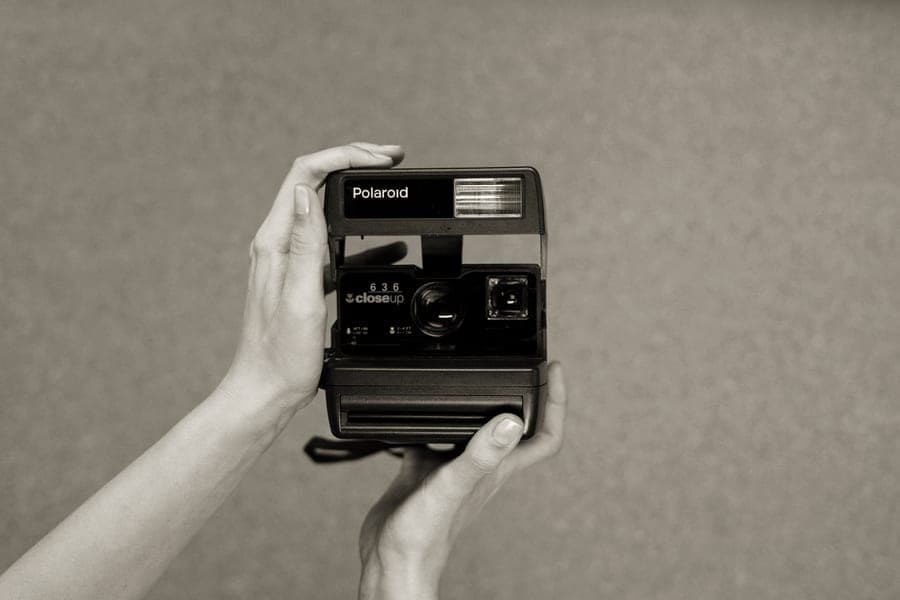 Fujifilm instax mini 13The same camera with a self-timer, which is what you need with nobody to hold it. Fujifilm instax mini 13The same camera with a self-timer, which is what you need with nobody to hold it. | Best for traveling alone | $0.85 | Check price |
| 3 | 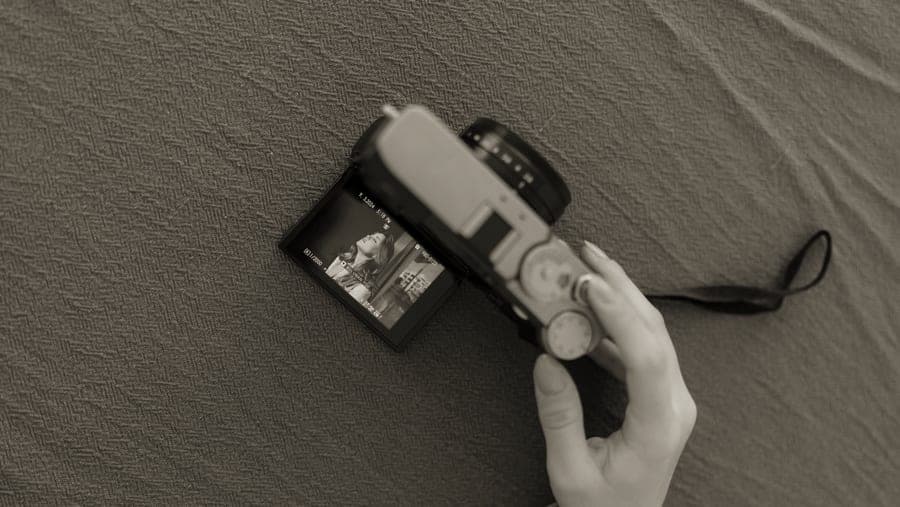 Fujifilm instax mini EvoA screen means you only spend film you brought with you on photographs worth keeping. Fujifilm instax mini EvoA screen means you only spend film you brought with you on photographs worth keeping. | Best for not wasting film abroad | $0.85 | Check price |
| 4 |  Polaroid Go Generation 3Genuinely pocketable at 251.9 g — and a film you will not find abroad. Polaroid Go Generation 3Genuinely pocketable at 251.9 g — and a film you will not find abroad. | Smallest, if you must have a Polaroid | $1.37 | Check price |
Travel changes which specifications matter
At home, the interesting specifications are print size and features. Traveling, three different things decide whether the camera gets used at all.
1. Battery type, which is the big one
A rechargeable camera needs a cable, a plug adapter, and somewhere to plug it in. A camera that takes AA batteries needs a shop. On a trip, the second is a much lower-risk proposition.
| Camera | Power | If it dies abroad |
|---|---|---|
| instax mini 12 / 13 / 41 | 2 x AA | Any shop, anywhere |
| instax WIDE 400 | 4 x AA | Any shop, but you need four |
| instax SQUARE SQ40 | 2 x CR2 lithium | A camera shop, or nothing |
| instax mini 99 | Rechargeable NP-70S | Cable and a plug socket |
| instax mini Evo | Rechargeable, USB | Cable and a plug socket |
| Polaroid Go / Now / Flip | Rechargeable, USB-C | Cable and a plug socket |
The CR2 row is the one to watch. The SQUARE SQ40's cells last about 30 film packs — an extremely long time — but they are not sold in general retail, so if they do die mid-trip you are unlikely to replace them. Carry a spare pair.
2. Film availability where you are going
instax mini is the only instant film with genuine general-retail distribution, and that holds internationally far better than any other format. Everything else means carrying enough film for the whole trip.
| Format | Print size | Pack | Pack price | Cost per shot | Checked at |
|---|---|---|---|---|---|
| instax mini | 2.4 x 1.8 in (62 x 46 mm) | 20 | $16.99 | $0.85 | Pro Photo Supply |
| instax WIDE | 3.9 x 2.4 in (99 x 62 mm) | 20 | $21.99 | $1.10 | Pro Photo Supply |
| instax SQUARE | 2.4 x 2.4 in (62 x 62 mm image on 86 x 72 mm film) | 20 | $22.99 | $1.15 | Pro Photo Supply |
| Polaroid Go | 2.6 x 2.1 in (66.6 x 53.9 mm) | 16 | $21.99 | $1.37 | Polaroid |
| Polaroid i-Type | 4.2 x 3.5 in (107 x 88 mm) | 8 | $18.99 | $2.37 | Polaroid |
There is a practical weight consequence too: film is not light. A 20-exposure instax pack is a small brick, and five of them plus a camera is a noticeable part of a daypack.
3. One copy, and the risk of losing it
This is the travel-specific argument for a hybrid camera. An instant print exists once. Lose it, get it wet, or leave it in a hostel and the photograph is gone — and you were on a trip, so it is not a photograph you can retake.
An instax mini Evo keeps a digital file alongside the print, on internal memory or a microSD card. For a once-in-a-decade trip that is a genuine argument for it over a simpler camera.
1. Best travel camera
Fujifilm instax mini 12
Light, cheap, and powered by batteries you can buy at any airport shop in the world.
- Buy it for
- Any trip, anywhere.
- Skip it if
- Group photographs, or a trip where you want the biggest possible print.
- **306 g** — the lightest instant camera here.
- **Two AA batteries**, available in literally any shop. No charger, no adapter, no cable.
- instax mini film is the one format stocked in general retail internationally.
- Cheap enough that losing it on a trip is annoying rather than expensive.
- About 100 exposures per set of batteries.
Running cost: instax mini works out at $0.85 a shot. See every format’s cost.
How it scores8.8/10 overall
- Weight10
- Battery availability10
- Film availability abroad10
- Print size5
Our editorial scoring, built from published specifications and reviews by outlets that test hardware — see how we pick. We have not handled these products, so these are not test results.
Engadget, which publishes hands-on reviews, calls it “a basic instant camera ideal for newbies that lets you get started shooting”.
#ad · we earn a commission at no extra cost to you
2. Best for traveling alone
Fujifilm instax mini 13
The same camera with a self-timer, which is what you need with nobody to hold it.
- Buy it for
- Solo travelers, and couples who want to both be in the photograph.
- Skip it if
- The absolute lightest packing.
- A **2- or 10-second self-timer** — the single most useful travel feature on any camera here.
- Same AA batteries and same supermarket film.
- 327 g, marginally heavier than the mini 12.
Running cost: instax mini works out at $0.85 a shot. See every format’s cost.
How it scores8.9/10 overall
- Weight9
- Battery availability10
- Self-portraits10
- Print size5
Our editorial scoring, built from published specifications and reviews by outlets that test hardware — see how we pick. We have not handled these products, so these are not test results.
#ad · we earn a commission at no extra cost to you
3. Best for not wasting film abroad
Fujifilm instax mini Evo
A screen means you only spend film you brought with you on photographs worth keeping.
- Buy it for
- A longer trip, where film is heavy to carry and hard to replace.
- Skip it if
- Anywhere you cannot charge it.
- Shoots digitally, so you print only keepers — critical when film is a finite resource you packed.
- Keeps digital files too, which means a lost print is not a lost photograph.
- **285 g** and 36 mm thick — flatter than any of the simple minis.
- About 100 prints per charge, but it does need charging.
Running cost: instax mini works out at $0.85 a shot. See every format’s cost.
How it scores8.5/10 overall
- Weight9
- Film efficiency10
- Battery availability4
- Backup copies10
Our editorial scoring, built from published specifications and reviews by outlets that test hardware — see how we pick. We have not handled these products, so these are not test results.
Engadget, which publishes hands-on reviews, calls it “marries the vintage charm of instant photography with digital shooting”.
#ad · we earn a commission at no extra cost to you
4. Smallest, if you must have a Polaroid
Polaroid Go Generation 3
Genuinely pocketable at 251.9 g — and a film you will not find abroad.
- Buy it for
- Someone who wants a Polaroid and is traveling somewhere with good shops.
- Skip it if
- Remote travel. Go film fits nothing else and is an online purchase almost everywhere.
- **251.9 g** and 106.5 x 83.8 x 64.6 mm — the smallest camera on this page.
- Up to 15 film packs per charge, which is a lot for a trip.
- Go film is $1.37 a shot, Polaroid's cheapest.
- But: a rechargeable battery and a film you must carry enough of.
Running cost: Polaroid Go works out at $1.37 a shot, so a hundred photographs in the first year puts the real total at about $243.92 including the camera. See every format’s cost.
How it scores7.0/10 overall
- Weight10
- Battery availability4
- Film availability abroad2
- Print size4
Our editorial scoring, built from published specifications and reviews by outlets that test hardware — see how we pick. We have not handled these products, so these are not test results.
Engadget, which publishes hands-on reviews, calls it “basic and relatively cheap, but it offers a lot”.
#ad · we earn a commission at no extra cost to you
What to pack
- The camera, and a spare set of batteries. Two AAs for a mini, four for a WIDE 400, a spare pair of CR2 for an SQ40.
- Film: your estimate plus one pack. For a two-week trip, two or three 20-exposure packs is realistic for most people.
- A hard case or a sock. Film packs are fine loose; a camera lens is not.
- Something flat to keep prints in. A thin album or even an envelope. Prints loose in a bag get bent, and a bent instant print is a damaged one.
- Not a printer. Pocket printers need charging and a phone app, and the one thing you have plenty of on a trip is photographs on your phone — which you can print when you get home, more cheaply.
Keeping film safe on the way
- Heat is the real enemy. Film left in a hot car or a sunny windowsill is damaged film. Keep it in the middle of a bag, out of direct sun.
- Carry it in hand luggage. Not because of X-ray scanners at normal screening doses, but because hold luggage goes through more handling and bigger temperature swings.
- Do not pre-load the camera and leave it in the sun. The loaded pack is as vulnerable as a spare one.
- Developing prints need shade. Face-down, in a pocket, for 90 seconds on instax. In bright sunlight an exposed print can be ruined in the first few seconds.
Questions people ask
What is the best instant camera for travel?
The instax mini 12 or mini 13. They are the lightest at 306 to 327 g, they run on AA batteries you can buy anywhere in the world, and instax mini is the only instant film with real general-retail distribution internationally. The mini 13's self-timer is genuinely useful when traveling.
Should I take a rechargeable instant camera traveling?
It is the higher-risk choice. A rechargeable camera needs a cable, a plug adapter and a socket; an AA-powered one needs a shop. If you are going somewhere remote or moving constantly, AA is the one that never strands you.
Can I buy instant film abroad?
instax mini, usually — it is the only format with genuine general-retail distribution internationally. instax WIDE and SQUARE mean finding a camera shop, and every Polaroid film is effectively an online purchase. For anything but instax mini, carry enough for the trip.
Is instant film safe through airport security?
We have not tested it and will not pretend to know. The commonly repeated advice is that normal cabin screening is fine for ISO 800 instant film and that newer CT scanners are more of an open question. Asking for a hand inspection costs nothing and removes the doubt.
How much film should I take on a trip?
Your honest estimate plus one pack. For most people on a two-week trip that is two or three 20-exposure instax packs. Film is heavier and bulkier than people expect, and on anything other than instax mini you cannot assume you will find more.
Should I take a photo printer traveling instead?
Generally no. A printer needs charging and a phone app, and the photographs on your phone can be printed more cheaply when you get home. The reason to carry an instant camera is to hand a print to somebody at the time, which a printer does less well.
Read these next
Best instant cameras
The general ranking, without the travel constraints.
instax mini Evo review
The camera that keeps a digital backup of every print.
Where to buy instant film
Which formats you can actually find on the road.

How much film do I need?
Working out what to pack.
Best pocket photo albums
Something flat to keep prints in while traveling.
Sources
- Fujifilm instax mini 12 specifications — Confirms the 0.3-2.2 m flash range and ~100 exposures per set of AAs
- Fujifilm instax mini 13 specifications — Confirms the 2 / 10 second self-timer
- Pro Photo Supply — instax mini film, 20 exposures — $16.99 on 13 October 2026
- Pro Photo Supply — instax WIDE film, 20 exposures — $21.99 on 13 October 2026
- Pro Photo Supply — instax SQUARE film, 20 exposures — $22.99 on 13 October 2026
- Fujifilm instax SQUARE SQ40 specifications — Confirms ~30 film packs per pair of CR2 cells
- Polaroid — Color i-Type film — $18.99 for 8 photos on 13 October 2026
Found something out of date or wrong? Tell us and we will correct it with a dated note. Our picks are re-checked quarterly — see our editorial policy.