Scrapbook ideas for instant prints
A stack of instant prints and a blank book is a good afternoon. Here are the layouts that work, and the one mounting method that will not damage the photographs.
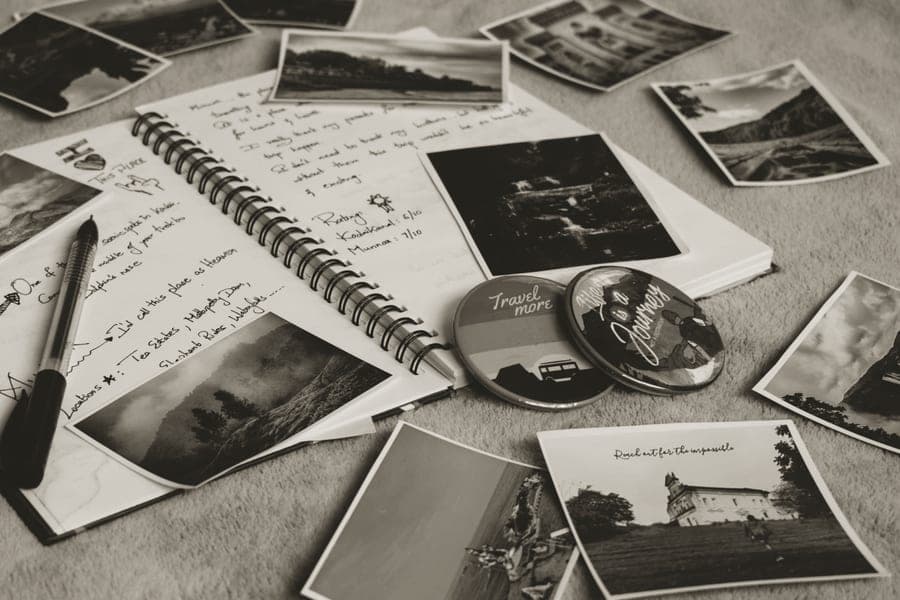
Use photo corners rather than glue — an instant print is a layered chemical sandwich and peeling it off adhesive can delaminate it. Leave writing room beside every print, because the captions are the part people value most in ten years.
How this page is funded. Shake & Print earns a commission when you buy through our links, at no extra cost to you. It does not change which products we pick or the order we rank them in, and we do not state prices we have not verified — the buy buttons send you to the current listing instead. Full disclosure.
The thing that matters most, which is not the layout
Write beside every print. Who, where, when, and one sentence about what was happening.
That is the part people value in ten years, and it is the part everybody skips because it feels obvious at the time. A beautifully arranged page of unlabelled photographs is considerably less interesting than a plain page of labeled ones — you will remember the arrangement and forget the names.
So leave writing room in whatever layout you choose. That single constraint rules out the tightly packed grid designs, and it is worth the space.
Five layouts that work
1. One print per page, with a paragraph
The simplest and, for a small number of good photographs, the best. A print mounted with corners in the upper two-thirds, and a few sentences underneath. It reads like a book, it is quick to do, and every photograph gets the space to matter.
Works especially well with larger prints: a full-size Polaroid at 4.2 x 3.5 inches or an instax WIDE print at 3.9 x 2.4 fills a page properly where an instax mini looks lost.
2. Four per page with a caption strip
The format Polaroid's own large album uses — four prints per page, 160 in the album. For a scrapbook version, mount four and run a single caption line under each row. It gets through a lot of prints without losing the labeling.
3. Chronological, one spread per event
A double-page spread per occasion, with the date and the event written at the top. This is the layout that holds up best over years, because it answers "when was this" without you having to remember.
4. One spread per person
Especially good for a family or a group of friends over time: a page each, filled as photographs accumulate. It turns a scrapbook into something people look for themselves in, which is why anybody opens one.
5. The mixed spread
Instant prints plus the good phone photographs of the same occasion, printed at 4 x 6 for about 39 cents. The instant prints carry the atmosphere and the printed ones carry the detail, and together they make a better record than either alone.
This is the honest division of labor: an instant print is the moment, and a dye-sublimation print is the photograph that survives. Using both is better than asking one to do everything.
Print sizes, for planning a layout
| Format | Print size | What to look for |
|---|---|---|
| instax mini | 2.4 x 1.8 in (62 x 46 mm) | Sold as "mini" or "3 inch" |
| ZINK / Hi-Print 2x3 | 2 x 3 in | A mini album usually fits these too |
| Kodak 4PASS card | 2.1 x 3.4 in | Sometimes sold as credit-card size |
| instax SQUARE | 2.4 x 2.4 in picture on an 86 x 72 mm sheet | A square pocket, 3.4 x 2.8 in outer |
| Polaroid Go | 2.6 x 2.1 in (66.6 x 53.9 mm) | Go-specific — most albums do not fit it |
| Kodak 4PASS square | 3 x 3 in | A square pocket, larger than instax SQUARE |
| instax WIDE | 3.9 x 2.4 in (99 x 62 mm) | Often sold for panoramic prints |
| Polaroid i-Type / 600 / SX-70 | 4.2 x 3.5 in (107 x 88 mm) | Usually labeled "600" |
| 4 x 6 printer prints | 4 x 6 in | Standard 4 x 6 — the cheapest and easiest to buy for |
Materials
- Photo corners. The one non-negotiable. Cheap, archival, reversible.
- A lay-flat or ring-bound book. Much easier to work in than a tightly bound one, and it stays open when you look at it.
- A pen that does not bleed. Any normal pen writes on an instant print's border, but on absorbent scrapbook paper a fine-liner behaves better than a marker.
- Nothing else. Decorative tape, stickers and die-cuts are optional, and they are also what makes a scrapbook look dated in five years. The photographs and the writing are the content.
What to avoid
- Glue, magnetic pages and tape across the back. Covered above, and it is the most common way to ruin an instant print.
- Laminating prints. Heat can affect the chemistry, and it is irreversible.
- Trimming an instant print. The white border is part of the format, and cutting into the print can breach the sealed layers.
- Filling every page immediately. Leave room. You will take more photographs.
- Keeping the finished book somewhere sunny. Instant film fades, and a scrapbook on a sunny shelf fades with it.
1. The alternative, if a scrapbook is too much work
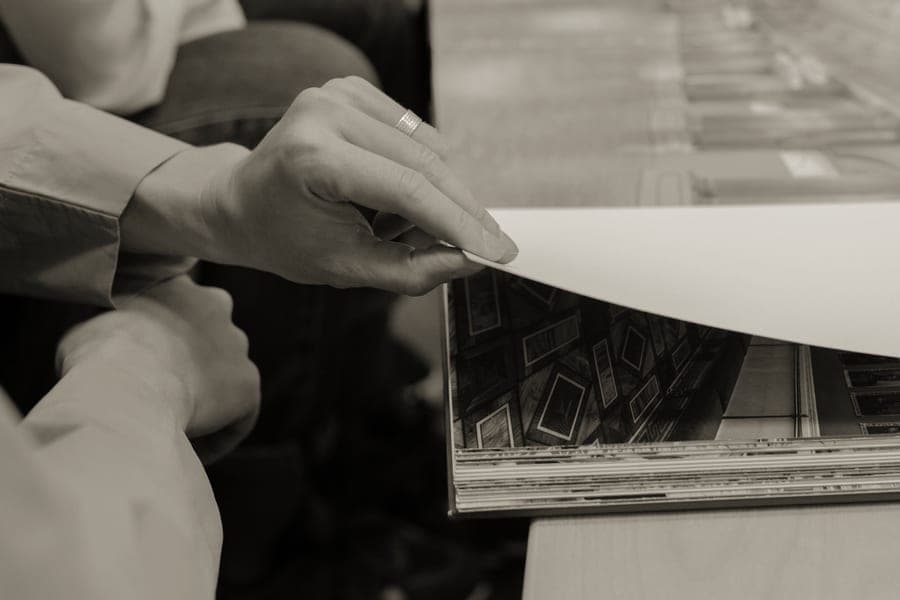
instax mini pocket album
A sleeved album, about $15, and the prints are safe and findable in ten minutes.
- Buy it for
- Anyone who wants the photographs organized rather than crafted.
- Skip it if
- Anyone who wants to write beside each print.
- Ten minutes of work against an afternoon, for a similar outcome in terms of keeping the prints.
- Sleeved, so nothing is attached to the back of a print.
- Check the pocket is 2.4 x 1.8 in for instax mini.
How it scores8.2/10 overall
- Effort required10
- Print protection10
- Room for captions4
Our editorial scoring, built from published specifications and reviews by outlets that test hardware — see how we pick. We have not handled these products, so these are not test results.
#ad · we earn a commission at no extra cost to you
2. If you want the finished object
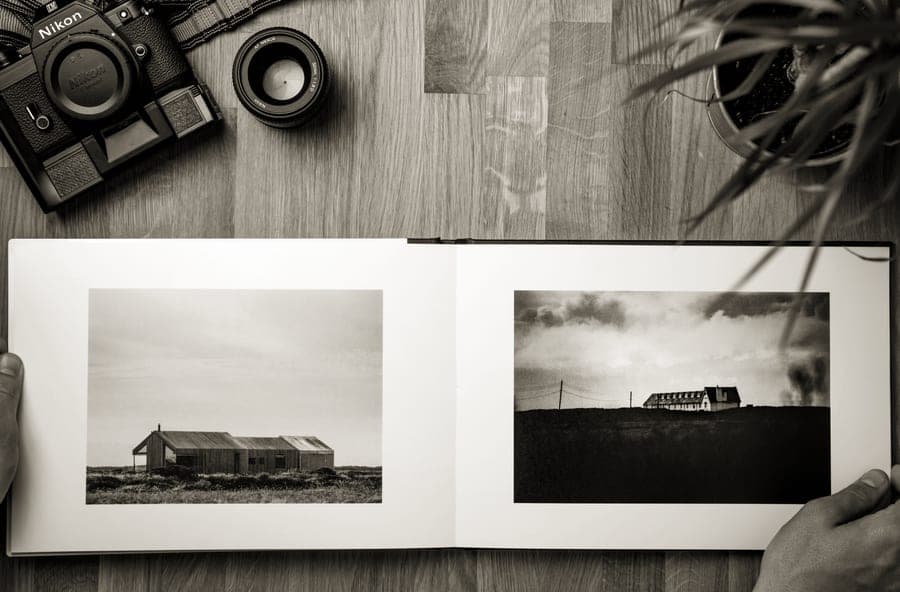
Polaroid Coffee Table Photo Album
$34.99 for a book designed to be left out and looked through.
- Buy it for
- A complete set of photographs worth presenting.
- Skip it if
- An ongoing collection.
- $34.99 listed, from Polaroid directly.
- Designed for display rather than storage, which is the point of printing.
- Pairs with a pack of film as a gift for under $55.
How it scores8.0/10 overall
- Finished object10
- Effort required7
- Room for captions6
Our editorial scoring, built from published specifications and reviews by outlets that test hardware — see how we pick. We have not handled these products, so these are not test results.
#ad · we earn a commission at no extra cost to you

3. The lowest-effort option of all
Photo string and clip display kit
Under $20, and the prints go on the wall this afternoon.
- Buy it for
- Anyone who wants the photographs visible rather than bound.
- Skip it if
- Prints that need protecting from light.
- Under $20 and works with every print format.
- No mounting, no adhesive, no risk to the print.
- Check the clip width — a clip for a 4 x 6 will crease a mini print.
How it scores7.8/10 overall
- Effort required10
- Print protection3
- Gets looked at9
Our editorial scoring, built from published specifications and reviews by outlets that test hardware — see how we pick. We have not handled these products, so these are not test results.
#ad · we earn a commission at no extra cost to you
If the scrapbook does not happen
Be honest with yourself about this. A scrapbook is an afternoon's work and a lot of them never get started, which leaves the prints exactly where they were: in a drawer.
A sleeved album takes ten minutes, costs about $15, protects the prints properly, and achieves most of the same outcome. Choosing one is the lower-effort version of this page and there is no shame in it — a filled album beats an imagined scrapbook every time.
Questions people ask
How do you put instant prints in a scrapbook?
With photo corners, not glue. An instant print is a sealed sandwich of chemical layers, and peeling one off an adhesive page can separate them and ruin the photograph. Corners hold the print without bonding to it and let you move it later.
Can I glue Polaroid photos into an album?
Avoid it. Glue sticks, magnetic pages and double-sided tape across the back all bond to the print's rear layers, and removal can delaminate the photograph. If the page needs to be permanent, photo corners achieve the same thing without the risk.
What should I write beside a photo in a scrapbook?
Who, where, when, and one sentence about what was happening. That is the part people value in ten years and the part everybody skips, because it feels obvious at the time. A plain page of labeled photographs beats a beautiful page of unlabelled ones.
Can I cut or trim instant prints?
Better not to. The white border is part of the format, and cutting into the print risks breaching the sealed chemical layers. If you need a different shape, print a copy at 4 x 6 and trim that instead.
Is a scrapbook better than a photo album?
It is better if you actually make it — there is room to write, and the result is a finished object. A sleeved album takes ten minutes instead of an afternoon, costs about $15, and protects the prints better. A filled album beats an imagined scrapbook.
Where should I keep a finished scrapbook?
Out of direct sunlight, flat or upright on a shelf rather than in a loft or a basement. Instant film fades in light and both heat and damp damage paper, so an ordinary bookshelf in a room you use is better than storage.
Read these next
Best albums for instant prints
The ten-minute version of this afternoon.
Pocket photo books
Bound books, and how they differ from albums.
Display and frames
For the prints that should be on a wall instead.
Setting up a photo guest book
A scrapbook other people fill in for you.
Canon SELPHY CP1500 review
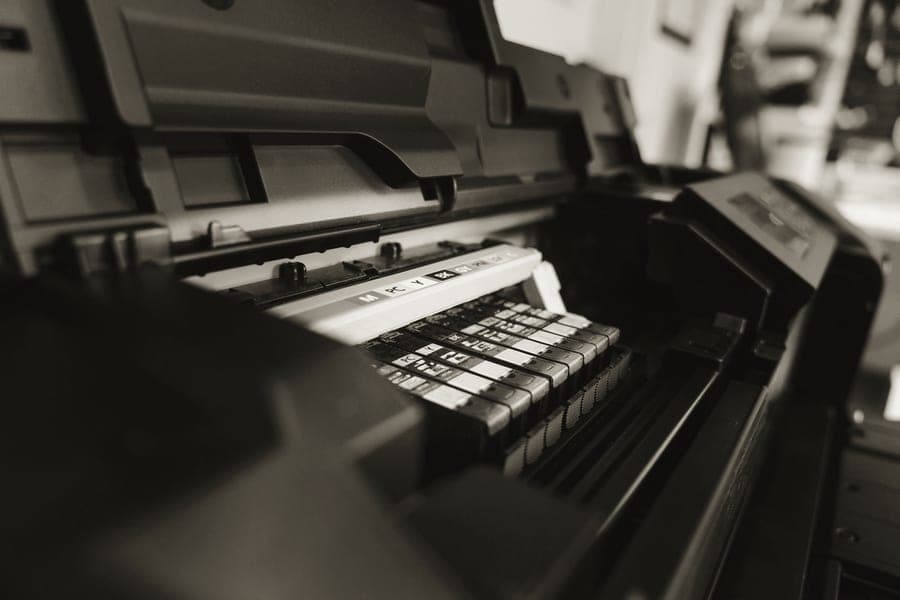
4 x 6 prints at 39 cents, for the mixed-spread layout.
Sources
- Polaroid — accessories — Album and frame range with prices, 13 October 2026
- Polaroid — Photo Album Large — Holds 160 photos, 4 per page; 213 x 243 mm; not compatible with Polaroid Go
- Fujifilm instax mini 12 specifications — Confirms the instax mini print size of 62 x 46 mm
- Fujifilm instax SQUARE SQ40 specifications — Confirms the 62 x 62 mm picture on an 86 x 72 mm sheet
- Fujifilm instax WIDE 400 specifications — Confirms the instax WIDE print size of 62 x 99 mm
- Polaroid — Color i-Type film — Confirms the 107 x 88 mm photo size and 79 x 77 mm image area
- Polaroid — Go film — Confirms the 66.6 x 53.9 mm photo size
- Pro Photo Supply — Canon SELPHY KP-108IN set — 4 x 6 print size; $41.99 for 108 prints
- ProCam — Canon 2x3 ZINK paper — Confirms the 2 x 3 in ZINK print size
- Kodak — 4PASS cartridges — Print sizes: 2.1 x 3.4, 3 x 3, 4 x 4 and 4 x 6 in
Found something out of date or wrong? Tell us and we will correct it with a dated note. Our picks are re-checked quarterly — see our editorial policy.