Why is Polaroid film so expensive?
About $2.37 a photograph, against 85 cents for instax. There are three real reasons, and only one of them is likely to change.
Polaroid film costs about $2.37 a photograph for three reasons: the print is more than three times the area of an instax mini so there is more chemistry per sheet; packs hold eight exposures rather than twenty; and Polaroid manufactures at a far smaller scale than Fujifilm after rebuilding the original production line.

How this page is funded. Shake & Print earns a commission when you buy through our links, at no extra cost to you. It does not change which products we pick or the order we rank them in, and we do not state prices we have not verified — the buy buttons send you to the current listing instead. Full disclosure.
The gap, stated plainly
| Format | Print size | Pack | Pack price | Cost per shot | Checked at |
|---|---|---|---|---|---|
| instax mini | 2.4 x 1.8 in (62 x 46 mm) | 20 | $16.99 | $0.85 | Pro Photo Supply |
| instax SQUARE | 2.4 x 2.4 in (62 x 62 mm image on 86 x 72 mm film) | 20 | $22.99 | $1.15 | Pro Photo Supply |
| Polaroid Go | 2.6 x 2.1 in (66.6 x 53.9 mm) | 16 | $21.99 | $1.37 | Polaroid |
| Polaroid i-Type | 4.2 x 3.5 in (107 x 88 mm) | 8 | $18.99 | $2.37 | Polaroid |
| Polaroid 600 | 4.2 x 3.5 in (107 x 88 mm) | 8 | $20.99 | $2.62 | Polaroid |
| Polaroid SX-70 | 4.2 x 3.5 in (107 x 88 mm) | 8 | $21.99 | $2.75 | Polaroid |
About $2.37 a photograph against 85 cents. On a hundred photographs that is $237 against $85 — a difference of $152, which is more than most of the cameras in this category cost.
Reason 1: the print is much bigger
This is the largest single factor and the one most comparisons leave out. A Polaroid i-Type print is 107 x 88 mm. An instax mini print is 62 x 46 mm.
| Format | Print size | Area | Relative |
|---|---|---|---|
| instax mini | 62 x 46 mm | 2,852 sq mm | 1x |
| instax SQUARE | 86 x 72 mm sheet | 6,192 sq mm | 2.2x |
| Polaroid i-Type | 107 x 88 mm | 9,416 sq mm | 3.3x |
An instant film sheet is not paper. It contains the developing chemistry for its own photograph — reagent, dye layers, a light-sensitive negative and a receiving sheet, sealed together. Three times the area means roughly three times the chemistry.
On a cost-per-square-inch basis the gap narrows considerably: about 25 cents per square inch for Polaroid i-Type against about 20 cents for instax mini. Still more expensive, but not three times more. Most of what feels like a markup is simply a bigger photograph.
Reason 2: eight exposures a pack, not twenty
Polaroid i-Type, 600 and SX-70 all come eight photographs to a pack. instax comes twenty. So an $18.99 Polaroid pack sounds comparable to a $16.99 instax pack until you count the pictures.
This is partly historical — the pack has always been the unit, and for vintage cameras it also carries the battery — and partly practical, since a thicker, larger sheet takes more room. The effect on the experience is real: one pack of Polaroid film is an hour at a party.
Reason 3: manufacturing scale
Fujifilm makes instax film at enormous volume — it is a mainstream consumer product sold in supermarkets worldwide. Polaroid makes film at a fraction of that volume, on a production line that had to be rescued and rebuilt after the original company wound down instant film manufacturing.
Lower volume means higher unit cost, less automation, and less buying power on raw materials. This is the reason that could in principle change, and the one least likely to change quickly: the gap in scale is very large.
What is not the reason
- It is not pure brand markup. The print-size arithmetic accounts for most of the difference on its own, and Polaroid's cheapest film, Go, is $1.37 a shot — well under its own i-Type, which it would not be if the price were simply a brand premium.
- It is not that the film is better. Instax film is ISO 800 against Polaroid's 640 and develops in 90 seconds rather than 10 to 15 minutes. Neither is better; they are different. You are not paying for superior chemistry.
- It is not a recent increase. Polaroid film has been priced in this band since the format was revived. This is the normal price, not a spike.
Will it come down?
Honestly: probably not much. Two of the three reasons are structural. The print will not get smaller, and the pack is unlikely to grow — Polaroid has had decades to change the unit and has not. The scale factor could improve if demand grew substantially, but the gap against Fujifilm's volumes is very wide.
The practical conclusion is to treat $2.37 a photograph as the price of the format rather than a temporary condition, and decide accordingly.
What to do about it
- Buy the five-pack. About $2.13 a shot against $2.37 — 11% off, and the only discount Polaroid itself offers.
- Buy i-Type, not 600, in a modern camera. Identical photograph, $2 less a pack.
- Consider the Go if a smaller print is acceptable: $1.37 a shot, 42% less than i-Type.
- Consider instax SQUARE if you wanted the square shape rather than the brand: about $1.15 a shot for a square instant print.
- Shoot deliberately. At $2.37 a frame, taking one photograph instead of three saves more than any discount available.
- Or decide it is worth it. The print genuinely is a different object, and plenty of people conclude the money is well spent. That is a legitimate answer — just make it before you buy the camera rather than after the first pack.

1. The honest alternative
Fujifilm instax SQUARE SQ40
A square instant print for about $1.15 a shot instead of $2.37.
- Buy it for
- Anyone who wanted a Polaroid for the square shape rather than the brand.
- Skip it if
- Anyone who wants the actual Polaroid print and border.
- A 2.4 x 2.4 inch square picture at about **$1.15 a shot** — under half Polaroid's cost.
- 20 exposures a pack rather than eight.
- Engadget rates it the best instant camera overall.
Running cost: instax SQUARE works out at $1.15 a shot. See every format’s cost.
How it scores8.3/10 overall
- Cost per shot6
- Square format8
- Build and feel9
Our editorial scoring, built from published specifications and reviews by outlets that test hardware — see how we pick. We have not handled these products, so these are not test results.
Engadget, which publishes hands-on reviews, calls it “looks great thanks to the leatherette details and retro design”.
#ad · we earn a commission at no extra cost to you

2. If the print is worth it
Polaroid Now Generation 3
The real thing, at the real price. Decide with the number, not after it.
- Buy it for
- Anyone for whom the 4.2 x 3.5 inch Polaroid print is the point.
- Skip it if
- Volume shooting, or anyone surprised by $237 for a hundred photographs.
- The largest instant print in production, and the one everyone recognizes.
- Two-lens autofocus, which matters more at $2.37 a frame.
- A five-pack brings the cost to about $2.13 a shot, an 11% saving.
Running cost: Polaroid i-Type works out at $2.37 a shot, so a hundred photographs in the first year puts the real total at about $366.86 including the camera. See every format’s cost.
How it scores7.9/10 overall
- Cost per shot2
- Print size10
- Recognizability10
Our editorial scoring, built from published specifications and reviews by outlets that test hardware — see how we pick. We have not handled these products, so these are not test results.
#ad · we earn a commission at no extra cost to you
Questions people ask
Why is Polaroid film so expensive compared to instax?
Three reasons. The print is 107 x 88 mm against instax mini's 62 x 46 mm, so there is about three times the chemistry per sheet. Packs hold eight photographs rather than twenty. And Polaroid manufactures at a far smaller scale than Fujifilm, on a production line rebuilt after the original company stopped making instant film.
Will Polaroid film get cheaper?
Probably not significantly. Two of the three reasons are structural — the print size and the eight-exposure pack are unlikely to change. Manufacturing scale could improve with demand, but the gap against Fujifilm's volumes is very large.
Is Polaroid film better quality than instax?
Different, not better. Polaroid film is ASA 640 and develops over 10 to 15 minutes; instax is ISO 800 and develops in about 90 seconds. The Polaroid print is much larger, which makes it a more satisfying object, but you are paying for size and scarcity rather than superior chemistry.
What is the cheapest way to shoot Polaroid?
A Polaroid Go, at about $1.37 a shot from sixteen-photograph packs — though the print is small. For full-size prints, buy i-Type rather than 600 and buy the five-pack, which brings it to about $2.13 a shot.
Is there a cheaper alternative that looks like a Polaroid?
The instax SQUARE SQ40 makes a 2.4 x 2.4 inch square instant print for about $1.15 a shot — under half the cost. It is not a Polaroid and the print is smaller, but for anyone who wanted the square shape rather than the brand it is the closest honest substitute.
Read these next
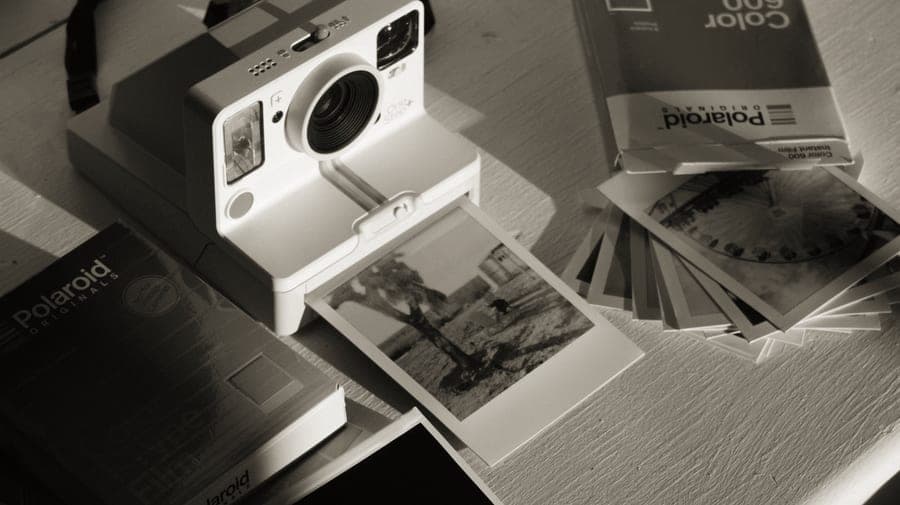
What Polaroid film costs per shot
Every Polaroid film, with the multipack ladder.
Instax vs Polaroid
The decision this price gap usually settles.
instax SQUARE SQ40 review
The square print at under half the cost.
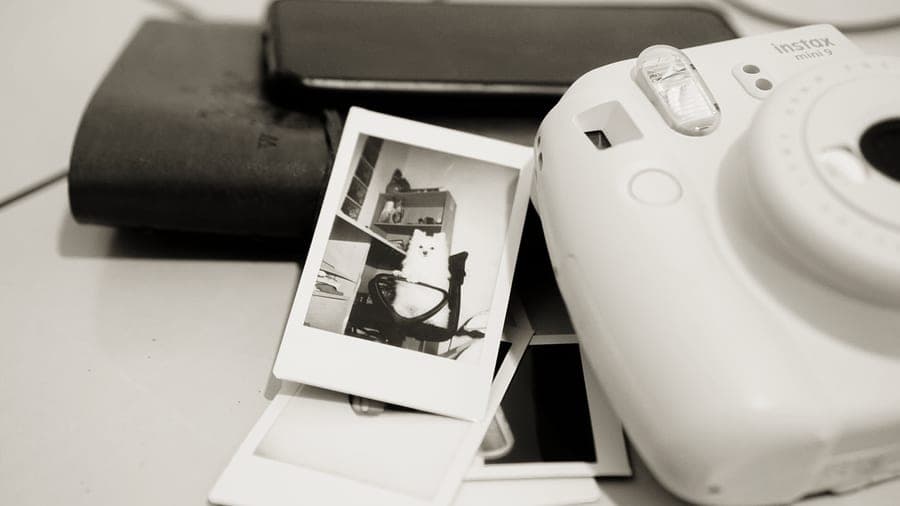
Every format compared on cost
Polaroid in context against everything else.
Is a Polaroid camera a good gift?
Where this cost becomes the deciding caveat.
Sources
- Polaroid — Color i-Type film — $18.99 for 8 photos, image area 79 x 77 mm, ASA 640, 13 October 2026
- Polaroid — Color 600 film — $20.99 for 8 photos, 13 October 2026
- Polaroid — Color SX-70 film — $21.99 for 8 photos, ASA 160, 13 October 2026
- Polaroid — Go film — $21.99 for 16 photos, image area 47 x 46 mm, 13 October 2026
- Polaroid — Color i-Type film five pack — $84.99 for 40 photos, 13 October 2026
- Polaroid — Color i-Type film triple pack — $52.99 for 24 photos, 13 October 2026
- Pro Photo Supply — instax mini film, 20 exposures — $16.99 on 13 October 2026
- Pro Photo Supply — instax SQUARE film, 20 exposures — $22.99 on 13 October 2026
- Fujifilm instax mini 12 specifications — Confirms instax mini picture size 62 x 46 mm and ISO 800
- Fujifilm instax SQUARE SQ40 specifications — Confirms instax SQUARE picture size 62 x 62 mm on 86 x 72 mm film
Found something out of date or wrong? Tell us and we will correct it with a dated note. Our picks are re-checked quarterly — see our editorial policy.