instax mini Evo vs mini 99
Fujifilm's two premium minis sit at the same price and shoot the same film. The Evo lets you see the photograph before you spend 85 cents on it. The 99 does not, on purpose.
Buy the instax mini Evo if the recipient would rather choose which shots get printed — it shoots digitally to a 3-inch screen and prints only what you pick, which is the biggest film-cost saver in the category. Buy the mini 99 if they want a real film camera with dials: bulb mode, exposure compensation and a vignette switch.
How this page is funded. Shake & Print earns a commission when you buy through our links, at no extra cost to you. It does not change which products we pick or the order we rank them in, and we do not state prices we have not verified — the buy buttons send you to the current listing instead. Full disclosure.
| # | Product | Best for | Cost per shot | Price |
|---|---|---|---|---|
| 1 | Fujifilm instax mini EvoThe only instax that lets you not print a bad photograph. | Best for most buyers at this price | $0.85 | Check price |
| 2 | 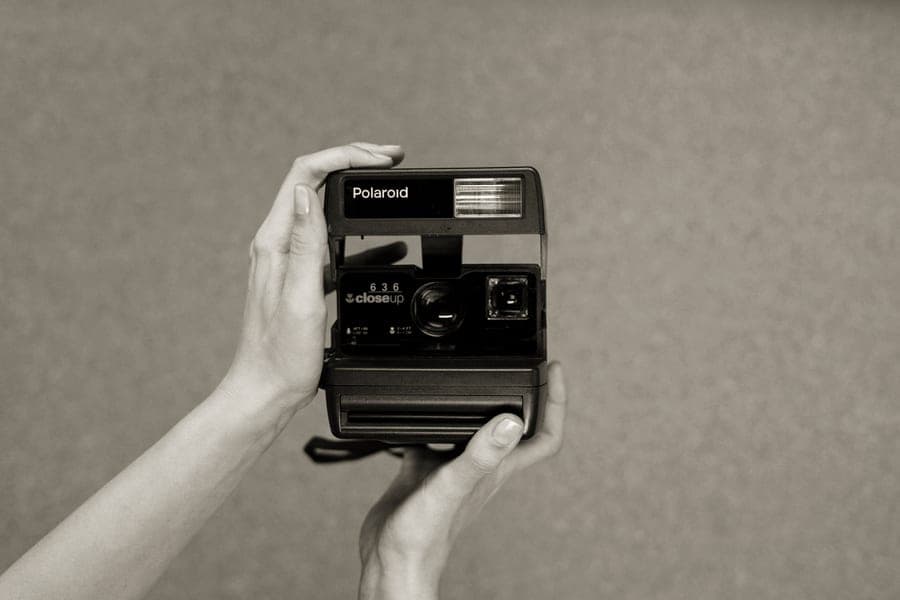 Fujifilm instax mini 99Real dials, real commitment, and the best flash reach of any instax mini. Fujifilm instax mini 99Real dials, real commitment, and the best flash reach of any instax mini. | Best for someone who wants a film camera | $0.85 | Check price |
| 3 | 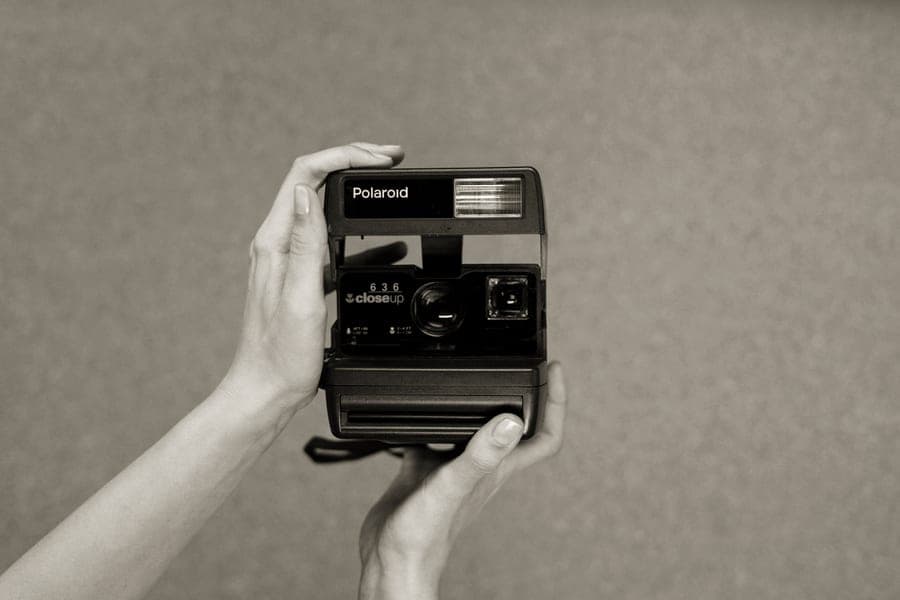 Fujifilm instax mini 41The same print at a third of the price, with nothing to learn. Fujifilm instax mini 41The same print at a third of the price, with nothing to learn. | The cheaper answer if neither feature matters | $0.85 | Check price |
They are not the same kind of camera
This is the comparison people get wrong, because the two cameras sit next to each other at the same price and both say instax mini on the box. They are different machines. The mini 99 is a film camera: light goes through the lens onto the film, and the picture you get is the picture you took. The Evo is a small digital camera with an instax printer bolted to it: it takes the photograph to a screen first, and film is only consumed when you decide it should be.
That difference is worth real money. At 85 cents a frame, a camera that prints only the good ones is cheaper to own than a camera that prints everything — and most people's first pack of film contains at least four frames they would not have printed given the choice.
Specification by specification
| Fujifilm instax mini Evo | Fujifilm instax mini 99 | |
|---|---|---|
| Film or media | instax mini | instax mini |
| Print size | 2.4 x 1.8 in (62 x 46 mm) | 2.4 x 1.8 in (62 x 46 mm) |
| Cost per shot | $0.85 | $0.85 |
| Shots per pack | 20 per $16.99 pack | 20 per $16.99 pack |
| Rough first-year cost | Hardware price not published | Hardware price not published |
| Power | Built-in rechargeable battery | Rechargeable battery (NP-70S) |
| Prints from a phone? | Yes | No |
| Flash | Not published | Auto with indoor/slow-synchro, fill-in, red-eye reduction; effective 0.3-2.7 m |
| Selfie mirror | No | No |
| Easy for a beginner? | Easy, with a menu to explore | Moderate — there are dials to learn |
| Best for | Shoots digitally, shows you the shot on a screen, and only prints the ones you choose. The single biggest film-cost saver in the category. | The one for someone who already likes photography: color-effect dial, vignette switch, double exposure, bulb mode, and a rechargeable battery. |
| mini Evo | mini 99 | |
|---|---|---|
| Type | Hybrid digital, prints on demand | Film camera, every shot prints |
| Screen | 3.0 in LCD, approx. 460,000 dots | None |
| Lens | 28 mm equivalent, f/2.0, autofocus | 60 mm, f/12.7, manual 3-point focus |
| Prints a phone photo | Yes, over Bluetooth | No |
| Shutter | Digital | 1.8 to 1/400 sec, plus bulb to 10 sec |
| Exposure control | Effects chosen on screen | -5/3EV to +1EV compensation, brightness dial |
| Creative modes | 100 effect combinations | Color dial, vignette switch, double exposure |
| Flash reach | Not published as a distance | 0.3 to 2.7 m |
| Film cost per shot | About $0.85, only for prints you choose | About $0.85, for every frame |
| Battery | Built-in, approx. 100 prints per charge | NP-70S, approx. 10 packs per charge |
| Weight | Approx. 285 g | 340 g |
The f/2.0 lens is the other reason the Evo wins indoors
Every simple instax mini has an f/12.7 lens and leans entirely on its flash. The Evo's lens is f/2.0 — many stops brighter — and it autofocuses. Indoors, at a dinner table, in a bar, that is the difference between a usable photograph and a bright foreground against a black wall. The mini 99 narrows the gap with the longest flash reach in the range at 2.7 m and a bulb mode for static night shots, but it cannot match an f/2.0 lens on available light.
If low light is the main use case, our low-light picks go through this in more detail.
What the mini 99 does that the Evo cannot
Three things, and they are real. Bulb mode holds the shutter open for up to ten seconds, which is how you photograph a lit street or a sparkler trail on film. Exposure compensation lets a person who understands light overrule the camera. And the vignette switch and color dial happen optically, in the camera, rather than as a filter applied to a digital file.
There is also the part that does not appear in a specification. A film camera makes you commit, and people who like film like that. If the recipient has ever said they shoot film, the 99 is the better gift even though the Evo is the more capable machine.
Cost over a year
| Camera or printer | 50 shots | 100 shots | 200 shots |
|---|---|---|---|
| Fujifilm instax mini EvoHardware price not published — film cost only | $50.973 packs of instax mini | $84.955 packs of instax mini | $169.9010 packs of instax mini |
| Fujifilm instax mini 99Hardware price not published — film cost only | $50.973 packs of instax mini | $84.955 packs of instax mini | $169.9010 packs of instax mini |
Read that table knowing it assumes the same number of prints from both. In practice the Evo's whole point is that it prints fewer frames for the same number of photographs taken, so its real-world film bill lands below the figure shown. The 99's does not.
Who should buy which
- A teenager or a twenty-something whose photos live on their phone: mini Evo, which prints those photos too.
- Someone who has mentioned shooting film: mini 99, for the bulb mode and the dials.
- A heavy shooter on a budget: mini Evo, because it is the only instax that lets them not print a bad frame.
- Someone who wants an object rather than a gadget: mini 99, or the cheaper mini 41 if the dials would go unused.
- A buyer choosing on looks alone: mini 41, and put the difference into film.
Questions people ask
Is the instax mini Evo better than the mini 99?
For most buyers, yes — the Evo shows each shot on a 3-inch screen and prints only the ones you choose, which saves film at 85 cents a frame, and its f/2.0 autofocus lens handles indoor light far better. The mini 99 is better for someone who wants a true film camera with bulb mode and exposure compensation.
Does the instax mini Evo use the same film as the mini 99?
Yes. Both take standard instax mini film at 62 x 46 mm and about 85 cents a shot, so the print is identical and there is no running-cost difference per print. The difference is how many prints each camera makes you spend.
Can the mini 99 print photos from a phone?
No. The mini 99 is a film camera with no Bluetooth and no screen. The mini Evo can print photographs from a phone over Bluetooth, which is one of the main reasons to choose it.
Which is better in low light?
The mini Evo, because of its f/2.0 autofocus lens — every simple instax mini is f/12.7 and depends on flash. The mini 99 has the longest flash reach of any instax mini at 2.7 m plus a 10-second bulb mode, which helps with static subjects but not with people indoors.
Read these next
instax mini Evo review
The full assessment, including what the screen costs you.
instax mini 99 review
Every dial explained, and who will actually use them.
instax mini 12 vs mini 99
The same question one price tier down.
Best instant cameras for adults
Where both of these sit in the wider range.
Sources
- Fujifilm instax mini Evo specifications — 3.0 in LCD, f/2.0 lens, Bluetooth phone printing, approx. 45 images internal storage
- Fujifilm instax mini 99 specifications — Shutter 1.8-1/400 sec plus bulb to 10 sec, flash to 2.7 m, exposure compensation -5/3EV to +1EV
- Fujifilm instax mini 41 specifications — Selfie mirror, same 60 mm f/12.7 lens and flash range as the mini 12
- Pro Photo Supply — instax mini film, 20 exposures — $16.99 on 13 October 2026, the basis of the 85c-per-shot figure
- Fujifilm instax camera range (US) — Current-lineup check, 17 October 2026 — used to avoid recommending a discontinued model
- Engadget — the best instant cameras — Cited for published hands-on verdicts. We do not test hardware
- TechRadar — Fujifilm instax mini 41 review — Cited for a hands-on verdict on the mini 41
Found something out of date or wrong? Tell us and we will correct it with a dated note. Our picks are re-checked quarterly — see our editorial policy.