The best instant cameras for low light
Almost every instant camera has a dim fixed lens and leans on its flash, which is why indoor photographs come back as a lit face against a black background. A few cameras in this category genuinely fix it.
The Fujifilm instax mini Evo is the best instant camera for low light: its f/2.0 autofocus lens gathers far more light than the f/12.7 optic on every simple instax, and the screen lets you reject a dark frame before it prints. For film cameras, the instax mini 99 has the longest flash reach at 2.7 m plus a 10-second bulb mode.

How this page is funded. Shake & Print earns a commission when you buy through our links, at no extra cost to you. It does not change which products we pick or the order we rank them in, and we do not state prices we have not verified — the buy buttons send you to the current listing instead. Full disclosure.
| # | Product | Best for | Cost per shot | Price |
|---|---|---|---|---|
| 1 | 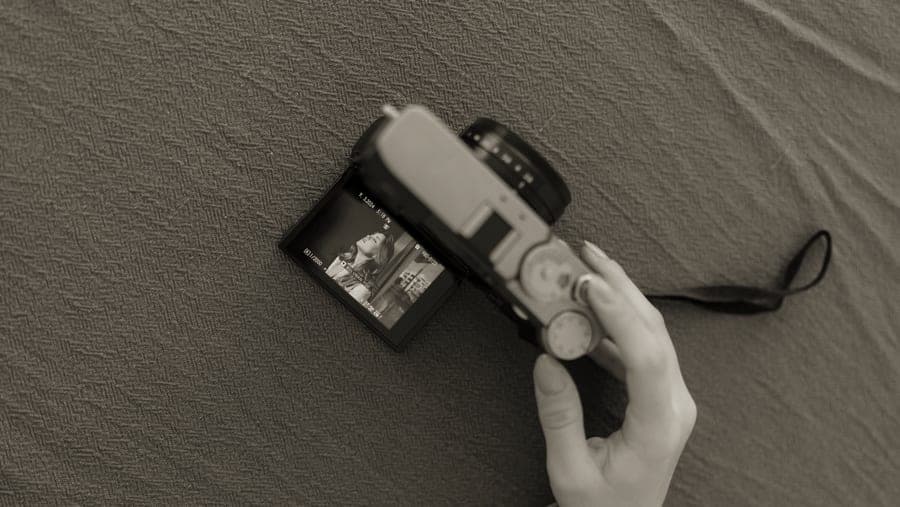 Fujifilm instax mini EvoAn f/2.0 lens and a screen: the only instax that both sees in the dark and lets you check. Fujifilm instax mini EvoAn f/2.0 lens and a screen: the only instax that both sees in the dark and lets you check. | Best in low light overall | $0.85 | Check price |
| 2 | 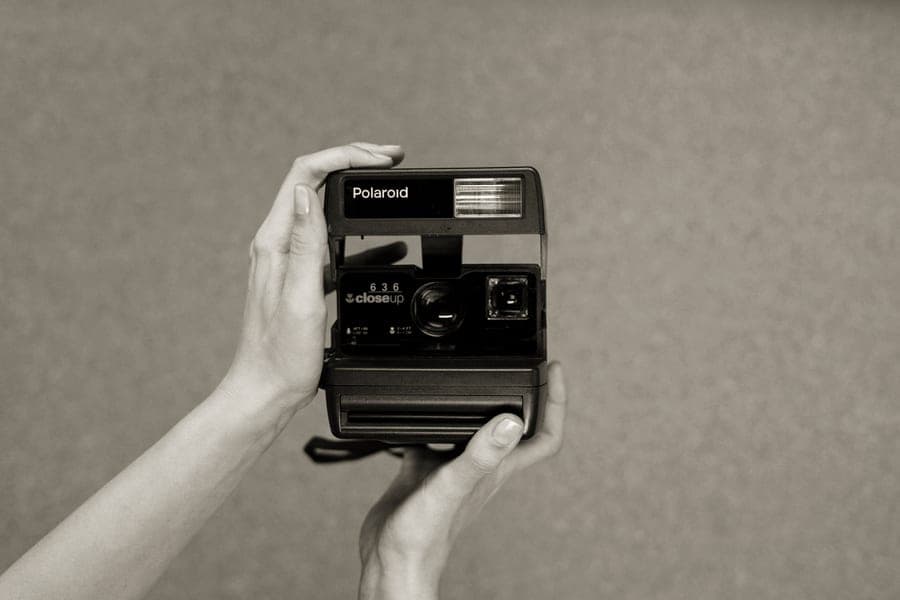 Fujifilm instax mini 99The longest flash reach of any instax mini, plus a real bulb mode. Fujifilm instax mini 99The longest flash reach of any instax mini, plus a real bulb mode. | Best film camera for low light | $0.85 | Check price |
| 3 | 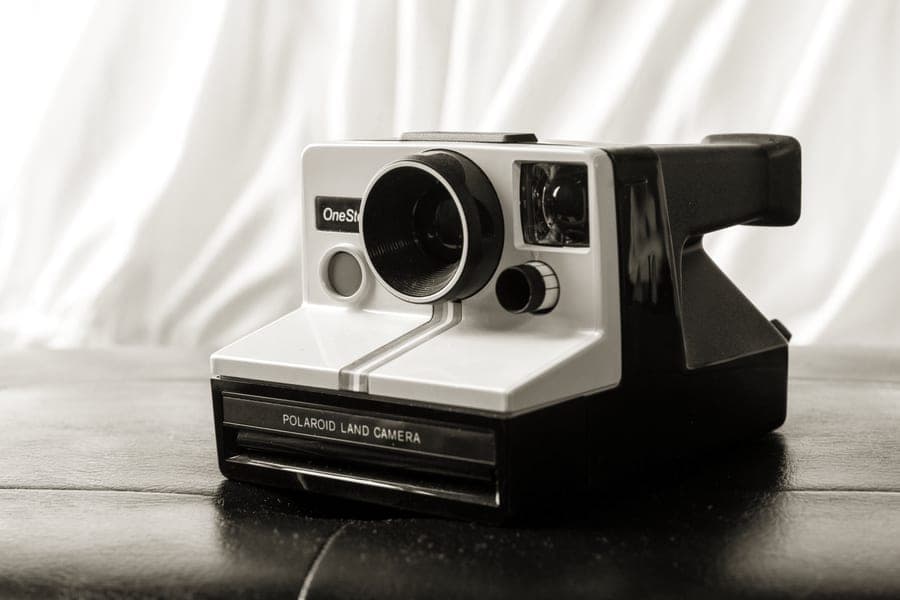 Fujifilm instax SQUARE SQ40Slow-synchro from 1/2 second, so the background does not fall to black. Fujifilm instax SQUARE SQ40Slow-synchro from 1/2 second, so the background does not fall to black. | Best simple camera for an indoor party | $1.15 | Check price |
| 4 | 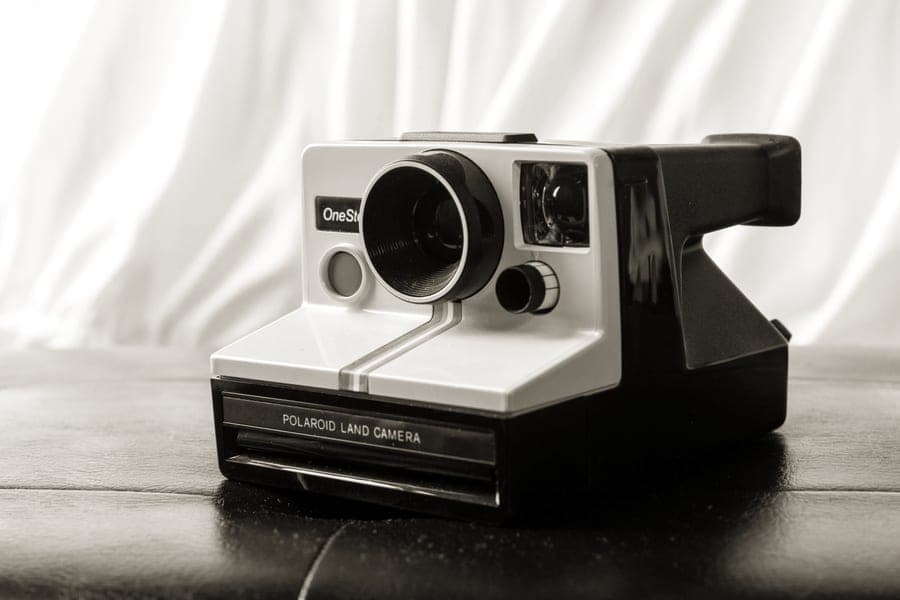 Polaroid Now Generation 3Twin-lens autofocus and six apertures, on the biggest print here. Polaroid Now Generation 3Twin-lens autofocus and six apertures, on the biggest print here. | Best Polaroid for a dim room | $2.37 | Check price |
Why instant cameras struggle indoors
It is the lens. Every simple instax mini — the 12, the 13, the 41 — uses a 60 mm f/12.7 lens. That is a very small opening by any standard, and it means the camera has almost no ability to work with the light already in a room. Its answer is to fire the flash on every single frame, at an effective range of 0.3 to 2.2 m.
That produces the photograph everybody recognizes: whoever stood inside 2.2 m is brightly lit, and everything behind them is black, because the flash never reached it and the shutter was not open long enough for the room's own light to register. It is not a fault. It is the physics of a dim lens and a short flash.
There are only three ways out, and the picks above are examples of each: a much brighter lens, a longer flash reach with slow-synchro so ambient light has time to land, or a screen that lets you not pay for the failures.
What to look for
- Maximum aperture. f/2.0 on the Evo against f/12.7 on a simple mini is the single biggest difference on this page.
- Flash range in metres. 2.7 m on the mini 99 against 2.2 m on a mini 12 sounds small and is the difference between reaching the back of a sofa and not.
- Slow-synchro or a long shutter. This is what keeps the background from printing black.
- Exposure compensation. Only the mini 99 has it among instax cameras, and it is the control that fixes a backlit subject.
- A screen. Not a light-gathering feature, but the cheapest insurance against paying for dark frames.
The picks in detail
1. Best in low light overall
Fujifilm instax mini Evo
An f/2.0 lens and a screen: the only instax that both sees in the dark and lets you check.
- Buy it for
- Anyone photographing indoors — dinners, bars, living rooms, evening parties.
- Skip it if
- A buyer who wants a pure film camera, or the cheapest option on this page.
- f/2.0 lens with single autofocus, many stops brighter than the f/12.7 lens on a simple instax mini.
- A 3.0 inch screen, so a frame that came out too dark costs nothing — you simply do not print it.
- Ten film effects and ten lens effects, applied after you see the shot, which can lift a flat indoor frame.
- Approximately 100 prints per charge, so a long evening does not end in a flat battery.
Running cost: instax mini works out at $0.85 a shot. See every format’s cost.
How it scores8.8/10 overall
- Available light9
- Flash control7
- Wasted frames10
- Value6
Our editorial scoring, built from published specifications and reviews by outlets that test hardware — see how we pick. We have not handled these products, so these are not test results.
Engadget, which publishes hands-on reviews, calls it “marries the vintage charm of instant photography with digital shooting”.
#ad · we earn a commission at no extra cost to you
2. Best film camera for low light
Fujifilm instax mini 99
The longest flash reach of any instax mini, plus a real bulb mode.
- Buy it for
- Someone who wants film and will use a setting to get the shot.
- Skip it if
- A casual recipient. Every dark frame still costs 85 cents.
- Flash effective from 0.3 to 2.7 m — further than the 2.2 m of every simple instax mini.
- Indoor and slow-synchro flash modes, which keep the room visible behind a lit subject.
- Bulb mode holds the shutter open up to 10 seconds, for a lit street or a still interior.
- Exposure compensation from -5/3EV to +1EV, the control that rescues a backlit frame.
- Shutter down to 1.8 seconds even outside bulb mode, where a mini 12 stops at 1/2 second.
Running cost: instax mini works out at $0.85 a shot. See every format’s cost.
How it scores8.1/10 overall
- Available light6
- Flash control10
- Wasted frames3
- Value6
Our editorial scoring, built from published specifications and reviews by outlets that test hardware — see how we pick. We have not handled these products, so these are not test results.
Engadget, which publishes hands-on reviews, calls it “offers far more control and features”.
#ad · we earn a commission at no extra cost to you
3. Best simple camera for an indoor party
Fujifilm instax SQUARE SQ40
Slow-synchro from 1/2 second, so the background does not fall to black.
- Buy it for
- A buyer who wants a one-button camera that still works at a dinner table.
- Skip it if
- A budget buyer — instax SQUARE film is about $1.15 a shot.
- Slow-synchro shutter from 1/2 to 1/400 second, which holds some ambient light behind the flash.
- Automatic exposure over a wide Lv 5.0 to 15.5 range, with no setting to get wrong.
- The square frame suits a table of faces better than a narrow mini print.
- CR2 lithium batteries, rated for about 30 film packs in Fujifilm's test conditions.
Running cost: instax SQUARE works out at $1.15 a shot. See every format’s cost.
How it scores7.6/10 overall
- Available light6
- Flash control7
- Wasted frames4
- Value6
Our editorial scoring, built from published specifications and reviews by outlets that test hardware — see how we pick. We have not handled these products, so these are not test results.
Engadget, which publishes hands-on reviews, calls it “looks great thanks to the leatherette details and retro design”.
#ad · we earn a commission at no extra cost to you
4. Best Polaroid for a dim room
Polaroid Now Generation 3
Twin-lens autofocus and six apertures, on the biggest print here.
- Buy it for
- Someone who wants the full-size Polaroid and will mostly shoot indoors.
- Skip it if
- Anyone counting the cost — i-Type film is about $2.37 a frame, the highest on this page.
- A two-lens autofocus system with zones from 0.40-1.3 m and 1.0 m to infinity, so indoor distances are covered.
- Six usable apertures from f/11 to f/64, which is more exposure latitude than a fixed-aperture instax.
- A built-in tripod mount, which is the honest answer to a very dim room.
- The classic 4.2 x 3.5 inch print, with a 79 x 77 mm image area.
Running cost: Polaroid i-Type works out at $2.37 a shot, so a hundred photographs in the first year puts the real total at about $366.86 including the camera. See every format’s cost.
How it scores7.0/10 overall
- Available light6
- Flash control7
- Wasted frames2
- Value4
Our editorial scoring, built from published specifications and reviews by outlets that test hardware — see how we pick. We have not handled these products, so these are not test results.
#ad · we earn a commission at no extra cost to you
Side by side on the low-light specifications
| Camera | Lens | Flash reach | Long-shutter option |
|---|---|---|---|
| instax mini Evo | f/2.0, autofocus | Not published as a distance | Digital shutter |
| instax mini 99 | f/12.7 | 0.3 to 2.7 m | Bulb to 10 sec; shutter to 1.8 sec |
| instax SQUARE SQ40 | f/12.6 | 0.3 to 2.2 m | Slow synchro from 1/2 sec |
| Polaroid Now Generation 3 | Twin-lens autofocus, f/11 to f/64 | Not published as a distance | Tripod mount |
| instax mini 12, for contrast | f/12.7 | 0.3 to 2.2 m | 1/2 sec minimum |
One honest caveat on that table: Fujifilm does not publish a flash distance for the Evo, and Polaroid does not publish one for the Now Generation 3, so those cells say so rather than guessing a number.
The cheapest fix is not a camera
If the photographs you want are indoor photographs, a phone is already better at low light than any camera on this page — modern phone sensors stack multiple exposures, which no instant camera does. The honest recommendation for a dim room is to take the photograph on the phone and print it: a pocket printer at 42 to 85 cents a print gives you the object without the dark frames.
What running cost does to this decision
| Camera or printer | 50 shots | 100 shots | 200 shots |
|---|---|---|---|
| Fujifilm instax mini EvoHardware price not published — film cost only | $50.973 packs of instax mini | $84.955 packs of instax mini | $169.9010 packs of instax mini |
| Fujifilm instax mini 99Hardware price not published — film cost only | $50.973 packs of instax mini | $84.955 packs of instax mini | $169.9010 packs of instax mini |
| Fujifilm instax SQUARE SQ40Hardware price not published — film cost only | $68.973 packs of instax SQUARE | $114.955 packs of instax SQUARE | $229.9010 packs of instax SQUARE |
| Polaroid Now Generation 3$119.99 MSRP at launch, March 2025 | $252.927 packs of Polaroid i-Type | $366.8613 packs of Polaroid i-Type | $594.7425 packs of Polaroid i-Type |
Low light is where film gets wasted, so the per-frame cost matters more here than anywhere else on this site. A dark frame on instax mini costs about 85 cents. The same dark frame on Polaroid i-Type costs about $2.37. That is the real reason the Evo tops this page: it is the only camera here where a failed frame costs nothing at all.
Questions people ask
What is the best instant camera for low light?
The Fujifilm instax mini Evo, because its f/2.0 autofocus lens gathers far more light than the f/12.7 lens fitted to every simple instax, and its screen lets you discard a dark frame before printing. Among film cameras the instax mini 99 is best, with flash to 2.7 m and a 10-second bulb mode.
Why are my instant photos dark or black in the background?
Because the flash only reaches about 2.2 m on most instant cameras and the shutter is not open long enough for the room's own light to register. Anything beyond flash range prints black. Move subjects closer, use a camera with slow-synchro flash, or shoot against a pale wall.
Can instant cameras take photos at night?
Of a close subject with flash, yes. Of a dark scene, only with a long exposure — the instax mini 99's bulb mode holds the shutter open up to 10 seconds, and the Polaroid Now Generation 3 has a tripod mount. Hand-held night shots without flash will not work on any camera in this category.
Does a brighter flash fix low light?
Partly. A longer flash reach lights subjects further away, which is why the mini 99's 2.7 m helps. It does nothing for the background beyond that range, which is why slow-synchro flash or a brighter lens matters just as much.
Read these next
instax mini Evo vs mini 99
The two low-light winners, head to head.
Best instant cameras for selfies
The same flash problem at arm's length.
Best cameras for parties
Where indoor light is the whole problem.

What instax film really costs
Why a wasted frame matters more than it looks.
Sources
- Fujifilm instax mini Evo specifications — 3.0 in LCD, f/2.0 lens, Bluetooth phone printing, approx. 45 images internal storage
- Fujifilm instax mini 99 specifications — Shutter 1.8-1/400 sec plus bulb to 10 sec, flash to 2.7 m, exposure compensation -5/3EV to +1EV
- Fujifilm instax SQUARE SQ40 specifications — Selfie mode 0.3-0.5 m, slow-synchro shutter from 1/2 sec, exposure Lv 5.0-15.5
- Polaroid Now Generation 3 specifications via Glazer's Camera — Takes Polaroid i-Type and 600 film; two-lens autofocus; Polaroid's own Gen 3 page was unreachable
- Fujifilm instax mini 12 specifications — Selfie mirror, flash range 0.3-2.2 m, exposure Lv 5.0-14.5, 2 x AA power
- Pro Photo Supply — instax mini film, 20 exposures — $16.99 on 13 October 2026, the basis of the 85c-per-shot figure
- Engadget — the best instant cameras — Cited for published hands-on verdicts. We do not test hardware
Found something out of date or wrong? Tell us and we will correct it with a dated note. Our picks are re-checked quarterly — see our editorial policy.