Kodak Mini Shot vs instax
Kodak's prints cost half as much and last longer. Fujifilm's are real instant film. Which of those two sentences matters more is the whole decision.
Kodak Mini Shot prints cost about 42 cents against about 85 cents for instax mini, and they come out dry and laminated. But the Kodak is a hybrid — it captures digitally and prints, so there is no developing instant film. Choose Kodak for cost and volume, instax for the instant-film experience.
How this page is funded. Shake & Print earns a commission when you buy through our links, at no extra cost to you. It does not change which products we pick or the order we rank them in, and we do not state prices we have not verified — the buy buttons send you to the current listing instead. Full disclosure.
| # | Product | Best for | Cost per shot | Price |
|---|---|---|---|---|
| 1 | Kodak Mini Shot 2 RetroA camera and phone printer in one, at about 42 cents a print with nothing wasted. | Cheapest prints, by half | $0.42 | Check price |
| 2 | 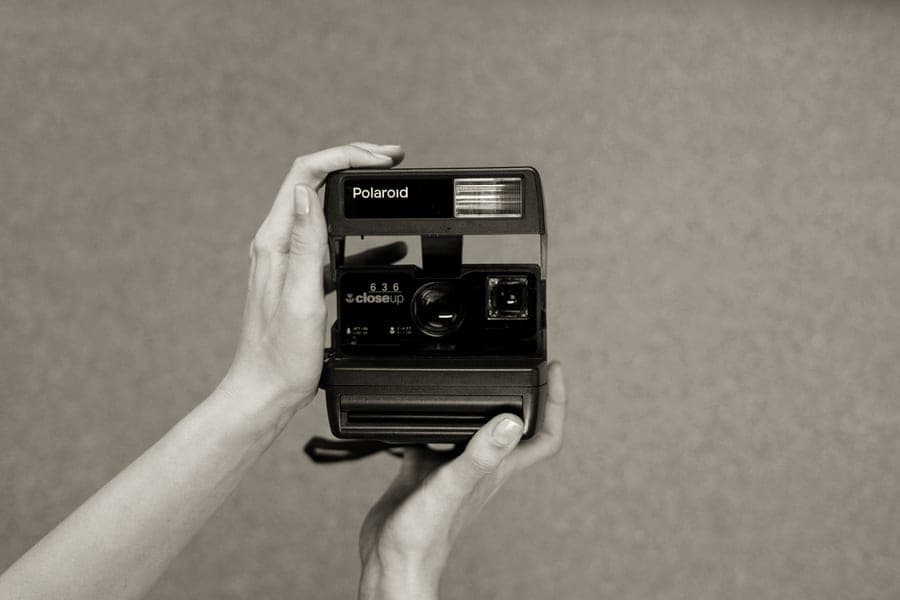 Fujifilm instax mini 12Actual instant film, developing in your hand, for 85 cents a frame. Fujifilm instax mini 12Actual instant film, developing in your hand, for 85 cents a frame. | The real instant camera | $0.85 | Check price |
These are not the same kind of product
That is the thing to understand first, because it decides everything else. An instax mini 12 exposes a sheet of chemical film; the picture appears over about ninety seconds while you hold it. A Kodak Mini Shot takes a digital photograph with a 13MP sensor and prints it using a dye-sublimation mechanism — four passes of color plus a clear laminate.
So the Kodak produces a better, cheaper, more durable print, and none of the thing people buy instant cameras for. Both of those statements are true at once.
The numbers
| Kodak Mini Shot 2 Retro | instax mini 12 | |
|---|---|---|
| What it is | Digital camera + dye-sub printer | Instant film camera |
| Print size | 2.1 x 3.4 in | 2.4 x 1.8 in |
| Cost per print | $0.42 | $0.85 |
| Pack / cartridge | 60 prints for $24.99 | 20 prints for $16.99 |
| Print technology | 4PASS dye-sub + laminate | Instant film |
| Print resolution | 291 x 300 dpi | n/a — chemical |
| Choose before printing? | Yes — 1.7 in LCD | No |
| Prints from a phone? | Yes — Bluetooth and USB-C | No |
| Print finish | Dry, laminated, smudge-proof | Develops in 90 sec, fades in sun |
| Film availability | Online and some retailers | Supermarkets, drugstores, everywhere |
| Weight | 255 g | 306 g |
| Power | Rechargeable | 2 x AA |
What the cost difference means over a year
| Camera or printer | 60 shots | 120 shots | 240 shots |
|---|---|---|---|
| Kodak Mini Shot 2 Retro$119.99 listed with a 38-sheet bundle (reg. $159.99) | $144.981 pack of Kodak 4PASS 2.1 x 3.4 | $169.972 packs of Kodak 4PASS 2.1 x 3.4 | $219.954 packs of Kodak 4PASS 2.1 x 3.4 |
| Fujifilm instax mini 12Hardware price not published — film cost only | $50.973 packs of instax mini | $101.946 packs of instax mini | $203.8812 packs of instax mini |
At 240 prints the Kodak's media costs about $125 and instax mini film about $204 — and the Kodak is giving you a larger, more durable print. For a family that prints a lot, it is the better buy on every measurable axis.
The screen cuts both ways
The Kodak's 1.7 inch LCD means nothing is wasted: you look, you decide, you print. On the face of it that is strictly better than instax, where every press of the shutter spends 85 cents whether the photograph worked or not.
But for some recipients it is a complication rather than a feature. A child or a less technical adult handed an instax mini 12 can use it immediately — twist, press, done. Handed a camera with a screen and a menu, they have to learn something first. For a gift, simplicity sometimes beats capability.
Print durability, where Kodak is clearly ahead
The fourth pass of the 4PASS process is a clear laminate, which is why these prints are dry the moment they emerge, do not smudge, and are not sticky-backed. Instant film prints are more delicate and fade noticeably in direct sunlight — which is why UV-protective frames exist for them.
If the prints are going on a sunny wall or into a child's hands, that difference is practical rather than theoretical.
Which to buy
- You want instant film and the ritual: instax mini 12, or the mini 13 for a self-timer.
- You want the most physical photographs for the least money: Kodak Mini Shot 2 Retro.
- You want square prints cheaply: Kodak Mini Shot 3 Retro, at 3 x 3 inches for about 42 cents, against $1.15 for instax SQUARE.
- You want both — film and selective printing: the instax mini Evo, which shoots digitally onto real instax film.
- The photographs are already on a phone: skip the camera entirely and read best pocket photo printers.
Questions people ask
Is the Kodak Mini Shot an instant camera?
Not in the strict sense. It is a hybrid: a 13MP digital camera with a dye-sublimation printer built in. The print is produced by a four-pass printing process with a laminate layer rather than by developing chemical film, so it emerges dry and finished rather than appearing over 90 seconds.
Are Kodak prints cheaper than instax?
Yes, by about half. A Kodak 4PASS cartridge is $24.99 for 60 prints, about 42 cents each, against $16.99 for 20 instax mini exposures, about 85 cents each. The Kodak print is also larger at 2.1 x 3.4 inches against 2.4 x 1.8.
Which is better for a child, Kodak or instax?
Kodak on cost — a child's wasted frames cost 42 cents instead of 85, and the screen means nothing need be wasted at all. instax on simplicity: an instax mini 12 has two controls and needs no explanation, where the Kodak has a screen and a menu.
Do Kodak Mini Shot prints fade?
Less than instant film. The 4PASS process finishes with a clear laminate pass, which makes the prints dry, smudge-proof and more resistant to handling and light than instax or Polaroid film. Instant film prints fade noticeably in direct sunlight.
Can the Kodak Mini Shot print photos from a phone?
Yes. It connects over Bluetooth, and ships with a USB-C cable plus a Lightning adapter for a direct wired connection, so it works as a pocket photo printer as well as a camera. That dual role is a large part of its value.
Read these next
Polaroid vs Instax vs Kodak
All three brands, including how Kodak undercuts both.
Kodak Mini 2 Retro review
The printer-only version, at the same cost per print.
instax mini Evo review
The hybrid that prints onto real instax film.
Every format compared on cost
Where Kodak's 42 cents sits against everything else.

Instant camera or photo printer?
The broader version of this question.
Sources
- Kodak Mini Shot 2 Retro specifications
- Kodak — 4PASS cartridges — $24.99 for 60 prints on 13 October 2026
- Fujifilm instax mini 12 specifications
- Pro Photo Supply — instax mini film, 20 exposures — $16.99 on 13 October 2026
Found something out of date or wrong? Tell us and we will correct it with a dated note. Our picks are re-checked quarterly — see our editorial policy.