Polaroid Now vs Polaroid Go
Both are real Polaroids. One makes the photograph you are picturing and one makes something much smaller — and the price difference is not the main difference.
Buy the Polaroid Now Generation 3 if you want the classic 4.2 x 3.5 inch Polaroid print. The Go Generation 3 is $30 cheaper at $89.99 but its photograph is 2.6 x 2.1 inches — smaller than an instax mini — though its film is cheaper at about $1.37 a shot against $2.37.

How this page is funded. Shake & Print earns a commission when you buy through our links, at no extra cost to you. It does not change which products we pick or the order we rank them in, and we do not state prices we have not verified — the buy buttons send you to the current listing instead. Full disclosure.
| # | Product | Best for | Cost per shot | Price |
|---|---|---|---|---|
| 1 |  Polaroid Now Generation 3The full-size print with real autofocus, for $30 more than the Go. Polaroid Now Generation 3The full-size print with real autofocus, for $30 more than the Go. | The Polaroid most people mean | $2.37 | Check price |
| 2 | Polaroid Go Generation 3Genuinely tiny, genuinely a Polaroid, and the print is genuinely small. | The pocketable one | $1.37 | Check price |
Side by side
| Polaroid Now Gen 3 | Polaroid Go Gen 3 | |
|---|---|---|
| Print size | 4.2 x 3.5 in (107 x 88 mm) | 2.6 x 2.1 in (66.6 x 53.9 mm) |
| Image area | 79 x 77 mm | 47 x 46 mm |
| Film | i-Type and 600 | Go film only |
| Shots per pack | 8 | 16 |
| Pack price | $18.99 | $21.99 |
| Cost per shot | $2.37 | $1.37 |
| Focus | Two-lens autofocus, 2 zones | Fixed focus, 63.75 mm |
| Apertures | Six, f/11 to f/64 | Not published |
| Self-timer | Yes | Yes |
| Double exposure | Yes | Yes |
| Tripod mount | Yes, built in | No |
| Battery life | Not published | Up to 15 film packs |
| Weight | 448 g | 251.9 g |
| Listed price | $119.99 at launch | $89.99 |
The film economics are the opposite of what you expect
The cheaper camera has the cheaper film, which is unusual. Go film is $21.99 for sixteen photographs — about $1.37 a shot — against $18.99 for eight i-Type photographs, about $2.37. So the Go is cheaper to buy and cheaper to run.
| Format | Print size | Pack | Pack price | Cost per shot | Checked at |
|---|---|---|---|---|---|
| Polaroid Go | 2.6 x 2.1 in (66.6 x 53.9 mm) | 16 | $21.99 | $1.37 | Polaroid |
| Polaroid i-Type | 4.2 x 3.5 in (107 x 88 mm) | 8 | $18.99 | $2.37 | Polaroid |
That makes the Go look like the obvious value pick, and over a year the gap is real:
| Camera or printer | 50 shots | 100 shots | 200 shots |
|---|---|---|---|
| Polaroid Go Generation 3$89.99 listed at polaroid.com | $177.954 packs of Polaroid Go | $243.927 packs of Polaroid Go | $375.8613 packs of Polaroid Go |
| Polaroid Now Generation 3$119.99 MSRP at launch, March 2025 | $252.927 packs of Polaroid i-Type | $366.8613 packs of Polaroid i-Type | $594.7425 packs of Polaroid i-Type |
But the Go's saving is purchased with print size. You are paying less per photograph because each photograph is a quarter of the area. Whether that is a saving or a disappointment depends entirely on what the recipient was expecting.
Autofocus: the other real difference
The Now Generation 3 has a twin-lens autofocus system that picks which of two lenses suits the shot, with zones at 0.40-1.3 m and 1.0 m to infinity. The Go is fixed-focus. Engadget specifically flags the Polaroid Go's autofocus as delivering "spotty results" — and on film at $1.37 a frame, a missed focus is not free.
This is the argument for the Now that is not about size: it is more likely to produce a usable photograph of a person at close range, which is what most of these photographs are.
Which to buy
- You want the classic Polaroid photograph: Now Generation 3. Nothing else in the range at this price produces it.
- You want to carry it everywhere: Go Generation 3. 251.9 g genuinely fits a pocket and the Now does not.
- You want the Polaroid name under $100: Go, with the print size clearly explained to whoever is receiving it.
- You want a square print and do not care about the brand: neither — the instax SQUARE SQ40 gives you a 2.4 x 2.4 inch square at about $1.15 a shot.
- You want the best Polaroid regardless of price: the Flip, with sonar autofocus and an exposure warning. See best Polaroid cameras.
Questions people ask
Is the Polaroid Go worth it?
Yes if you want a genuinely pocketable Polaroid and know the print is small — 2.6 x 2.1 inches, with a 47 x 46 mm image area. No if you are buying it as the cheap way to get the classic big Polaroid photograph, because it does not produce one.
What is the difference between Polaroid Now and Polaroid Go?
Print size above all: the Now's photograph is 4.2 x 3.5 inches against the Go's 2.6 x 2.1. The Now also has two-lens autofocus where the Go is fixed-focus, a tripod mount, and six usable apertures. The Go is lighter at 251.9 g against 448 g, and its film is cheaper at about $1.37 a shot versus $2.37.
Can the Polaroid Go use i-Type film?
No. Go film is a smaller format that fits only the Polaroid Go, and the Go cannot take i-Type, 600 or SX-70 film. The Now Generation 3, by contrast, takes both i-Type and the older 600 film.
Which Polaroid has the cheapest film?
The Go, at about $1.37 a shot — $21.99 for sixteen photographs. Every other current Polaroid uses i-Type at about $2.37, 600 at about $2.62 or SX-70 at about $2.75, all of which come eight to a pack.
Is the Polaroid Go good for a child?
It is small and simple, which helps, but at $1.37 a shot a child's learning mistakes are expensive. An instax mini 12 at about 85 cents a frame is the better choice for a child, and the print is a comparable size.
Read these next
Polaroid Go Generation 3 review
The full write-up, including the print-size caveat in detail.
Polaroid Now Generation 3 review
The full-size Polaroid, reviewed.
Best Polaroid cameras
The whole current range, ranked.
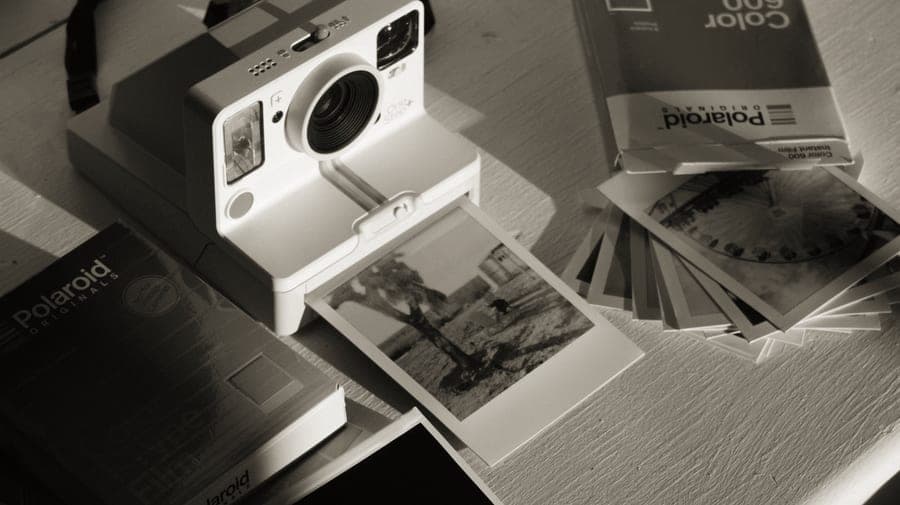
What Polaroid film costs per shot
All four Polaroid films, with multipack savings.
Instax vs Polaroid
Whether to buy Polaroid at all, settled on cost.
Sources
- Polaroid Go Generation 3 specifications
- Polaroid Now Generation 3 specifications (retailer listing) — Polaroid's own Gen 3 product page was unreachable; specification taken from the retailer listing
- Polaroid — Go film — $21.99 for 16 photos on 13 October 2026
- Polaroid — Color i-Type film — $18.99 for 8 photos on 13 October 2026
- Polaroid — instant cameras — Listed prices, 13 October 2026
- Engadget — the best instant cameras — Cited for published verdicts. We do not test hardware
Found something out of date or wrong? Tell us and we will correct it with a dated note. Our picks are re-checked quarterly — see our editorial policy.