Are instant cameras worth it?
Your phone takes better photographs and they cost nothing. So the honest question is not whether instant cameras are good — it is what you are actually buying.
Instant cameras are worth it if you want physical photographs to hand to people — that is something a phone cannot do. They are not worth it for image quality, which any modern phone beats comfortably, and each photograph costs between 85 cents and $2.75 depending on the film.
How this page is funded. Shake & Print earns a commission when you buy through our links, at no extra cost to you. It does not change which products we pick or the order we rank them in, and we do not state prices we have not verified — the buy buttons send you to the current listing instead. Full disclosure.
What you are actually buying
Not image quality. A $300 phone takes sharper, better-exposed, more color-accurate photographs than every camera on this site, in worse light, for free, forever. Anyone telling you an instax mini takes better pictures than a phone is selling something.
What you are buying is a physical object that exists once and can be handed to somebody. That is genuinely something a phone cannot do, and it turns out to matter to people — which is why a category that should have died in 2005 is instead growing.
So the question is whether that object is worth between 85 cents and $2.75 to you, every time.
What each photograph actually costs
| Format | Print size | Pack | Pack price | Cost per shot | Checked at |
|---|---|---|---|---|---|
| instax mini | 2.4 x 1.8 in (62 x 46 mm) | 20 | $16.99 | $0.85 | Pro Photo Supply |
| instax WIDE | 3.9 x 2.4 in (99 x 62 mm) | 20 | $21.99 | $1.10 | Pro Photo Supply |
| instax SQUARE | 2.4 x 2.4 in (62 x 62 mm image on 86 x 72 mm film) | 20 | $22.99 | $1.15 | Pro Photo Supply |
| Polaroid Go | 2.6 x 2.1 in (66.6 x 53.9 mm) | 16 | $21.99 | $1.37 | Polaroid |
| Polaroid i-Type | 4.2 x 3.5 in (107 x 88 mm) | 8 | $18.99 | $2.37 | Polaroid |
| Polaroid SX-70 | 4.2 x 3.5 in (107 x 88 mm) | 8 | $21.99 | $2.75 | Polaroid |
Those are not small numbers at volume. A hundred photographs a year is about $85 on instax mini and about $237 on Polaroid i-Type. A phone's hundredth photograph of the year costs nothing.
When they are clearly worth it
- Social use. Parties, weddings, trips with friends — anywhere you can hand the photograph to the person in it. This is what the category is for and it is genuinely good at it.
- Guest books and keepsakes. A wedding guest book of instant prints with handwritten messages beside them is a better object than a shared album nobody opens. See wedding guest book cameras.
- For children. A child taking a photograph and holding it ninety seconds later understands something about photography that a phone does not teach. At 85 cents a frame it is an affordable lesson.
- Deliberately slowing down. Eight or twenty exposures makes you think before pressing the shutter in a way an unlimited camera roll does not. Some people find that valuable enough on its own.
When they are not worth it
- If you want good photographs. Buy a better phone, or a used mirrorless camera. Fixed-focus lenses and compulsory flash are not how you get good pictures.
- If you want a lot of photographs. The arithmetic defeats you. Two hundred instant prints a year is $170 to $475 in film; two hundred Kodak 4PASS prints is about $84.
- If your photos are already on a phone. This is the big one. If the actual problem is four years of pictures that exist only digitally, a camera does not solve it. A printer does, at 39 to 60 cents a print.
- If nobody will look after the prints. Instant photographs left loose get stuck together, bent and lost. If no album is going to happen, the money mostly produces clutter.
- If the budget is genuinely tight. The camera is the small cost. Buying one and then not being able to afford film is the worst outcome in this category.
The disadvantages nobody mentions
- There is one copy. Lose it or damage it and the photograph is gone. The exception is a hybrid like the instax mini Evo, which keeps a digital file as well.
- Prints fade in sunlight. Not slowly, either. Keep them out of south-facing windows and use UV-protective glazing for anything framed.
- Film expires. Packs carry a date, results drift either side of it, and multipacks bought for a camera that comes out twice a year will go off before they are used.
- Flash does all the indoor work. Beyond 2.2 meters on a mini — 3 meters on a WIDE 400 — indoor photographs come out dark and there is no manual exposure to fix it.
- No zoom, no second try. You stand where the lens needs you to stand, and whatever happened is what you paid for.
The cheapest way to find out
An instax mini 12 and one 20-exposure pack of film is about the lowest-cost honest experiment in this category: roughly $17 of film on the cheapest camera, and if it turns out not to suit you, you have spent the price of a takeaway finding out.
1. If the answer is yes, start here
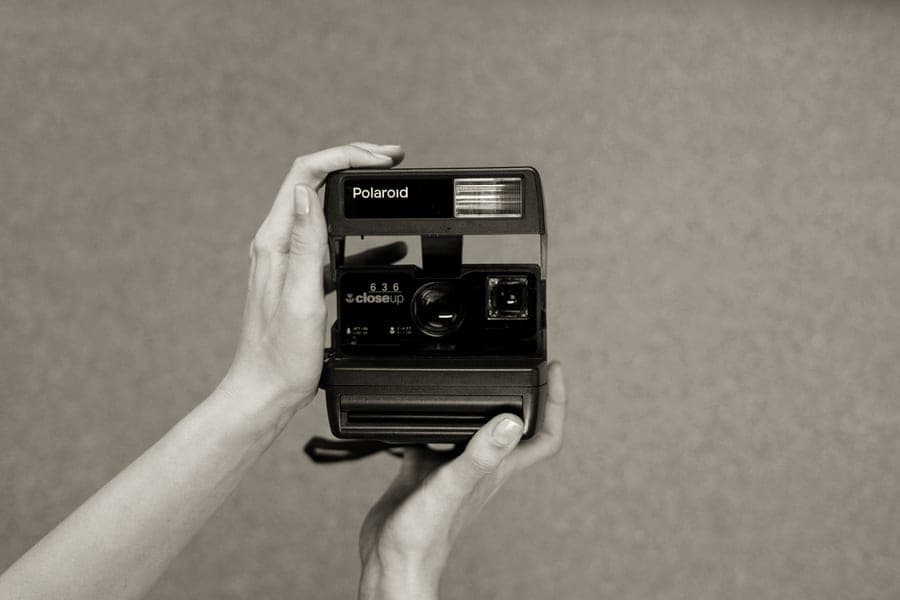
Fujifilm instax mini 12
The lowest-risk way to find out whether you actually want one.
- Buy it for
- Anyone trying the category for the first time.
- Skip it if
- Someone who has decided they want a big print or a lot of control.
- The cheapest film in the category at about 85 cents a shot, so finding out costs least.
- Two controls, so there is no learning curve to blame if you do not take to it.
- AA batteries and supermarket film: nothing to plan around.
Running cost: instax mini works out at $0.85 a shot. See every format’s cost.
How it scores8.5/10 overall
- Low risk10
- Running cost9
- Ease of use10
Our editorial scoring, built from published specifications and reviews by outlets that test hardware — see how we pick. We have not handled these products, so these are not test results.
Engadget, which publishes hands-on reviews, calls it “a basic instant camera ideal for newbies that lets you get started shooting”.
#ad · we earn a commission at no extra cost to you
2. If the answer is no, this is probably what you wanted
Kodak Mini 2 Retro
Physical photographs at about 42 cents each, from the pictures you already took.
- Buy it for
- Anyone who wanted prints rather than a camera.
- Skip it if
- Anyone who wanted the moment of a print developing in their hand.
- About **42 cents a print** — half the cheapest instant film.
- You print the photographs that are already good, instead of paying for the bad ones.
- Dry, laminated prints that do not fade like instant film.
Running cost: Kodak 4PASS 2.1 x 3.4 works out at $0.42 a shot, so a hundred photographs in the first year puts the real total at about $139.97 including the camera. See every format’s cost.
How it scores8.2/10 overall
- Cost per print10
- Print quality8
- The instant moment2
Our editorial scoring, built from published specifications and reviews by outlets that test hardware — see how we pick. We have not handled these products, so these are not test results.
#ad · we earn a commission at no extra cost to you
Questions people ask
Are instant cameras worth the money?
They are if you want physical photographs to hand to people, which is the one thing a phone cannot do. They are not worth it for image quality — any modern phone is better — and each photograph costs 85 cents to $2.75 depending on the film, which adds up quickly at volume.
What are the disadvantages of an instant camera?
Cost per shot, from 85 cents to $2.75. Only one copy of each photograph unless you scan it. Prints fade in direct sunlight. Film expires. Flash does all the indoor work, so anything beyond about 2.2 meters comes out dark. And the picture quality loses comfortably to a phone.
Are instant cameras just a fad?
The category has been through one revival already and is still growing — Fujifilm currently lists thirteen instax models in the US and Polaroid six cameras, with film for all of them in production. The appeal is the physical print rather than the technology, and that has not changed in fifty years.
Is it cheaper to print photos than use an instant camera?
Considerably. A Canon SELPHY 4 x 6 print is about 39 cents and a Kodak 4PASS print about 42 cents, against 85 cents for the cheapest instant film and about $2.37 for Polaroid i-Type. You also print only the photographs worth printing rather than paying for every frame.
Do instant cameras take good photos?
Not by any technical measure. Most have a fixed-focus lens around f/12.7, no manual exposure control, and flash that fires on every frame. The appeal is the physical print and its particular look, not resolution or accuracy — and expecting phone-quality images will disappoint.
Read these next

Instant camera or photo printer?
If the answer here was no, this is the question to ask next.
Best instant cameras
If the answer was yes, these are the picks.
Every film format compared on cost
All fourteen films and media, ranked cheapest first.

Are portable photo printers worth it?
The same honest treatment, for the other half of the category.

What to look for in an instant camera
The specifications that matter if you do buy one.
Sources
- Pro Photo Supply — instax mini film, 20 exposures — $16.99 on 13 October 2026
- Polaroid — Color i-Type film — $18.99 for 8 photos on 13 October 2026
- Polaroid — Go film — $21.99 for 16 photos on 13 October 2026
- Fujifilm instax camera range (US) — Current-lineup check, 13 October 2026 — confirms which models are still sold
- Polaroid — instant cameras — Listed prices, 13 October 2026
Found something out of date or wrong? Tell us and we will correct it with a dated note. Our picks are re-checked quarterly — see our editorial policy.