What to look for in an instant camera
Most instant-camera buying advice is written by people comparing the wrong things. Here are the six specifications that change the photograph, and the ones to ignore.
Six things matter on an instant camera: the film format and its cost per shot, the print size, the flash range, the minimum focusing distance, whether it has a self-timer, and the battery type. Sensor size, megapixels, autofocus systems and lens mounts do not exist on these cameras.

How this page is funded. Shake & Print earns a commission when you buy through our links, at no extra cost to you. It does not change which products we pick or the order we rank them in, and we do not state prices we have not verified — the buy buttons send you to the current listing instead. Full disclosure.
1. The film format, and what it costs per shot
This is the most important specification and the one least often mentioned. A camera takes exactly one format of film for its entire life, so choosing the camera is choosing every film purchase you will ever make for it.
| Format | Print size | Pack | Pack price | Cost per shot | Checked at |
|---|---|---|---|---|---|
| instax mini | 2.4 x 1.8 in (62 x 46 mm) | 20 | $16.99 | $0.85 | Pro Photo Supply |
| instax WIDE | 3.9 x 2.4 in (99 x 62 mm) | 20 | $21.99 | $1.10 | Pro Photo Supply |
| instax SQUARE | 2.4 x 2.4 in (62 x 62 mm image on 86 x 72 mm film) | 20 | $22.99 | $1.15 | Pro Photo Supply |
| Polaroid Go | 2.6 x 2.1 in (66.6 x 53.9 mm) | 16 | $21.99 | $1.37 | Polaroid |
| Polaroid i-Type | 4.2 x 3.5 in (107 x 88 mm) | 8 | $18.99 | $2.37 | Polaroid |
| Polaroid 600 | 4.2 x 3.5 in (107 x 88 mm) | 8 | $20.99 | $2.62 | Polaroid |
| Polaroid SX-70 | 4.2 x 3.5 in (107 x 88 mm) | 8 | $21.99 | $2.75 | Polaroid |
The spread runs from about 85 cents to about $2.75 a photograph. At a hundred shots a year that is the difference between $85 and $275 — more than the price gap between almost any two cameras in this category. Check this first, and check it before you fall in love with a body.
2. Print size — in inches, not marketing words
| Format | Print size | Relative area |
|---|---|---|
| instax mini | 2.4 x 1.8 in | 1x (the baseline) |
| Polaroid Go | 2.6 x 2.1 in | About 1.3x |
| instax SQUARE | 2.4 x 2.4 in picture | About 1.3x |
| Kodak 4PASS card | 2.1 x 3.4 in | About 1.7x |
| instax WIDE | 3.9 x 2.4 in | About 2.2x |
| Polaroid i-Type / 600 | 4.2 x 3.5 in | About 3.4x |
| 4 x 6 printer print | 4 x 6 in | About 5.6x |
"Credit-card size" and "the classic Polaroid" are not measurements. An instax mini print is genuinely small — fine for one or two faces, inadequate for a group. If prints are going in a guest book or on a wall, go up a format.
3. Flash range — the indoor specification
On a camera with no manual exposure control, flash reach is the entire indoor story. Beyond it, the photograph is dark and nothing can be done.
- instax mini 12, 13, 41: effective 0.3 to 2.2 m.
- instax SQUARE SQ40: 0.3 to 2.2 m.
- instax mini 99: 0.3 to 2.7 m, with fill-in and slow synchro.
- instax WIDE 400: 0.9 to 3 m — the best in the instax range.
Two point two meters is about the width of a dinner table. If the camera is for evening events, three meters rather than 2.2 is a specification worth paying for.
4. Minimum focusing distance
The single biggest cause of disappointing first photographs. Every simple instant camera has a minimum distance, and going closer produces a soft picture at full price.
- instax mini 12, 13, 41 and SQUARE SQ40: 0.3 m, with a close-up mode for 0.3 to 0.5 m.
- instax mini 99: three-point manual switching from 0.3 m, plus a macro setting.
- instax WIDE 400: 0.9 m — further than arm's length, so unaided selfies do not work. A close-up lens is included.
- Polaroid Now Generation 3: autofocus from 0.40 m.
If the camera is for selfies and arm's-length photographs, a 0.3 m minimum with a close-up mode is what you want, and the WIDE 400 is the wrong choice.
5. Self-timer — rarer than you would expect
Most instant cameras do not have one, including several expensive ones. Among current models: the instax mini 13 has a 2- or 10-second timer, the instax WIDE 400 has a self-timer lever, and the Polaroid Go and Now both have self-timer modes. The instax mini 12, mini 41, mini 99 and SQUARE SQ40 have none.
This matters more than it sounds for a camera that will be used in groups: without it, the owner is never in the photograph.
6. Battery type — a hidden running cost either way
- AA alkaline (instax mini 12, 13, 41; WIDE 400 takes four) — about 100 exposures per set. Replaceable anywhere in the world, which is the right answer for a camera that travels.
- CR2 lithium (instax SQUARE SQ40) — about 30 film packs, so very long life, but the cells cost more and are not stocked in ordinary shops.
- Built-in rechargeable (instax mini 99 and mini Evo, Polaroid Go, Now and Flip) — convenient and cheaper over time, but the cell is a wear item, and when it stops holding charge that is usually the end of the camera.
Things worth checking that are not specifications
- Is it still sold? Several widely cited roundups still recommend the discontinued instax mini 11. Check the manufacturer's current range before buying anything recommended by a page that does not state when it was last checked.
- Is film easy to buy where the recipient lives? instax mini is in supermarkets. instax WIDE and every Polaroid film usually mean a camera shop or an order.
- Does the bundle include real film? A ten-shot taster is not a start. Twenty is.
- Will the prints have somewhere to live? An album is about $15 and is the single best add-on in this category.
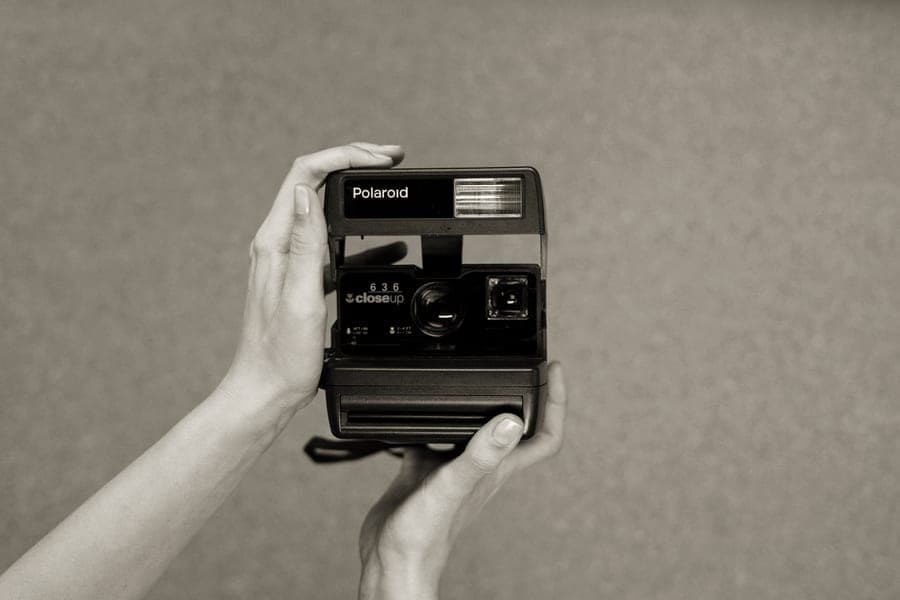
1. Scores best on the six that matter
Fujifilm instax mini 13
Cheapest film, simplest operation, and the self-timer most simple cameras lack.
- Buy it for
- Anyone applying the checklist below without a specific requirement.
- Skip it if
- Someone who needs a big print or manual exposure control.
- 85-cent film, the cheapest of the six formats.
- A 2- or 10-second self-timer — the only simple instax with one.
- Focuses to 0.3 m with Close-Up Mode, and AA batteries you can buy anywhere.
Running cost: instax mini works out at $0.85 a shot. See every format’s cost.
How it scores8.8/10 overall
- Cost per shot9
- Self-timer10
- Close focus9
- Battery convenience9
Our editorial scoring, built from published specifications and reviews by outlets that test hardware — see how we pick. We have not handled these products, so these are not test results.
#ad · we earn a commission at no extra cost to you

2. Scores best on flash and print size
Fujifilm instax WIDE 400
The only instax flash that reaches 3 m, and the only print with room for a group.
- Buy it for
- Anyone whose photographs are indoors or have several people in them.
- Skip it if
- Anyone who needs to focus closer than 0.9 m unaided, or carry it in a pocket.
- Flash effective to **3 m** rather than 2.2 m.
- A 3.9 x 2.4 inch print, about 2.2 times the area of an instax mini.
- A self-timer lever and close-up lens included in the box.
Running cost: instax WIDE works out at $1.10 a shot. See every format’s cost.
How it scores8.2/10 overall
- Flash range10
- Print size10
- Close focus4
- Portability3
Our editorial scoring, built from published specifications and reviews by outlets that test hardware — see how we pick. We have not handled these products, so these are not test results.
Engadget, which publishes hands-on reviews, calls it “simple operation”.
#ad · we earn a commission at no extra cost to you
Questions people ask
What should I look for when buying an instant camera?
Six things: the film format and its cost per shot, the print size in inches, the flash range, the minimum focusing distance, whether it has a self-timer, and the battery type. Cost per shot matters most, because it is the only one you keep paying.
What is a good instant camera?
For most people the instax mini 12 or mini 13: the cheapest film at about 85 cents a shot, two controls, a 0.3 m minimum focusing distance, and AA batteries. The mini 13 adds the self-timer. Choose the instax WIDE 400 instead if photographs need to fit a group.
Does megapixel count matter on an instant camera?
On a conventional instant camera there are no megapixels at all — the film is exposed optically, with no sensor. Only hybrid cameras like the instax mini Evo (a 1/5-inch CMOS sensor) and the Kodak Mini Shot (13MP) have a sensor, and even there the print resolution matters more than the capture.
Which instant camera specification matters most?
Cost per shot. It is the only specification you keep paying, and the spread is from about 85 cents to about $2.75 per photograph. At a hundred shots a year that gap is larger than the price difference between most cameras in the category.
How do I know an instant camera is still being made?
Check the manufacturer's own current range page — Fujifilm and Polaroid both publish one. It is worth doing, because several widely read roundups still recommend models that have been superseded, including the instax mini 11.
Read these next
Best instant cameras
The checklist applied, with named picks.

Best instant cameras for beginners
Plus the distance mistake that ruins most first packs.

Instant film types explained
Every format, which cameras take it, and what it costs.
Are instant cameras worth it?
The question before this one.
Instax vs Polaroid
The brand decision, on print size and cost.
Sources
- Fujifilm mini12 specifications (US) — Manufacturer specification page, checked 13 October 2026
- Fujifilm mini13 specifications (US) — Manufacturer specification page, checked 13 October 2026
- Fujifilm mini99 specifications (US) — Manufacturer specification page, checked 13 October 2026
- Fujifilm wide400 specifications (US) — Manufacturer specification page, checked 13 October 2026
- Fujifilm squareSQ40 specifications (US) — Manufacturer specification page, checked 13 October 2026
- Fujifilm instax camera range (US) — Current-lineup check, 13 October 2026 — confirms which models are still sold
- Pro Photo Supply — instax mini film, 20 exposures — $16.99 on 13 October 2026
- Polaroid — Color i-Type film — $18.99 for 8 photos on 13 October 2026
Found something out of date or wrong? Tell us and we will correct it with a dated note. Our picks are re-checked quarterly — see our editorial policy.