instax mini 12 vs instax mini 13
Fujifilm sells both of these at once, which is confusing, because they are very nearly the same camera. There is exactly one difference that changes what you can photograph.
Buy the instax mini 13 if the price difference is small: it has the same 60 mm lens, the same flash and the same 85-cent film as the mini 12, plus a 2 and 10 second self-timer the mini 12 does not have. Buy the mini 12 if it is clearly cheaper and nobody needs to be in the photograph.
How this page is funded. Shake & Print earns a commission when you buy through our links, at no extra cost to you. It does not change which products we pick or the order we rank them in, and we do not state prices we have not verified — the buy buttons send you to the current listing instead. Full disclosure.
| # | Product | Best for | Cost per shot | Price |
|---|---|---|---|---|
| 1 | 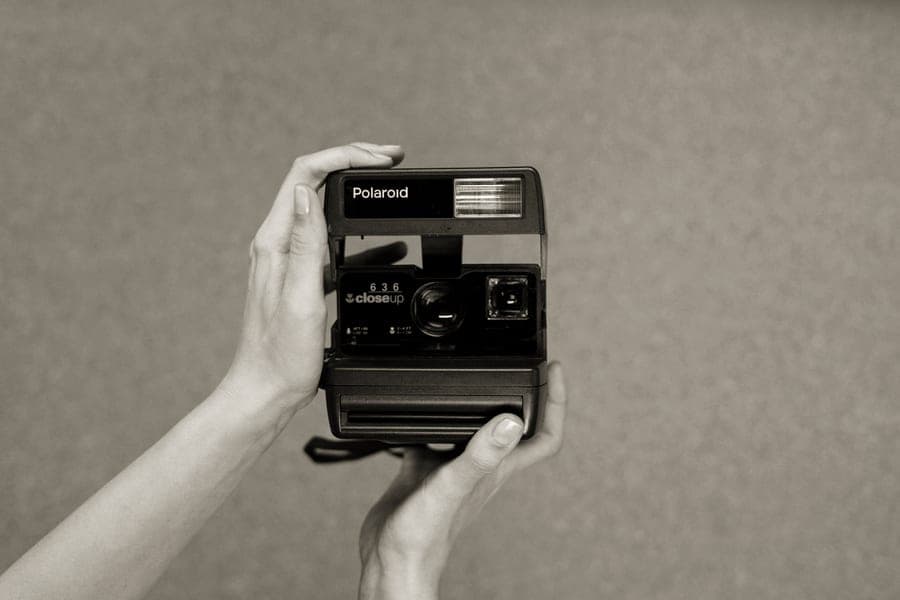 Fujifilm instax mini 13The same camera as the mini 12 with a self-timer, which is the difference between being in the photograph and not. | Best for most buyers | $0.85 | Check price |
| 2 | Fujifilm instax mini 12The same photograph for less money, as long as nobody needs to be in it. | Buy this one if it is cheaper on the day | $0.85 | Check price |
The short answer
If the two cameras are close in price, buy the mini 13 — the self-timer costs you nothing and it is the difference between a photograph of your friends and a photograph with you in it. If the mini 12 is clearly cheaper on the day you shop, buy the mini 12 and spend the difference on film, which is where the money actually goes in this category.
That is the whole decision. Everything below is the evidence for it, because this is a pair where the specification sheets look different at a glance and are not.
What is actually different
| instax mini 12 | instax mini 13 | |
|---|---|---|
| Self-timer | Not listed | Approx. 2 sec / 10 sec |
| Slow synchro | Not published on the mini 12 page | Listed: slow synchro for low light |
| Shutter speed | Not published | Programmed electronic, 1/2 to 1/250 sec |
| Viewfinder | Real image finder | Real image finder, 0.37x, with target spot |
| Weight | 306 g, bare | 327 g, with film and strap |
| Dimensions | Not compared here | 105.5 x 124.7 x 67.6 mm |
| Battery life as published | About 100 exposures per set | About 10 packs of 10 exposures per set |
Two rows there need a caveat rather than a conclusion. Fujifilm does not publish a shutter-speed figure or a slow-synchro line on the mini 12's specification page, so "not published" means exactly that — not "the camera cannot do it". We are not going to tell you the mini 12 has no slow synchro on the strength of a missing line. The self-timer is different: that one is a stated feature on one page and absent from the other, and every hands-on account of the mini 12 agrees it has none.
The self-timer is the whole decision
This sounds like a small thing and it is not, because of what these cameras are for. An instax mini is bought for occasions: a birthday, a trip, a party, a wedding table. In every one of those situations the useful photograph includes everybody, and on a camera with no self-timer somebody is always excluded — usually the person who bought it.
The mini 12 does have a selfie mirror and a Close-Up Mode, which together handle an arm's-length selfie of one or two people. That is a different photograph from a timed group shot of six people around a table. For a group you need the camera on a shelf, a stack of books or a window ledge and ten seconds to get into frame, and that is what the mini 13 adds.
On film at about 85 cents a frame this also matters for a slightly unglamorous reason: a self-timed shot you set up deliberately is more likely to work than a reached-out arm shot with half a head missing. Fewer wasted frames is money back. If group photographs are the main use, read the best instant cameras for parties too — the self-timer is one of the three things that page selects on.
What is identical
This is the longer list, and it is the reason the decision comes down to price. Both cameras share, as published by Fujifilm:
- The lens. f = 60 mm, 1:12.7, two components and two elements. Same optics, same depth of field, same look.
- The flash. Constant firing with automatic light adjustment, effective from 0.3 m to 2.2 m. Neither can light a room beyond about seven feet.
- The focus system. Fixed focus from 0.3 m to infinity, with a Close-Up Mode for 0.3 to 0.5 m and parallax correction when it is engaged.
- The exposure system. Fully automatic, Lv 5.0 to 14.5 at ISO 800. No exposure compensation on either camera.
- The film and the print. instax mini, 62 x 46 mm, about 90 seconds to develop, about 85 cents a shot.
- The power. Two AA alkaline batteries, replaceable anywhere, no charger and no cable to lose.
- The selfie mirror, which both have, next to the lens.
Because the lens and the exposure system are the same, the photographs are the same. Nobody will look at a print and tell you which of these two cameras made it.
The 21-gram weight gap is not a real gap
Fujifilm publishes 306 g for the mini 12 and 327 g for the mini 13, and it is tempting to read that as the mini 13 being heavier. It is mostly a measuring difference. The mini 12 figure is stated without batteries, strap or film; the mini 13 figure is stated without batteries but with film loaded and the strap attached. A pack of instax mini film and a strap account for most of 21 grams on their own.
We are flagging it rather than putting it in a pros-and-cons list because this is exactly the kind of row that comparison sites turn into a verdict. Both cameras weigh about 300 grams bare and about 350 grams loaded, and neither is heavy.
What neither of them does
Both cameras are deliberately simple, and the limits are identical. Neither has any manual control: no exposure compensation, no aperture choice, no focus override. Neither has a screen, so you cannot see a photograph before it costs you 85 cents. Neither prints from a phone. Neither has a tripod socket. And the flash fires on every frame on both, which is right for a party and wrong for a sunset.
If any of that is a dealbreaker, the answer is not the other one of this pair — it is a different camera. The instax mini 99 adds real manual control and exposure compensation. The instax mini Evo adds a screen, so you choose which shots to spend film on, and prints from a phone. The instax mini 41 is the same simplicity as this pair in a more grown-up body. What to look for in an instant camera walks through the whole set of trade-offs.
What they cost to run
Identically, which is one more reason the hardware price decides it. Both take instax mini film, which was $16.99 for 20 exposures when we checked — about 85 cents a shot, the cheapest film in the category and the only one widely stocked in supermarkets and pharmacies.
| Format | Print size | Pack | Pack price | Cost per shot | Checked at |
|---|---|---|---|---|---|
| instax mini | 2.4 x 1.8 in (62 x 46 mm) | 20 | $16.99 | $0.85 | Pro Photo Supply |
| instax WIDE | 3.9 x 2.4 in (99 x 62 mm) | 20 | $21.99 | $1.10 | Pro Photo Supply |
| instax SQUARE | 2.4 x 2.4 in (62 x 62 mm image on 86 x 72 mm film) | 20 | $22.99 | $1.15 | Pro Photo Supply |
| Polaroid Go | 2.6 x 2.1 in (66.6 x 53.9 mm) | 16 | $21.99 | $1.37 | Polaroid |
| Polaroid i-Type | 4.2 x 3.5 in (107 x 88 mm) | 8 | $18.99 | $2.37 | Polaroid |
On top of film, both cameras eat AA batteries rather than charging. Fujifilm quotes roughly 100 exposures per set, which is about $1 to $3 of batteries per 100 photographs depending on what you buy — small against $85 of film, but it is a shopping trip the recipient has to make. How much film do I need has the quantities for an event.
Both against the rest of the simple instax range
| Fujifilm instax mini 13 | Fujifilm instax mini 12 | Fujifilm instax mini 41 | Fujifilm instax mini 99 | |
|---|---|---|---|---|
| Film or media | instax mini | instax mini | instax mini | instax mini |
| Print size | 2.4 x 1.8 in (62 x 46 mm) | 2.4 x 1.8 in (62 x 46 mm) | 2.4 x 1.8 in (62 x 46 mm) | 2.4 x 1.8 in (62 x 46 mm) |
| Cost per shot | $0.85 | $0.85 | $0.85 | $0.85 |
| Shots per pack | 20 per $16.99 pack | 20 per $16.99 pack | 20 per $16.99 pack | 20 per $16.99 pack |
| Rough first-year cost | Hardware price not published | Hardware price not published | Hardware price not published | Hardware price not published |
| Power | Two AA batteries | Two AA batteries | Two AA batteries | Rechargeable battery (NP-70S) |
| Prints from a phone? | No | No | No | No |
| Flash | Constant firing, automatic; effective 0.3-2.2 m | Constant firing, automatic; effective 0.3-2.2 m | Constant firing, automatic; effective 0.3-2.2 m | Auto with indoor/slow-synchro, fill-in, red-eye reduction; effective 0.3-2.7 m |
| Selfie mirror | Yes | Yes | Yes | No |
| Easy for a beginner? | Very easy — effectively one button | Very easy — effectively one button | Very easy — effectively one button | Moderate — there are dials to learn |
| Best for | The current entry-level instax, and the only one of the simple minis with a self-timer — which is what makes it the one to buy for a party. | The hardest instant camera in the world to get wrong: twist the lens to turn it on, press the button, done. Still the safest gift in the category. | The mini 12 in a squarer, more grown-up body. Same pictures, same simplicity, a look that suits an adult rather than a bedroom shelf. | The one for someone who already likes photography: color-effect dial, vignette switch, double exposure, bulb mode, and a rechargeable battery. |
Which to buy
Buy the mini 13 for a household, a couple, a family or anyone who will want to be in their own photographs. The self-timer is the only reason, and it is a good one, and the rest of the camera is already the easiest instant camera to use.
Buy the mini 12 when it is clearly the cheaper of the two, when you are buying for a child who will photograph other people, or when you want to put the saving into a second pack of film — which is a better gift than a self-timer if the recipient has never used an instant camera before. Either way the print, the running cost and the experience are the same, which makes this an unusually low-stakes decision for a gift. Best instant cameras sets both against everything else, and if the 85-cent film cost is what is bothering you, the Kodak Mini Shot 2 Retro review covers the hybrid that prints for about 42 cents instead.
Questions people ask
What is the difference between the instax mini 12 and the mini 13?
The mini 13 has a self-timer of about 2 or 10 seconds and the mini 12 does not. Beyond that they share the 60 mm f/12.7 lens, the 0.3 to 2.2 m flash, automatic exposure at Lv 5.0 to 14.5, Close-Up Mode, a selfie mirror, instax mini film and two AA batteries. The photographs are identical.
Is the instax mini 13 better than the mini 12?
Slightly, and only because of the self-timer. It is the better buy when the prices are close, because a self-timer lets the person holding the camera be in the group photograph. When the mini 12 is clearly cheaper, the mini 12 is the better buy and the saving is better spent on film.
Does the instax mini 12 have a self-timer?
No. Fujifilm's specification page for the mini 12 lists no self-timer. It does have a selfie mirror and a Close-Up Mode for 0.3 to 0.5 m, which handles an arm's-length selfie but not a timed group shot.
Do the mini 12 and mini 13 use the same film?
Yes — Fujifilm instax mini film, 62 x 46 mm, in both cameras. It was $16.99 for 20 exposures when we checked, about 85 cents a shot. Film bought for one works in the other, and in every other instax mini camera.
Has the instax mini 13 replaced the mini 12?
No. Fujifilm's US camera lineup listed both as current models when we checked on 20 October 2026, alongside the mini 41, mini 99, mini Evo and mini LiPlay. They are sold side by side, which is why the price on the day is the thing to compare.
Which instax mini is best for a beginner?
Either of these two. Both have two controls — twist the lens to turn on, twist again for Close-Up Mode — fully automatic exposure and flash, and the cheapest film in the category. The mini 13 edges it on the self-timer; neither has anything a beginner has to learn.
Read these next
instax mini 12 review
The full write-up of the simpler of the two.
Best instax cameras
Every current instax model, ranked.

What instax film costs per shot
The 85-cent figure both cameras run on.
instax mini 12 vs mini 99
The same question against the instax with real controls.
Kodak Mini Shot 2 Retro review
The hybrid that prints for about 42 cents instead of 85.
Sources
- Fujifilm instax mini 13 specifications — Same 60 mm f/12.7 lens and 0.3-2.2 m flash as the mini 12, plus a 2 sec / 10 sec self-timer, a 1/2 to 1/250 sec shutter with slow synchro, 327 g, 2 x AA, 0.37x finder
- Fujifilm instax mini 12 specifications — 60 mm f/12.7 lens, flash 0.3-2.2 m, exposure Lv 5.0-14.5, 2 x AA, 306 g, no self-timer
- Fujifilm instax mini 41 specifications — Selfie mirror, same 60 mm f/12.7 lens and flash range as the mini 12
- Fujifilm instax camera range (US) — Current-lineup check, 20 October 2026: the mini 13 and the mini 12 are both listed as current models, alongside the mini 41, mini 99, mini Evo and mini LiPlay
- Pro Photo Supply — instax mini film, 20 exposures — $16.99 on 13 October 2026, the basis of the 85c-per-shot figure
- Engadget — the best instant cameras — Cited for published hands-on verdicts. We do not test hardware
Found something out of date or wrong? Tell us and we will correct it with a dated note. Our picks are re-checked quarterly — see our editorial policy.