instax mini 12 vs Polaroid Go
These are the two entry points to the category, and they are not the same purchase. One is cheap to buy and cheap to feed. The other is cheap to buy and expensive to feed.
Buy the instax mini 12 for almost any gift: its film costs about 85 cents a shot against $1.37 for Polaroid Go, and it runs on AA batteries. Choose the Polaroid Go Generation 3 only when the recipient specifically wants the white-framed Polaroid square and a camera that fits a coat pocket.

How this page is funded. Shake & Print earns a commission when you buy through our links, at no extra cost to you. It does not change which products we pick or the order we rank them in, and we do not state prices we have not verified — the buy buttons send you to the current listing instead. Full disclosure.
| # | Product | Best for | Cost per shot | Price |
|---|---|---|---|---|
| 1 | 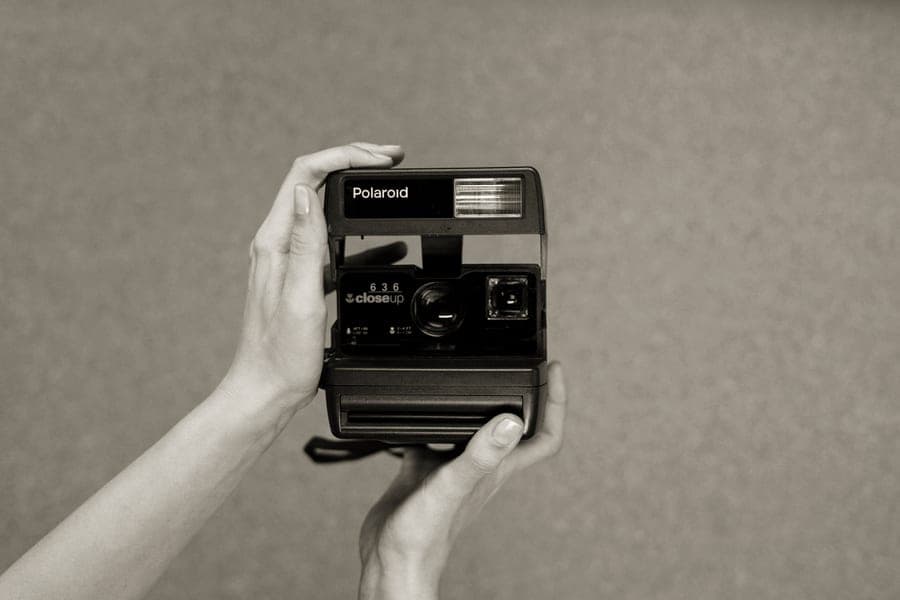 Fujifilm instax mini 12Cheaper to buy, far cheaper to run, and impossible to operate wrongly. Fujifilm instax mini 12Cheaper to buy, far cheaper to run, and impossible to operate wrongly. | Best for most gift buyers | $0.85 | Check price |
| 2 | Polaroid Go Generation 3A genuine Polaroid square, shrunk to pocket size — at the highest running cost here. | Best if it has to be a Polaroid | $1.37 | Check price |
| 3 |  Fujifilm instax mini 13The mini 12 with the one feature a party actually needs. Fujifilm instax mini 13The mini 12 with the one feature a party actually needs. | Worth the extra look: same price band, adds a self-timer | $0.85 | Check price |
The short version
Both of these are real cameras from real manufacturers whose film you can buy without hunting. Neither is a mistake. But they are optimized for different things, and the difference does not show up on the price tag — it shows up every time the recipient presses the button.
The instax mini 12 is the cheapest camera in the category to own. The Polaroid Go Generation 3 is the cheapest camera in the category to buy that still gives you a Polaroid. If the person you are buying for has said the word "Polaroid", read that literally — they want the white frame, and an instax mini will land as a near-miss.
Side by side on the things that matter
| instax mini 12 | Polaroid Go Generation 3 | |
|---|---|---|
| Print size | 2.4 x 1.8 in (62 x 46 mm) | 2.6 x 2.1 in (66.6 x 53.9 mm) |
| Image area | 62 x 46 mm | 47 x 46 mm inside a white frame |
| Cost per shot | about $0.85 | about $1.37 |
| Shots per pack | 20 | 16 |
| Power | 2 x AA alkaline | Built-in rechargeable |
| Battery life | About 100 exposures per set | Up to 15 film packs per charge |
| Self-timer | No | Yes |
| Double exposure | No | Yes |
| Selfie mirror | Yes | Yes |
| Weight | 306 g | 251.9 g |
The running cost, which is the real decision
A camera in this category is a subscription with a one-off joining fee. Film is the subscription. At 85 cents against $1.37, every ten photographs taken on the Polaroid Go cost about $5.20 more than the same ten on the instax mini 12 — and the gap compounds for as long as the camera gets used.
| Format | Print size | Pack | Pack price | Cost per shot | Checked at |
|---|---|---|---|---|---|
| instax mini | 2.4 x 1.8 in (62 x 46 mm) | 20 | $16.99 | $0.85 | Pro Photo Supply |
| Polaroid Go | 2.6 x 2.1 in (66.6 x 53.9 mm) | 16 | $21.99 | $1.37 | Polaroid |
| Camera or printer | 50 shots | 100 shots | 200 shots |
|---|---|---|---|
| Fujifilm instax mini 12Hardware price not published — film cost only | $50.973 packs of instax mini | $84.955 packs of instax mini | $169.9010 packs of instax mini |
| Polaroid Go Generation 3$89.99 listed at polaroid.com | $177.954 packs of Polaroid Go | $243.927 packs of Polaroid Go | $375.8613 packs of Polaroid Go |
That table is the argument. Over a first year of ordinary use the film bill, not the camera, decides which of these two was the cheaper gift — and it is not close. Our full breakdown of instax film costs and the same workings for Polaroid show where every figure comes from.
Print size: the thing people get wrong
On paper the Polaroid Go print is bigger — 2.6 x 2.1 inches against 2.4 x 1.8. In the hand the difference is smaller than that, because the Go print puts a thick white frame around a 47 x 46 mm image. The instax mini uses 62 x 46 mm of its slightly smaller print for the picture. So the Go gives you more paper and less photograph.
Neither is large. If print size is what you actually care about, both of these are the wrong camera and the answer is instax WIDE or a full-size Polaroid.
Batteries: the quiet reason the mini 12 wins as a gift
The mini 12 takes two AA batteries. The Polaroid Go has a built-in lithium cell charged over USB. For a gift, AA is the better property: the camera works the moment it comes out of the box if you tape a pair of batteries to it, it works again in five years when the cell in a rechargeable camera would have degraded, and it works at a party without someone finding a cable.
Who should buy which
- Buying for a child or teenager: instax mini 12. Cheaper film means more photographs, AA batteries mean no charging arguments, and the camera survives being thrown in a bag.
- Buying for an adult who asked for a Polaroid: Polaroid Go Generation 3. Nothing else in this price band produces that frame.
- Buying for a party or a wedding table: instax mini 13 instead of either, for the self-timer — or read our wedding guest book picks.
- Buying for someone who takes a lot of photographs: instax mini 12, and spend the difference on film rather than on the camera.
- Not sure the recipient will use film at all: neither. A phone printer prints the photos they already have.
What the reviewers who handle these say
We do not test hardware, so the hands-on judgments here are other people's. Engadget calls the instax mini 12 "a basic instant camera ideal for newbies that lets you get started shooting", and describes the Polaroid Go as "basic and relatively cheap, but it offers a lot". Both verdicts match the specifications: these are simple cameras that do one thing.
Questions people ask
Is the instax mini 12 or the Polaroid Go better?
For most buyers the instax mini 12, because its film costs about 85 cents a shot against $1.37 for Polaroid Go film and it runs on AA batteries. The Polaroid Go Generation 3 is the better choice only if the recipient wants the white-framed Polaroid square specifically.
Which one has the bigger print?
The Polaroid Go print is slightly bigger overall at 2.6 x 2.1 inches against 2.4 x 1.8 inches, but its image area is only 47 x 46 mm inside a thick white frame, while the instax mini uses 62 x 46 mm. The Go gives you more paper; the mini gives you more photograph.
Can the Polaroid Go use instax film?
No. The Polaroid Go takes Polaroid Go film only, and no instax camera accepts Polaroid film of any type. The formats are different sizes and are not interchangeable in either direction.
Which is cheaper to own over a year?
The instax mini 12, by a wide margin. Film is the dominant cost in this category, and at 85 cents against $1.37 a shot the instax is cheaper to feed from the first pack onward, regardless of what each camera cost to buy.
Read these next
Instax vs Polaroid
The brand-level version of this decision, across the whole range.
Polaroid Now vs Polaroid Go
If you have already settled on Polaroid, this is the next question.
instax mini 12 review
The full assessment of the camera that wins this page.
Every film format on cost
All fourteen formats in one verified table.
Sources
- Fujifilm instax mini 12 specifications — Selfie mirror, flash range 0.3-2.2 m, exposure Lv 5.0-14.5, 2 x AA power
- Fujifilm instax mini 13 specifications — The only simple mini with a self-timer (approx. 2 sec / 10 sec)
- Polaroid Go Generation 3 product page — Polaroid Go film only; double exposure and self-timer; up to 15 packs per charge
- Polaroid — Go film — $21.99 for 16 photos, image area 47 x 46 mm
- Pro Photo Supply — instax mini film, 20 exposures — $16.99 on 13 October 2026, the basis of the 85c-per-shot figure
- Polaroid — instant cameras — Current range and listed prices, 17 October 2026
- Engadget — the best instant cameras — Cited for published hands-on verdicts. We do not test hardware
Found something out of date or wrong? Tell us and we will correct it with a dated note. Our picks are re-checked quarterly — see our editorial policy.