How to store instant photos
An instant print is a sealed chemical object with dye layers inside it. Three things damage it — light, heat and being pressed face to face in a drawer — and all three are easy to avoid.
Keep instant prints out of direct sunlight, out of heat, and in sleeved pockets rather than loose or stacked. A sleeved album sized to the exact print format is the single best thing you can buy for them; for anything on display, use a UV-protective frame, because sunlight is what actually fades instant film dyes.
How this page is funded. Shake & Print earns a commission when you buy through our links, at no extra cost to you. It does not change which products we pick or the order we rank them in, and we do not state prices we have not verified — the buy buttons send you to the current listing instead. Full disclosure.
What actually damages an instant print
Light. This is the big one. The dyes in an instant print are more fragile than those in a laboratory print, and ultraviolet light breaks them down. A print taped to a sunny window will visibly lose colour inside a year. It is why Polaroid sells UV-glazed frames rather than treating glazing as a luxury.
Heat. The same advice manufacturers give about storing unexposed film applies to finished prints: keep them away from heat. A print left on a radiator shelf or in a car ages far faster than one in a drawer.
Pressure and contact. Instant prints have a smooth coated surface, and a stack of them pressed together — especially in a warm room — can stick face to face. Pulling two apart takes the image with it. This is the failure that destroys prints most often, and a sleeved album prevents it completely.
What to look for in storage
- Pocket size in inches or millimetres. This is the only specification that matters and the one listings obscure. An instax mini print is 2.4 x 1.8 in; a full-size Polaroid is 4.2 x 3.5 in; a Polaroid Go is 2.6 x 2.1 in; a 4 x 6 print is 4 x 6.
- Sleeved, not adhesive. Sleeves let you reorder the album later and do not bond to the print surface. Adhesive pages are permanent in the bad sense.
- UV glazing for anything framed. Plain acrylic looks identical and does nothing for fading.
- Somewhere it will actually be seen. A print in a box is a print nobody looks at. A coffee-table album is a worse archive and a better object.
- Write on the back, in pencil. Dates and names are what make a print worth keeping in ten years. Pencil on the white border, not ballpoint pressed hard into the image area.
Match the storage to the format
| Size | What fits it | |
|---|---|---|
| instax mini | 2.4 x 1.8 in (62 x 46 mm) | Sleeved mini album, 64-108 pockets |
| 2 x 3 in ZINK / Polaroid Hi-Print | 2 x 3 in | The same mini album sleeves |
| instax SQUARE | 86 x 72 mm film, 62 x 62 mm picture | Square-pocket album |
| instax WIDE | 3.9 x 2.4 in (99 x 62 mm) | Wide-pocket album |
| Polaroid Go | 2.6 x 2.1 in | Go pocket album, 36 photos |
| Polaroid i-Type / 600 / SX-70 | 4.2 x 3.5 in (107 x 88 mm) | Polaroid large album, 160 photos |
| 4 x 6 dock print | 4 x 6 in | 4 x 6 sleeved album |
The two rows worth noticing are the small formats sharing a sleeve size, and the Polaroid Go not fitting the Polaroid large album — Polaroid states that limitation on the product itself. Our album roundup goes through the options format by format.
What to buy, by format
1. Best for instax mini prints
instax mini pocket album
Sleeved pockets sized to the 2.4 x 1.8 inch print, usually 64 to 108 of them.
- Buy it for
- Anyone with a drawer of instax mini, 2 x 3 inch ZINK or Polaroid Hi-Print prints.
- Skip it if
- Full-size Polaroid prints, which are far too large for these pockets.
- Sleeves stop prints touching each other, which is what causes the surfaces to stick in a stack.
- Fits instax mini, 2 x 3 inch ZINK and Polaroid Hi-Print prints — the three small formats share a size.
- Typically 64 to 108 pockets, so one album holds several packs of film.
- Buy by pocket size in inches, never by a listing that says only "fits Polaroid".
How it scores8.4/10 overall
- Protection9
- Right size9
- Gets looked at7
Our editorial scoring, built from published specifications and reviews by outlets that test hardware — see how we pick. We have not handled these products, so these are not test results.
#ad · we earn a commission at no extra cost to you
2. Best for full-size Polaroid prints
Polaroid Photo Album Large
160 i-Type, 600 or SX-70 prints, four to a page, in Polaroid's own album.
- Buy it for
- Owners of a Polaroid Now, Flip or any vintage full-size camera.
- Skip it if
- Polaroid Go prints, which Polaroid explicitly says this album does not fit.
- Holds 160 full-size Polaroid prints at 4 per page, in a 213 x 243 mm book.
- Sized by the manufacturer to the i-Type, 600 and SX-70 print, so nothing slides or creases.
- Listed at $22.99 on polaroid.com, which is less than two packs of i-Type film.
How it scores8.6/10 overall
- Protection9
- Right size10
- Gets looked at7
Our editorial scoring, built from published specifications and reviews by outlets that test hardware — see how we pick. We have not handled these products, so these are not test results.
#ad · we earn a commission at no extra cost to you
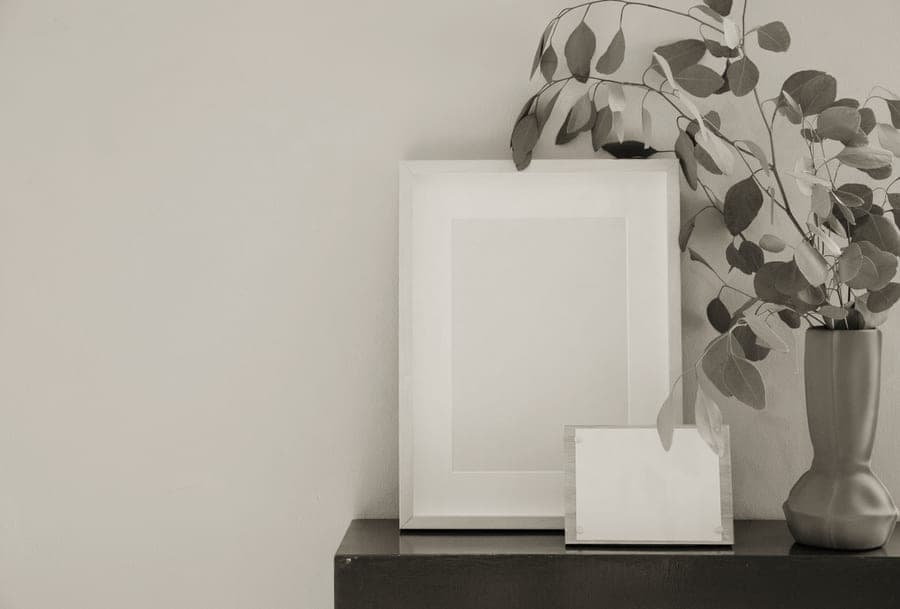
3. Best for anything on display
Polaroid acrylic and UV photo frames
UV-protective glazing is the only thing that slows fading on a wall.
- Buy it for
- Anyone putting a print somewhere it can be seen, which is most people.
- Skip it if
- Bulk storage. Frames are for the few prints that earn a wall.
- Instant prints fade in direct sunlight, and UV-protective glazing is what slows that down.
- Sized to the print rather than cropping it, and sold in singles and three-packs.
- A Go-specific multiframe is sold separately, because the Go print is a different size.
How it scores8.8/10 overall
- Protection8
- Right size9
- Gets looked at10
Our editorial scoring, built from published specifications and reviews by outlets that test hardware — see how we pick. We have not handled these products, so these are not test results.
#ad · we earn a commission at no extra cost to you
4. Best for prints from a 4 x 6 printer
4 x 6 pocket photo album
Cheap, sleeved, boring, and the right home for dye-sublimation prints.
- Buy it for
- Anyone printing on a Canon SELPHY or a Kodak Dock at 4 x 6.
- Skip it if
- Instant film, which is a different size entirely.
- Sized to the 4 x 6 inch print that both common dock printers produce.
- Sleeved versions survive children; adhesive-page versions do not survive being reorganised.
- At about 39 to 40 cents a print, a 200-photo album is often cheaper than the prints inside it.
How it scores8.0/10 overall
- Protection8
- Right size9
- Gets looked at7
Our editorial scoring, built from published specifications and reviews by outlets that test hardware — see how we pick. We have not handled these products, so these are not test results.
#ad · we earn a commission at no extra cost to you
Two mistakes worth naming
The first is the laminating pouch. People laminate instant prints to protect them, and it destroys them: an instant print is a sealed unit containing moisture and chemistry, and heat laminating can blister it. If a print needs to survive handling, sleeve it.
The second is the rubber band. A bundled stack of prints under tension, left in a warm drawer, is the exact recipe for prints bonding face to face. If you are moving prints around, a rigid box with dividers costs almost nothing and does not press them together.
If the prints in question came from a printer rather than a camera, you have more latitude: 4PASS and dye-sublimation prints carry a laminate layer from the factory and are dry and water resistant on exit, which is one of the quieter advantages of printing rather than shooting film.
Questions people ask
How should I store instant photos?
In sleeved album pockets sized to the exact print format, kept out of direct sunlight and away from heat. Never store prints stacked loose or under a rubber band, because the coated surfaces can bond face to face and pulling them apart destroys the image.
Do instant photos fade?
Yes, mainly from light. Ultraviolet light breaks down the dyes in an instant print, so anything on display should sit behind UV-protective glazing. Kept in an album away from sunlight and heat, a modern instant print lasts for decades.
Can you laminate an instant photo?
No. An instant print is a sealed chemical unit containing moisture, and heat laminating can blister or ruin it. Use a sleeved pocket or a frame instead if the print needs protecting.
What album fits instax mini photos?
A sleeved album with pockets sized for the 2.4 x 1.8 inch print, typically sold with 64 to 108 pockets. The same pockets fit 2 x 3 inch ZINK and Polaroid Hi-Print prints. Buy by pocket dimension, not by a listing that says only that it fits Polaroid.
Read these next
Best instax photo albums
The right pocket size for every format.
Photo display and frames
Getting prints onto a wall without fading them.
Polaroid scrapbook ideas
What to do with prints beyond an album.

How long does instant film last?
The same care, applied to the film before you shoot it.
Sources
- Polaroid — albums, frames and accessories — Album and frame range with listed prices, 17 October 2026
- Polaroid support — How should I store Polaroid film? — Polaroid's own guidance: store sealed packs flat in a fridge at a constant 4-18 C / 41-65 F, never freeze, and allow at least 1 hour to return to ambient temperature before shooting
- Fujifilm instax WIDE 400 user's guide (PDF) — Fujifilm's own film handling instructions: keep film cool, never leave it in a closed car, let film reach normal temperature before shooting, use before the expiration date, and use a loaded pack as soon as possible
- Fujifilm instax mini 12 specifications — Selfie mirror, flash range 0.3-2.2 m, exposure Lv 5.0-14.5, 2 x AA power
- Polaroid — Go film — $21.99 for 16 photos, image area 47 x 46 mm
- Kodak — 4PASS cartridges — $24.99 for 60 prints (2.1x3.4 and 3x3), $31.99 for 80 prints (4x6), 13 October 2026
Found something out of date or wrong? Tell us and we will correct it with a dated note. Our picks are re-checked quarterly — see our editorial policy.