How to use an instant camera
There are five things to know, and four of them are the reasons first photographs come out badly. None of them takes more than a minute to learn, and each one saves 85 cents a time.
Load the film pack with the yellow or coloured marks aligned, then fire once to eject the dark slide — that first ejection is not a wasted photo. Keep subjects between about 0.5 and 2.2 m so the flash reaches them, switch on close-up mode for anything nearer than 0.5 m, and let each print develop face-down and out of the light.
How this page is funded. Shake & Print earns a commission when you buy through our links, at no extra cost to you. It does not change which products we pick or the order we rank them in, and we do not state prices we have not verified — the buy buttons send you to the current listing instead. Full disclosure.
1. Loading the film
Every instant camera loads the same way in principle: open the film door, slide the pack in with the marks aligned, close the door. On an instax the pack has a yellow or coloured index mark that lines up with a matching mark inside the camera; on a Polaroid the pack only fits one way round. Do not force a pack that resists — a pack that will not seat is almost always the wrong format for the camera.
Load in subdued light rather than bright sunshine, and do not open the door again until the frame counter reads zero. Opening a loaded camera exposes the remaining sheets and ruins them.
2. The dark slide is not a wasted photo
The first thing that comes out of the camera after loading is a plain black sheet. That is the dark slide, and its job was to protect the pack from light. Everybody who has not been told this thinks the camera has just wasted 85 cents.
So: close the door, point the camera at nothing in particular, and fire once. The dark slide ejects, the counter drops to the full pack count, and the next press is your first real photograph.
3. Distance, which is what ruins most first photos
This is the single most useful thing on this page. A simple instant camera has a fixed-focus lens and a flash with a published effective range — on an instax mini 12, mini 13 or mini 41 that range is 0.3 to 2.2 m. Inside it, people are lit. Outside it, they are dark. There is no in-between and no automatic compensation.
- Nearer than 0.5 m: switch on close-up mode, or the face comes back soft. On a mini 12 or mini 41 that is a twist of the lens ring; the SQ40 calls it selfie mode.
- 0.5 to 2.2 m: the sweet spot. Almost every good instant photograph of a person is taken here.
- Beyond 2.2 m: the flash does not reach. The subject will be dark, however bright the room looks to you.
- Across a room or a dance floor: do not. Walk closer. This is the fix for nine out of ten disappointing instant photos.
The instax WIDE 400 is the exception worth knowing: its flash is effective from 0.9 to 3 m and it has a manual two-range focus switch, because it is built for groups rather than faces.
4. Light, and where to stand
Put the light behind the camera, not behind the subject. Shooting someone in front of a window gives you a silhouette, because the camera meters for the bright background. Outdoors on a grey day is close to ideal. Direct midday sun is harsher than it looks and bleaches faces.
Indoors, a pale wall behind your subject bounces the flash and keeps the photograph from looking like a face floating in a void. A dark wall absorbs it and gives you the black background everybody complains about. Our low-light page goes into why.
5. Developing the print
Do not shake it. The shaking habit comes from a 1960s Polaroid process that no longer exists, and on modern film it can cause blotches. What actually matters is light and temperature: lay the print face-down somewhere out of direct light for a minute or two, and keep it at a reasonable temperature while it develops. Cold film develops unevenly and prints blue.
Instax mini takes about 90 seconds to develop fully; Polaroid film takes longer, up to 15 minutes to reach final colour. Resist judging a Polaroid at 30 seconds — it is not finished.
Cameras that are easy to learn on
1. Easiest camera to learn on
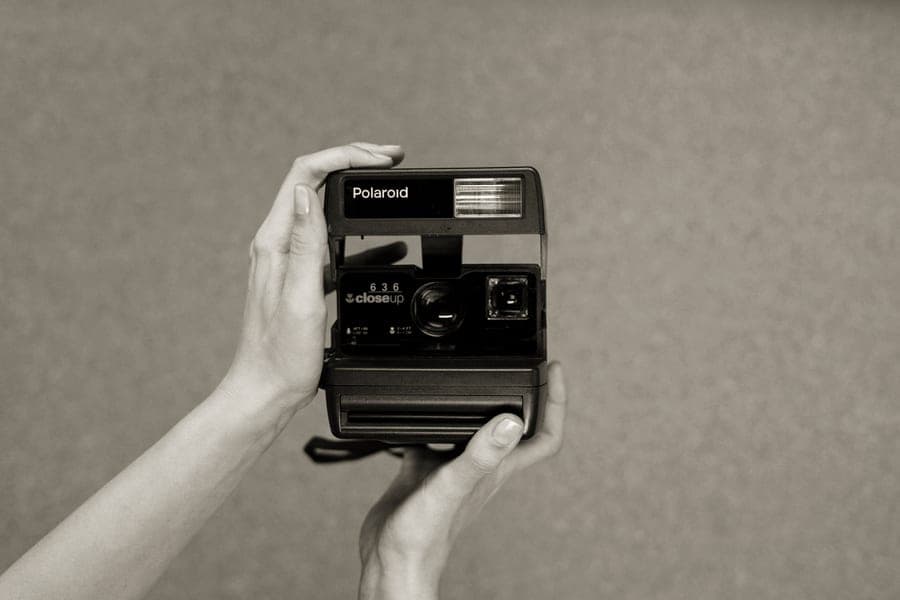
Fujifilm instax mini 12
Twist the lens to switch on, press the button. There is almost nothing to teach.
- Buy it for
- A complete beginner of any age, and anyone buying for one.
- Skip it if
- Somebody who wants to control the exposure. There is no control to reach for.
- Automatic exposure from Lv 5.0 to 14.5 — the camera makes every decision except framing.
- Close-Up Mode is a twist of the lens barrel, which is as simple as that setting ever gets.
- Two AA batteries, good for about 100 exposures, so no charging step before first use.
- Film at about 85 cents a shot, which makes learning affordable.
Running cost: instax mini works out at $0.85 a shot. See every format’s cost.
How it scores9.0/10 overall
- Easy to learn10
- Forgiving8
- Cost of mistakes9
Our editorial scoring, built from published specifications and reviews by outlets that test hardware — see how we pick. We have not handled these products, so these are not test results.
Engadget, which publishes hands-on reviews, calls it “a basic instant camera ideal for newbies that lets you get started shooting”.
#ad · we earn a commission at no extra cost to you
2. Best for learning with other people in the photo
Fujifilm instax mini 13
The same simplicity, plus the self-timer the mini 12 does not have.
- Buy it for
- Anyone who will be in the photographs rather than behind the camera.
- Skip it if
- A buyer who wants the absolute cheapest instax body.
- A 2 or 10 second self-timer, so a group shot does not need a volunteer.
- Identical film, print and 85-cent running cost as the mini 12.
- Flash effective 0.3 to 2.2 m, with constant automatic firing — nothing to set.
Running cost: instax mini works out at $0.85 a shot. See every format’s cost.
How it scores8.9/10 overall
- Easy to learn10
- Forgiving8
- Cost of mistakes9
Our editorial scoring, built from published specifications and reviews by outlets that test hardware — see how we pick. We have not handled these products, so these are not test results.
#ad · we earn a commission at no extra cost to you
3. The camera that removes the learning curve entirely
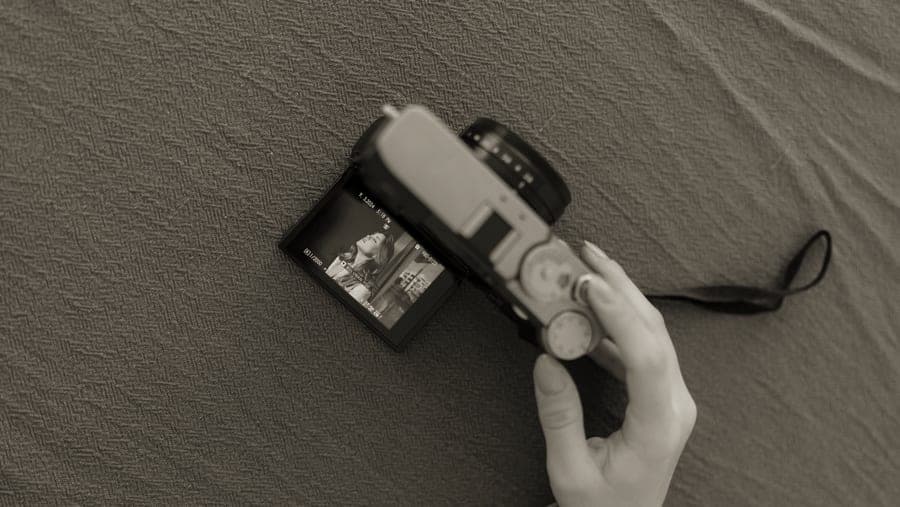
Fujifilm instax mini Evo
A screen means a bad frame costs nothing — you simply do not print it.
- Buy it for
- Someone who would rather see the photograph before paying for it.
- Skip it if
- A buyer who wants the gift to feel like a film camera.
- A 3.0 inch screen shows the shot before any film is used.
- An f/2.0 autofocus lens, so the two commonest beginner failures — focus and low light — mostly disappear.
- Prints phone photographs too, over Bluetooth.
- Approximately 100 prints per charge, and about 16 seconds a print.
Running cost: instax mini works out at $0.85 a shot. See every format’s cost.
How it scores9.1/10 overall
- Easy to learn8
- Forgiving10
- Cost of mistakes10
Our editorial scoring, built from published specifications and reviews by outlets that test hardware — see how we pick. We have not handled these products, so these are not test results.
Engadget, which publishes hands-on reviews, calls it “marries the vintage charm of instant photography with digital shooting”.
#ad · we earn a commission at no extra cost to you
What not to worry about
- Settings. On a simple instax there are none beyond close-up mode. If you are hunting for an exposure control, you have the wrong camera — that is the mini 99.
- Running out of battery. AA cells last about 100 exposures, which is five packs of film.
- Which film to buy. It is named on the camera. Which instax film do I need has the full lookup.
- Storing the camera loaded. Do finish the pack first, though — both manufacturers say to use a loaded pack promptly.
Questions people ask
How do you use an instant camera for the first time?
Load the film pack with the coloured index marks aligned and close the door, then fire once to eject the black dark slide — that is not a wasted photo. Then photograph people between about 0.5 and 2.2 m away, with the light behind you, and let each print develop face-down out of direct light.
Why is the first photo from my instant camera black?
It is the dark slide, a plain black sheet that protected the film pack from light before you loaded it. Every pack has one, it ejects on the first press of the shutter, and it does not count against your exposures.
Should you shake an instant photo?
No. That habit comes from an obsolete 1960s Polaroid process, and on modern film shaking can cause blotches. Lay the print face-down out of direct light and let it develop — about 90 seconds for instax mini, up to 15 minutes for Polaroid film to reach final colour.
How close can you be to the subject with an instant camera?
On a simple instax mini, 0.3 m is the minimum and anything nearer than 0.5 m needs close-up mode switched on, or the picture prints soft. The flash is effective to about 2.2 m, so subjects further away than that will come out dark.
Read these next
Best instant cameras for beginners
Which camera to learn on in the first place.
What to look for in an instant camera
The buying criteria behind these picks.

Which instax film do I need?
The camera-by-camera film lookup.
Are instant cameras worth it?
The honest running-cost answer before you commit.
Sources
- Fujifilm instax mini 12 specifications — Selfie mirror, flash range 0.3-2.2 m, exposure Lv 5.0-14.5, 2 x AA power
- Fujifilm instax mini 13 specifications — The only simple mini with a self-timer (approx. 2 sec / 10 sec)
- Fujifilm instax mini 41 specifications — Selfie mirror, same 60 mm f/12.7 lens and flash range as the mini 12
- Fujifilm instax WIDE 400 specifications — Flash effective 0.9-3 m, exposure Lv 10.5-15, 4 x AA power
- Fujifilm instax SQUARE SQ40 specifications — Selfie mode 0.3-0.5 m, slow-synchro shutter from 1/2 sec, exposure Lv 5.0-15.5
- Fujifilm instax mini Evo specifications — 3.0 in LCD, f/2.0 lens, Bluetooth phone printing, approx. 45 images internal storage
- Fujifilm instax WIDE 400 user's guide (PDF) — Fujifilm's own film handling instructions: keep film cool, never leave it in a closed car, let film reach normal temperature before shooting, use before the expiration date, and use a loaded pack as soon as possible
- Polaroid — Color i-Type film — $18.99 for 8 photos, image area 79 x 77 mm, ASA 640
Found something out of date or wrong? Tell us and we will correct it with a dated note. Our picks are re-checked quarterly — see our editorial policy.