Polaroid i-Type vs 600 film
These two films produce an identical photograph at an identical size. One of them contains a battery you are paying for and may not need — which is the whole decision.
Buy i-Type film if you own a modern Polaroid such as the Now Generation 3 or the Flip: it has no battery in the pack, so it costs less — $18.99 for 8 against $20.99. Buy 600 film if your camera is a vintage Polaroid with no internal battery, because the pack's battery is what powers it.
How this page is funded. Shake & Print earns a commission when you buy through our links, at no extra cost to you. It does not change which products we pick or the order we rank them in, and we do not state prices we have not verified — the buy buttons send you to the current listing instead. Full disclosure.
What is actually different
One thing: the battery. A 600 film pack contains a thin flat battery, because the cameras it was designed for — the Polaroid 600 series of the 1980s and 1990s — have no power source of their own. Everything those cameras do, including firing the flash and driving the ejection motor, runs off the battery in the film pack you just loaded.
i-Type film does not have that battery, because every camera designed for it has its own rechargeable cell. Removing the battery is why i-Type is cheaper: $18.99 for 8 photos against $20.99 for the same 8 photos in 600 format.
Beyond that, the two are the same product. Same 4.2 x 3.5 inch print, same 79 x 77 mm image area, same ASA 640 speed, same white frame, same development behaviour. A photograph taken on i-Type and the same photograph taken on 600 are indistinguishable.
Which one your camera needs
| Camera | i-Type | 600 | SX-70 | Go |
|---|---|---|---|---|
| Polaroid Now Generation 3 | Yes, buy this | Works, costs more | No | No |
| Polaroid Flip | Yes, buy this | Works, costs more | No | No |
| Polaroid Go Generation 3 | No | No | No | Yes, Go film only |
| Vintage Polaroid 600 series | No — no battery in the pack | Yes, buy this | No | No |
| Vintage Polaroid SX-70 | No | Only with a filter | Yes, buy this | No |
The rule that covers almost every case: if the camera charges over USB, buy i-Type. If the camera has no charging port at all, buy 600. If it says Go on it, buy Go film and nothing else.
What each costs per shot
| Format | Print size | Pack | Pack price | Cost per shot | Checked at |
|---|---|---|---|---|---|
| Polaroid Go | 2.6 x 2.1 in (66.6 x 53.9 mm) | 16 | $21.99 | $1.37 | Polaroid |
| Polaroid i-Type | 4.2 x 3.5 in (107 x 88 mm) | 8 | $18.99 | $2.37 | Polaroid |
| Polaroid 600 | 4.2 x 3.5 in (107 x 88 mm) | 8 | $20.99 | $2.62 | Polaroid |
| Polaroid SX-70 | 4.2 x 3.5 in (107 x 88 mm) | 8 | $21.99 | $2.75 | Polaroid |
These are the highest per-shot figures of any format on this site, and that is the real context for an i-Type against 600 decision: the 25-cent saving is worth taking, but neither film is cheap. Why Polaroid film costs what it does explains the manufacturing reason, and the cheapest instant film ranks the alternatives.
Where SX-70 film fits in
SX-70 film is the third full-size option and it is a different beast: ASA 160 rather than 640, so it is roughly two stops slower and needs far more light. It exists for the original SX-70 folding cameras, which were built around that sensitivity. At $21.99 for 8 photos it is also the most expensive film per shot we have verified anywhere, at about $2.75.
Unless you specifically own an SX-70, this is not your film. Putting it in a 600-series camera without a filter gives badly underexposed photographs, because the camera expects film four times as fast.
The cameras in question
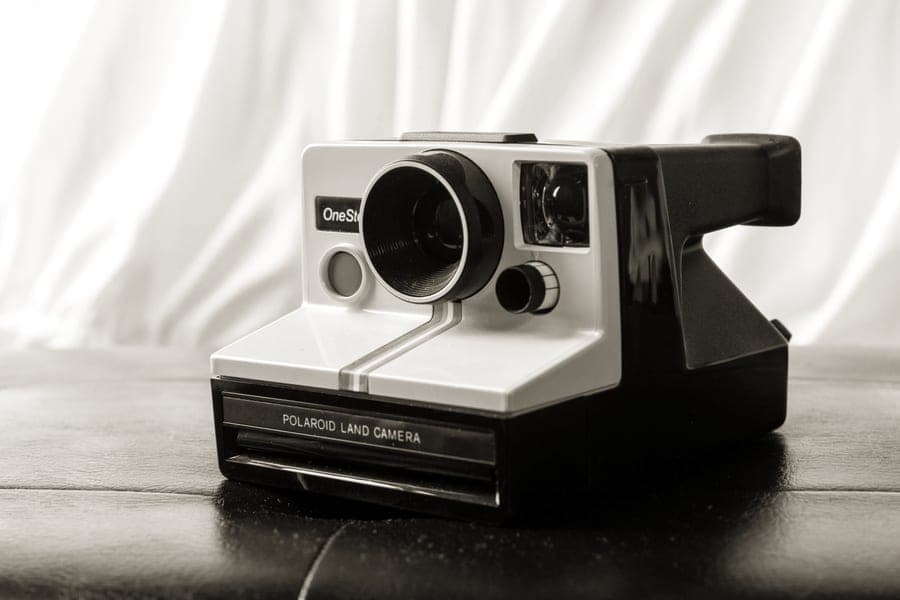
1. Takes either — buy i-Type
Polaroid Now Generation 3
A rechargeable camera, so the battery in a 600 pack is money wasted.
- Buy it for
- Anyone buying film for a modern Polaroid camera.
- Skip it if
- A vintage camera owner; this is the wrong film for a battery-less body.
- Accepts both i-Type and 600, and charges over USB-C, so it needs no power from the film.
- i-Type is $18.99 for 8 photos — about $2.37 a shot — against $20.99 for 600 film at about $2.62.
- The print is identical either way: 4.2 x 3.5 inches with a 79 x 77 mm image area.
Running cost: Polaroid i-Type works out at $2.37 a shot, so a hundred photographs in the first year puts the real total at about $366.86 including the camera. See every format’s cost.
How it scores8.0/10 overall
- Right film choice10
- Cost per shot4
- Print size10
Our editorial scoring, built from published specifications and reviews by outlets that test hardware — see how we pick. We have not handled these products, so these are not test results.
#ad · we earn a commission at no extra cost to you
2. Also takes either — still buy i-Type
Polaroid Flip
Polaroid's most capable camera, and another USB-C body that needs no film battery.
- Buy it for
- Someone who already owns a Flip and wants the cheaper of the two compatible films.
- Skip it if
- A budget buyer. This is the most expensive camera and film combination on the site.
- Takes i-Type and 600; sonar autofocus with a four-lens system and Polaroid's most powerful flash.
- Saves about 25 cents a shot by using i-Type rather than 600 film.
- Same 4.2 x 3.5 inch print as every full-size Polaroid.
Running cost: Polaroid i-Type works out at $2.37 a shot, so a hundred photographs in the first year puts the real total at about $466.86 including the camera. See every format’s cost.
How it scores7.4/10 overall
- Right film choice10
- Cost per shot3
- Print size10
Our editorial scoring, built from published specifications and reviews by outlets that test hardware — see how we pick. We have not handled these products, so these are not test results.
Engadget, which publishes hands-on reviews, calls it “most advanced modern instant camera to date”.
#ad · we earn a commission at no extra cost to you

3. Takes neither — it needs Go film
Polaroid Go Generation 3
The one Polaroid that is not part of this question at all.
- Buy it for
- Worth knowing if you are buying film for somebody else's Polaroid and have not seen it.
- Skip it if
- Anyone who wanted the big print. Go film is 2.6 x 2.1 inches.
- Polaroid Go takes Polaroid Go film only — a smaller 66.6 x 53.9 mm print with a 47 x 46 mm image.
- Go film is $21.99 for 16, about $1.37 a shot, the cheapest Polaroid film per frame.
- Buying i-Type or 600 for a Go is the most common Polaroid film mistake there is.
Running cost: Polaroid Go works out at $1.37 a shot, so a hundred photographs in the first year puts the real total at about $243.92 including the camera. See every format’s cost.
How it scores7.6/10 overall
- Right film choice10
- Cost per shot6
- Print size6
Our editorial scoring, built from published specifications and reviews by outlets that test hardware — see how we pick. We have not handled these products, so these are not test results.
Engadget, which publishes hands-on reviews, calls it “basic and relatively cheap, but it offers a lot”.
#ad · we earn a commission at no extra cost to you
Is it ever worth buying 600 for a modern camera?
Only one case: availability. 600 film is sometimes on a shelf when i-Type is not, and a modern Polaroid will shoot it happily. You pay about 25 cents a frame for the privilege of a battery your camera ignores. That is a reasonable trade for a pack you need today and a bad habit as a default.
Questions people ask
What is the difference between Polaroid i-Type and 600 film?
The battery. A 600 pack contains a battery to power vintage cameras that have none of their own; i-Type packs do not, which is why i-Type is cheaper at $18.99 for 8 photos against $20.99. The photograph itself is identical: 4.2 x 3.5 inches with a 79 x 77 mm image.
Can I use 600 film in a Polaroid Now?
Yes. The Polaroid Now Generation 3 accepts both i-Type and 600 film. It charges over USB-C, so the battery in a 600 pack does nothing for it — you are paying about 25 cents a shot more for no benefit. Buy i-Type unless 600 is all you can find.
Can I use i-Type film in a vintage Polaroid 600 camera?
No. A vintage 600-series camera has no internal battery and draws its power from the film pack, so an i-Type pack leaves it dead. Those cameras need 600 film specifically.
Which Polaroid film is cheapest?
Polaroid Go film, at $21.99 for 16 photos — about $1.37 a shot — but it only fits the Polaroid Go. Among full-size films, i-Type is cheapest at about $2.37 a shot, then 600 at about $2.62 and SX-70 at about $2.75.
Read these next
What Polaroid film costs per shot
Every Polaroid format with the workings shown.

Why Polaroid film is so expensive
Three real reasons, and whether it will change.
Polaroid Now vs Polaroid Go
The camera decision behind the film decision.

Instant film types explained
All fourteen formats, including instax and printer media.
Sources
- Polaroid — Color i-Type film — $18.99 for 8 photos, image area 79 x 77 mm, ASA 640
- Polaroid — Color 600 film — $20.99 for 8 photos, ASA 640, for cameras with no internal battery
- Polaroid — Color SX-70 film — $21.99 for 8 photos, ASA 160
- Polaroid — Go film — $21.99 for 16 photos, image area 47 x 46 mm
- Polaroid — all instant film — Current film range and pack prices, 17 October 2026
- Polaroid Now Generation 3 specifications via Glazer's Camera — Takes Polaroid i-Type and 600 film; two-lens autofocus; Polaroid's own Gen 3 page was unreachable
- Polaroid — instant cameras — Current range and listed prices, 17 October 2026
Found something out of date or wrong? Tell us and we will correct it with a dated note. Our picks are re-checked quarterly — see our editorial policy.