Do instant cameras need ink?
It is the most reasonable question in the category and the answer is no — but what these machines do consume is more expensive than ink, which is the part worth understanding before you buy one.
No instant camera needs ink. An instax or Polaroid photograph develops from chemistry sealed inside the film sheet itself, so the only consumable is film. Pocket printers do not use ink either: ZINK paper carries the color inside it, and Kodak and Canon printers use an all-in-one cartridge of paper plus a dye ribbon.

How this page is funded. Shake & Print earns a commission when you buy through our links, at no extra cost to you. It does not change which products we pick or the order we rank them in, and we do not state prices we have not verified — the buy buttons send you to the current listing instead. Full disclosure.
The short answer, and why the question comes up
No instant camera has ever needed ink. The question comes up because these machines produce a printed photograph, and every other machine in a household that produces a printed anything runs on ink. It is a fair inference from a very different technology.
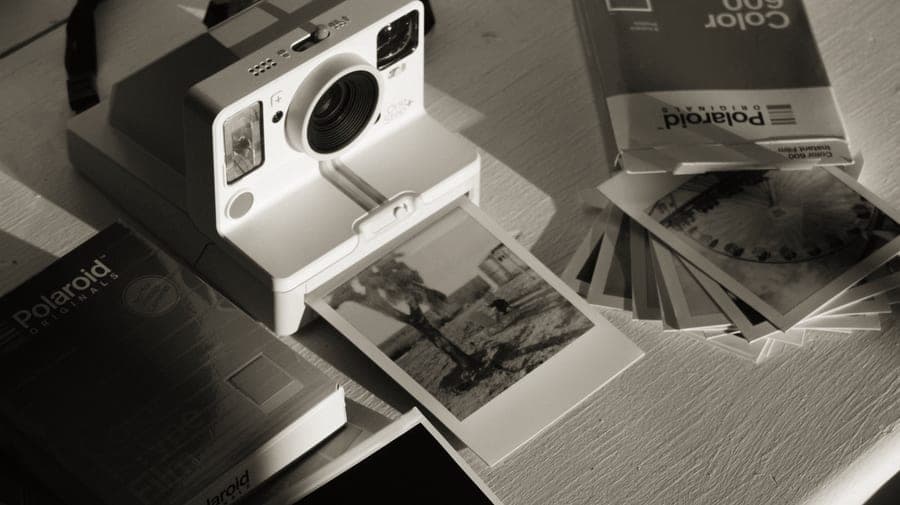
An instant film sheet is a sealed sandwich. It contains the light-sensitive layers, the dyes, and a pouch of developer paste along one edge — the thick white border everybody recognizes. When the camera ejects the sheet it squeezes it between rollers, which bursts the pouch and spreads the paste evenly across the image. The photograph then develops in your hand over the next minute or so. All of the chemistry you are paying for is inside that one sheet, which is why film is expensive and why there is nothing else to refill.
What each type of machine actually consumes
| Type | Example | Consumable | Ink? |
|---|---|---|---|
| Instant film camera | instax mini 12, Polaroid Now Generation 3 | Film sheets with developer paste inside | No |
| Hybrid instant camera | instax mini Evo | instax mini film | No |
| ZINK printer | HP Sprocket, Canon IVY 2 Mini | ZINK paper; dye crystals are inside the paper | No, zero ink |
| 4PASS printer | Kodak Mini 2 Retro, Kodak Dock Plus Retro | All-in-one cartridge: paper plus dye ribbon | No, a ribbon |
| Dye-sublimation printer | Canon SELPHY CP1500, Polaroid Hi-Print | Ink and paper set: ribbon plus matched paper | A ribbon, not liquid ink |
| Office inkjet, for contrast | A household all-in-one | Liquid ink cartridges plus photo paper | Yes |
The practical difference is that nothing in this category can dry out, clog or need head cleaning. A pocket printer left in a drawer for a year works when you take it out. An inkjet left in a drawer for a year usually does not. That is a real advantage of the whole category and nobody mentions it.
What it costs instead
This is the part that matters more than the ink question. Instant film is the most expensive consumable per photograph of anything here, and printer media is the cheapest.
| Format | Print size | Pack | Pack price | Cost per shot | Checked at |
|---|---|---|---|---|---|
| Canon SELPHY 4 x 6 (KP-108IN) | 4 x 6 in | 108 | $41.99 | $0.39 | Pro Photo Supply |
| Kodak 4PASS 2.1 x 3.4 | 2.1 x 3.4 in | 60 | $24.99 | $0.42 | Kodak Photo Printer store |
| ZINK 2 x 3 | 2 x 3 in | 20 | $11.99 | $0.60 | ProCam |
| instax mini | 2.4 x 1.8 in (62 x 46 mm) | 20 | $16.99 | $0.85 | Pro Photo Supply |
| Polaroid i-Type | 4.2 x 3.5 in (107 x 88 mm) | 8 | $18.99 | $2.37 | Polaroid |
A Polaroid i-Type frame at about $2.37 costs roughly six times a 4PASS print at about 42 cents. That gap is not a quality difference in any simple sense — it is the price of putting the entire developing process inside each sheet. Our full cost comparison ranks all fourteen formats.
What to look for when the consumable is the real cost
- Is the media an all-in-one pack? Kodak 4PASS and Canon SELPHY sets pair paper and ribbon, so you cannot buy a mismatched refill.
- Can you buy it locally? instax mini film is in supermarkets and pharmacies. A 3 x 3 inch 4PASS cartridge usually is not.
- How many photos per pack? 8 for Polaroid i-Type, 20 for instax mini, 60 for a Kodak cartridge, 108 for a SELPHY set.
- Does the media expire? Instant film does and printer media effectively does not — see how long instant film lasts.
- Does the camera let you not print? A screen is the only consumable-saving feature in the category.
Three machines that show the three answers
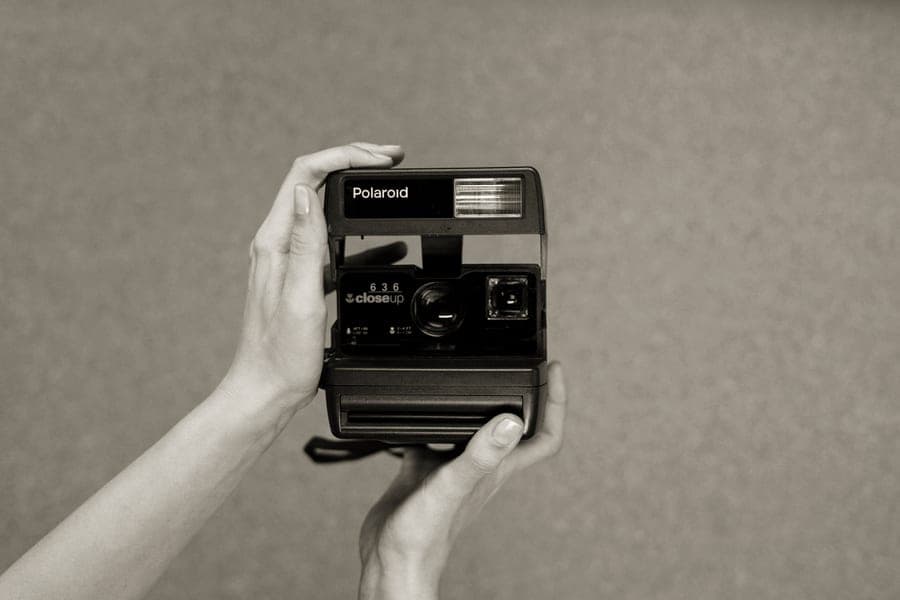
1. Simplest: film only
Fujifilm instax mini 12
Two AA batteries and a pack of film. There is nothing else to buy, ever.
- Buy it for
- Anyone who wants a camera with no cartridges, no app and no consumable beyond film.
- Skip it if
- Someone who wants to print photos already on a phone — this camera cannot.
- The developer paste is inside each film sheet, so no ink, toner or ribbon exists anywhere in the camera.
- instax mini film is about 85 cents a shot and sold in supermarkets as well as camera shops.
- Two AA batteries last roughly 100 exposures, so batteries are a once-a-year thought at most.
Running cost: instax mini works out at $0.85 a shot. See every format’s cost.
How it scores8.7/10 overall
- Consumables to track10
- Cost per photo7
- Where to buy refills10
Our editorial scoring, built from published specifications and reviews by outlets that test hardware — see how we pick. We have not handled these products, so these are not test results.
Engadget, which publishes hands-on reviews, calls it “a basic instant camera ideal for newbies that lets you get started shooting”.
#ad · we earn a commission at no extra cost to you
2. Cheapest per print: an all-in-one cartridge
Kodak Mini 2 Retro
Paper and ribbon in one box, so you cannot buy the wrong refill.
- Buy it for
- Anyone printing phone photos who wants the lowest cost per print.
- Skip it if
- A buyer who wants the instant-film look with its white frame.
- 4PASS dye sublimation: a ribbon lays down color in four passes, then a laminate pass seals it.
- The ribbon and paper ship as a single cartridge of 60 prints for $24.99 — about 42 cents each.
- Prints leave the machine dry and laminated, so there is no drying time and nothing to smudge.
Running cost: Kodak 4PASS 2.1 x 3.4 works out at $0.42 a shot, so a hundred photographs in the first year puts the real total at about $139.97 including the camera. See every format’s cost.
How it scores8.6/10 overall
- Consumables to track9
- Cost per photo10
- Where to buy refills7
Our editorial scoring, built from published specifications and reviews by outlets that test hardware — see how we pick. We have not handled these products, so these are not test results.
#ad · we earn a commission at no extra cost to you
3. Genuinely zero ink
HP Sprocket
ZINK paper has the color crystals inside it — heat develops them, nothing is deposited.
- Buy it for
- Someone who wants sticker prints and the simplest possible refill.
- Skip it if
- Anyone wanting archival print quality; ZINK is the least detailed option here.
- ZINK stands for zero ink, and that is literal: the dye is in the paper and heat brings it out.
- Paper is the only consumable, at $11.99 for 20 sheets — about 60 cents a print.
- Sticky-backed, which is what makes it the teenager's printer.
Running cost: ZINK 2 x 3 works out at $0.60 a shot. See every format’s cost.
How it scores8.0/10 overall
- Consumables to track10
- Cost per photo7
- Where to buy refills8
Our editorial scoring, built from published specifications and reviews by outlets that test hardware — see how we pick. We have not handled these products, so these are not test results.
#ad · we earn a commission at no extra cost to you
So is an instant camera cheap to own?
No, and the absence of ink is exactly why. You are not buying a printer with a cheap consumable; you are buying a camera where each photograph carries its own miniature development lab. That is a lovely thing and it costs 85 cents to $2.75 every time you press the button. If that figure matters to you, a printer is the cheaper route to the same object — we lay out the choice on instant camera vs photo printer.
Questions people ask
Do instant cameras need ink?
No. Instant film contains its own developer chemistry in a pouch along one edge of each sheet, which bursts as the photo is ejected. Film is the only consumable, and there is no ink, toner or ribbon anywhere in the camera.
Do Polaroid cameras need ink?
No. A Polaroid camera consumes only film — i-Type, 600 or SX-70 depending on the model, or Go film for the Polaroid Go. At about $2.37 a frame for i-Type, that film is the most expensive consumable in the category, but none of it is ink.
Do pocket photo printers need ink?
Not liquid ink. ZINK printers such as the HP Sprocket and Canon IVY 2 Mini use paper with the dye built in. Kodak 4PASS and Canon SELPHY printers use a cartridge that combines paper with a dye ribbon, so the paper and the colorant are bought together.
What is the cheapest instant photo to print?
A 4 x 6 print on a Canon SELPHY CP1500 at about 39 cents, or a 2.1 x 3.4 inch Kodak 4PASS print at about 42 cents. The cheapest real instant film is instax mini at about 85 cents a shot.
Read these next
How pocket photo printers work
ZINK, 4PASS and dye-sublimation, and what each one costs.
Are instant cameras worth it?
The running-cost question, answered straight.
Every film format on cost
All fourteen formats, cheapest first.
Instant film types explained
Which film each camera takes, and why it matters.
Sources
- Fujifilm instax mini 12 specifications — Selfie mirror, flash range 0.3-2.2 m, exposure Lv 5.0-14.5, 2 x AA power
- Kodak — 4PASS cartridges — $24.99 for 60 prints (2.1x3.4 and 3x3), $31.99 for 80 prints (4x6), 13 October 2026
- ProCam — Canon 2x3 ZINK photo paper, 20 sheets — $11.99 on 13 October 2026, the basis of the 60c-per-print ZINK figure
- HP Sprocket specifications via reseller listing — ZINK sticky-backed 2 x 3 in paper, up to 313 x 400 dpi. HP's own US store and the major US retailers return 403 to our fetches, so a reseller listing carries the specification
- Pro Photo Supply — instax mini film, 20 exposures — $16.99 on 13 October 2026, the basis of the 85c-per-shot figure
- Polaroid — Color i-Type film — $18.99 for 8 photos, image area 79 x 77 mm, ASA 640
- Pro Photo Supply — Canon SELPHY KP-108IN ink and paper set — $41.99 for 108 prints at 4 x 6 in, 13 October 2026
Found something out of date or wrong? Tell us and we will correct it with a dated note. Our picks are re-checked quarterly — see our editorial policy.