instax mini Evo alternatives
The mini Evo earns its reputation: it is the camera that stopped instant photography wasting film, and it has 100 effect combinations to play with. It is also the most expensive instax mini body Fujifilm sells, and it still feeds on 85-cent film. These are the five cameras and printers worth buying instead.
The closest cheaper alternative to an instax mini Evo is the Kodak Mini Shot 2 Retro: the same screen-before-you-print loop, a slightly larger print, and about 42 cents a photo against the Evo's 85. The instax mini 99 is the alternative if the effects are what you want, and the instax mini Link 3 is the cheapest way to keep the Evo's best trick.
How this page is funded. Shake & Print earns a commission when you buy through our links, at no extra cost to you. It does not change which products we pick or the order we rank them in. Prices on the buy buttons come from Amazon and carry the date they were read; where we have no current price the button shows no figure. Full disclosure.
| # | Product | Best for | Cost per shot | Price |
|---|---|---|---|---|
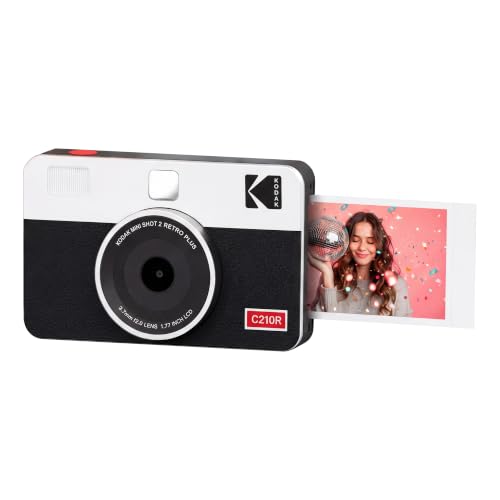
| 1 | Kodak Mini Shot 2 RetroThe same idea as the Evo — see the shot, then decide whether to spend a sheet on it — for about half the price per print and a larger photograph. | Closest cheaper alternative | $0.42 | $112.30 · View on Amazon |
| 2 | 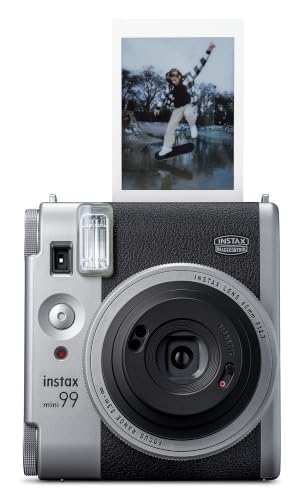 Fujifilm instax mini 99The Evo's hundred digital looks, done with dials and real chemistry instead: a color-effect dial, a vignette switch, double exposure and a bulb mode. | Best alternative if the effects are the point | $0.85 | $179.00 · View on Amazon |
| 3 | 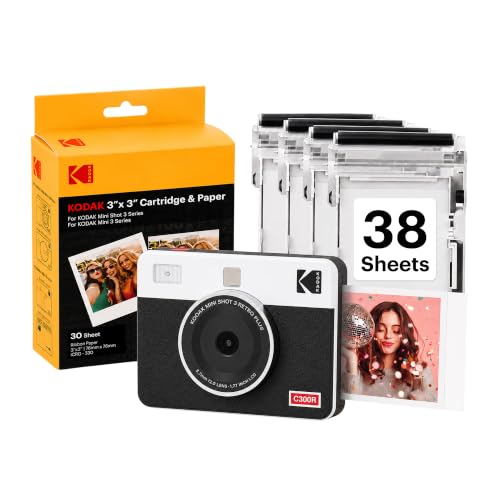 Kodak Mini Shot 3 RetroThe same screen-then-print loop as our top pick, on a 3 x 3 inch square print for about 42 cents — the cheapest square photograph there is. | Best alternative in square format | $0.42 | $114.74 · View on Amazon |
| 4 | 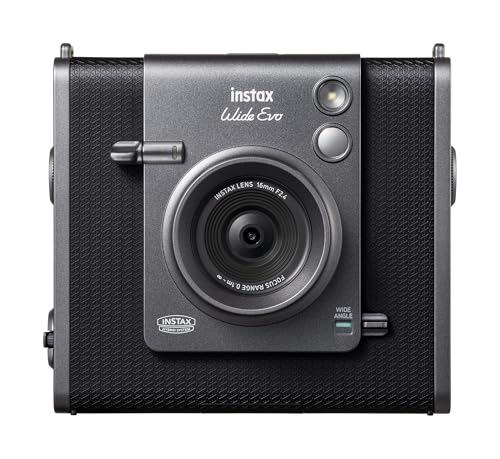 Fujifilm instax WIDE EvoThe mini Evo idea scaled up to the 99 x 62 mm WIDE print, with the widest lens instax has made and a 3.5 inch screen. | The same camera on a much bigger print | $1.10 | $360.00 · View on Amazon |
| 5 | 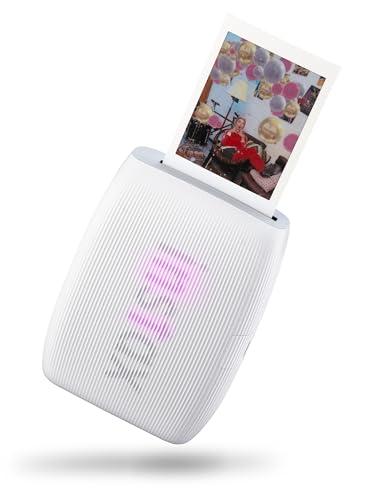 Fujifilm instax mini Link 3Your phone already has a better camera and a bigger screen than the Evo. This is the printer half, and it prints onto real instax mini film. | Budget pick — the Evo's best trick, without the camera | $0.85 | $99.95 · View on Amazon |
Prices as of November 28, 2026 and may change.
What the mini Evo is known for, before anything else
The instax mini Evo is the camera most lists put at the top of this category, and the reason is specific. It shoots digitally and shows you the picture on a 3.0 inch LCD, so you only spend a sheet of film on the shots you actually want — which, on 85-cent film, is the single biggest saving available in instant photography. It has 10 lens effects multiplied by 10 film effects, so there are 100 looks to turn the two dials through. It holds about 45 images internally and takes a microSD card. It prints in about 16 seconds, and it doubles as a Bluetooth printer for your phone. Engadget's hands-on verdict is that it "marries the vintage charm of instant photography with digital shooting".
So the Evo is not an overrated camera, and this is not a page arguing that it is. People search for alternatives for three honest reasons. It is the most expensive instax mini body Fujifilm makes, which puts it above every camera in our best instant cameras under $150 bracket. It still feeds on instax mini film at about 85 cents a sheet, so the screen reduces waste without making prints cheap. And the photograph it makes is still an instax mini frame — a 62 x 46 mm picture — which is the smallest print in the whole category.
How to choose an alternative: start with what you liked
- If you liked the screen, buy a Kodak hybrid. Same loop, about half the cost per print, and a larger photograph.
- If you liked the effects, buy the instax mini 99. Dials and switches instead of menus, on real instant film — and no way to preview a shot.
- If you liked everything but wanted a bigger print, buy the instax WIDE Evo, and price the film before you do.
- If you only ever wanted to print good photographs, buy a printer instead of a camera. Your phone is the better camera and it already shows you the shot.
- If none of the above, buy the Evo. No alternative here combines real instax film, a preview screen, 100 effects and phone printing in one body. That combination is why it costs what it costs.
What each alternative costs to feed
| Format | Print size | Pack | Pack price | Cost per shot | Checked at |
|---|---|---|---|---|---|
| Kodak 4PASS 2.1 x 3.4 | 2.1 x 3.4 in | 60 | $24.99 | $0.42 | Kodak Photo Printer store |
| Kodak 4PASS 3 x 3 | 3 x 3 in | 60 | $24.99 | $0.42 | Kodak Photo Printer store |
| instax mini | 2.4 x 1.8 in (62 x 46 mm) | 20 | $16.99 | $0.85 | Pro Photo Supply |
| instax WIDE | 3.9 x 2.4 in (99 x 62 mm) | 20 | $21.99 | $1.10 | Pro Photo Supply |
Three photographs a week for a year is 156 prints. On Kodak 4PASS media that is about $65. On instax mini film it is about $133, and on instax WIDE about $172. The Evo's screen saves you the frames you would have wasted, which is real; a Kodak hybrid with a screen saves you that and then halves what the kept frames cost. If you want the arithmetic in full, instax film cost per shot does it pack by pack.
The five alternatives worth buying
Ordered by how well each one replaces a mini Evo, not by price, with the budget pick named rather than buried. Every entry says who should not buy it.
1. Closest cheaper alternative
Kodak Mini Shot 2 Retro
The same idea as the Evo — see the shot, then decide whether to spend a sheet on it — for about half the price per print and a larger photograph.
- Buy it for
- Anyone who wants the Evo because of the screen rather than the effects, and anyone who will photograph enough for the film bill to matter.
- Skip it if
- Someone who wants real instax film. The print is dye-sublimation paper, so there is no development in your hand and no white instax border.
- **About 42 cents a print** from a $24.99 Kodak 4PASS cartridge of 60, against about 85 cents a sheet for instax mini film.
- **A 2.1 x 3.4 inch print**, physically larger than the Evo's 62 x 46 mm instax mini frame.
- **A 1.7 inch screen, a 13MP sensor, a 25.4 mm lens and autofocus from 30 cm**, all published by Kodak.
- **It is a phone printer too**, over Bluetooth or USB-C with a Lightning adapter in the box, so it covers the Evo's printing job as well.
- **No effects library and a much smaller screen than the Evo's 3.0 inch LCD**, and Kodak publishes no prints-per-charge figure for it.
Running cost: Kodak 4PASS 2.1 x 3.4 works out at $0.42 a shot, so a hundred photographs in the first year puts the real total at about $179.97 including the camera. See every format’s cost.
How it scores8.1/10 overall
- Closeness to the Evo8
- Cost per print10
- Print size6
- Creative control4
- Value for money9
Our editorial scoring, built from published specifications and reviews by outlets that test hardware — see how we pick. We have not handled these products, so these are not test results.
price as of November 28, 2026
#ad · we earn a commission at no extra cost to you
2. Best alternative if the effects are the point
Fujifilm instax mini 99
The Evo's hundred digital looks, done with dials and real chemistry instead: a color-effect dial, a vignette switch, double exposure and a bulb mode.
- Buy it for
- Someone who wants to shape the picture and wants it to be a genuine instant-film photograph rather than a print of a file.
- Skip it if
- Saving film. There is no screen and no preview, so every frame you take is a frame you have paid for at about 85 cents.
- **A color-effect dial and a manual vignette switch**, applied optically rather than in software.
- **A shutter from 1.8 to 1/400 sec plus a bulb mode up to 10 seconds**, which is real low-light control the Evo does not offer.
- **Exposure compensation from -5/3EV to +1EV and double exposure**, on a retractable 60 mm f/12.7 lens.
- **A rechargeable NP-70S battery good for about 10 film packs**, so there are no AA cells to buy.
- **Engadget's hands-on verdict is that it "offers far more control and features"** — and it has no screen, no phone printing and no way to skip a bad frame.
Running cost: instax mini works out at $0.85 a shot. See every format’s cost.
How it scores7.6/10 overall
- Closeness to the Evo6
- Cost per print5
- Print size4
- Creative control9
- Value for money7
Our editorial scoring, built from published specifications and reviews by outlets that test hardware — see how we pick. We have not handled these products, so these are not test results.
Engadget, which publishes hands-on reviews, calls it “offers far more control and features”.
$234.99 · 24% off · price as of November 28, 2026
#ad · we earn a commission at no extra cost to you
3. Best alternative in square format
Kodak Mini Shot 3 Retro
The same screen-then-print loop as our top pick, on a 3 x 3 inch square print for about 42 cents — the cheapest square photograph there is.
- Buy it for
- Anyone who wanted the Evo but actually prefers a square photograph, and scrapbookers who need the extra print area.
- Skip it if
- Someone comparing specifications. Kodak publishes five rows for this camera and no battery life, where Fujifilm publishes a full sheet for the Evo.
- **A 3 x 3 inch square print** for about 42 cents, against about $1.15 a shot for instax SQUARE film.
- **4PASS dye sublimation with a laminate pass**, so prints are sealed, dry and water resistant immediately.
- **The screen means you only print keepers**, which is the Evo's single most useful feature carried over.
- **Bluetooth phone printing**, so it replaces a printer as well as a camera.
- **No effects library, no published battery figures, and a square format that fits fewer albums** than the instax mini frame does.
Running cost: Kodak 4PASS 3 x 3 works out at $0.42 a shot, so a hundred photographs in the first year puts the real total at about $199.97 including the camera. See every format’s cost.
How it scores8.0/10 overall
- Closeness to the Evo7
- Cost per print10
- Print size7
- Creative control4
- Value for money9
Our editorial scoring, built from published specifications and reviews by outlets that test hardware — see how we pick. We have not handled these products, so these are not test results.
$134.99 · 15% off · price as of November 28, 2026
#ad · we earn a commission at no extra cost to you
4. The same camera on a much bigger print
Fujifilm instax WIDE Evo
The mini Evo idea scaled up to the 99 x 62 mm WIDE print, with the widest lens instax has made and a 3.5 inch screen.
- Buy it for
- Someone whose only complaint about the Evo is the size of the photograph, and who shoots groups, interiors or landscapes.
- Skip it if
- Most people, on price. It is the most expensive instax you can buy and WIDE film runs about $1.10 a sheet.
- **A 3.9 x 2.4 inch print at 1600 x 1260 dots**, nearly twice the width of a mini frame.
- **A 16 mm equivalent F2.4 lens**, the widest angle in the instax line, with single and face-detection autofocus from 10 cm.
- **10 lens effects x 10 film effects plus 6 film styles**, so the creative range is wider than the mini Evo's.
- **A 3.5 inch LCD and about 100 prints a charge**, with Bluetooth 5.1 phone printing.
- **Tech Advisor's hands-on verdict is that it "has a high price tag that most people will find hard to justify"**, and at 490 g it is no longer pocketable.
Running cost: instax WIDE works out at $1.10 a shot, so a hundred photographs in the first year puts the real total at about $519.90 including the camera. See every format’s cost.
How it scores7.5/10 overall
- Closeness to the Evo9
- Cost per print3
- Print size10
- Creative control9
- Value for money5
Our editorial scoring, built from published specifications and reviews by outlets that test hardware — see how we pick. We have not handled these products, so these are not test results.
Tech Advisor, which publishes hands-on reviews, calls it “this camera-printer hybrid has a high price tag that most people will find hard to justify”.
TechRadar, which publishes hands-on reviews, calls it “one of the most stylish instant hybrid cameras I've ever seen”.
$409.95 · 12% off · price as of November 28, 2026
#ad · we earn a commission at no extra cost to you
5. Budget pick — the Evo's best trick, without the camera
Fujifilm instax mini Link 3
Your phone already has a better camera and a bigger screen than the Evo. This is the printer half, and it prints onto real instax mini film.
- Buy it for
- Anyone who worked out that the useful part of a hybrid is choosing before printing — which is what a phone does by default.
- Skip it if
- A party, or a gift for a child. There is no camera here, so nothing gets handed round and nothing works without a phone.
- **The cheapest route to real instax prints you have chosen**, with no wasted frames at all.
- **Genuine instax mini film at 318 dpi** in about 15 seconds, from JPEG, PNG, HEIF or DNG.
- **About 100 prints a charge** from a 210 g body that charges in 1.5 to 2 hours.
- **It shares film with every instax mini camera**, so a household with an instax already buys one consumable.
- **Still about 85 cents a sheet**, so it fixes the Evo's price but not instax mini's running cost.
Running cost: instax mini works out at $0.85 a shot, so a hundred photographs in the first year puts the real total at about $201.94 including the camera. See every format’s cost.
How it scores7.4/10 overall
- Closeness to the Evo5
- Cost per print6
- Print size4
- Creative control6
- Value for money8
Our editorial scoring, built from published specifications and reviews by outlets that test hardware — see how we pick. We have not handled these products, so these are not test results.
$116.95 · 15% off · price as of November 28, 2026
#ad · we earn a commission at no extra cost to you
| Fujifilm instax mini Evo | Kodak Mini Shot 2 Retro | Fujifilm instax mini 99 | Kodak Mini Shot 3 Retro | Fujifilm instax WIDE Evo | |
|---|---|---|---|---|---|
| Film or media | instax mini | Kodak 4PASS 2.1 x 3.4 | instax mini | Kodak 4PASS 3 x 3 | instax WIDE |
| Print size | 2.4 x 1.8 in (62 x 46 mm) | 2.1 x 3.4 in | 2.4 x 1.8 in (62 x 46 mm) | 3 x 3 in | 3.9 x 2.4 in (99 x 62 mm) |
| Cost per shot | $0.85 | $0.42 | $0.85 | $0.42 | $1.10 |
| Shots per pack | 20 per $16.99 pack | 60 per $24.99 pack | 20 per $16.99 pack | 60 per $24.99 pack | 20 per $21.99 pack |
| Rough first-year cost | Hardware price not published | $179.97 at 100 shots | Hardware price not published | $199.97 at 100 shots | $519.90 at 100 shots |
| Power | Built-in rechargeable battery | Rechargeable | Rechargeable battery (NP-70S) | Rechargeable | Built-in rechargeable battery |
| Prints from a phone? | Yes | Yes | No | Yes | Yes |
| Flash | Not published | On, off or auto | Auto with indoor/slow-synchro, fill-in, red-eye reduction; effective 0.3-2.7 m | Not published | Auto / forced / suppressed; effective approx. 30 cm to 1.5 m |
| Selfie mirror | No | No | No | No | No |
| Easy for a beginner? | Easy, with a menu to explore | Very easy — effectively one button | Moderate — there are dials to learn | Very easy — effectively one button | Easy, with a menu to explore |
| Best for | Shoots digitally, shows you the shot on a screen, and only prints the ones you choose. The single biggest film-cost saver in the category. | Camera and phone printer in one body, on the cheapest print media we verified. You see the shot on a small screen before you spend a sheet. | The one for someone who already likes photography: color-effect dial, vignette switch, double exposure, bulb mode, and a rechargeable battery. | The square-print version of the Mini Shot. A 3 x 3 in print for about 42 cents, which undercuts square instant film by a wide margin. | The mini Evo idea on the big WIDE print: shoot digitally, choose on a 3.5 inch screen, print only what you want. The widest lens instax has made, and the most expensive instax you can buy. |
| Price | $199.20 · View on Amazon | $112.30 · View on Amazon | $179.00 · View on Amazon | $114.74 · View on Amazon | $360.00 · View on Amazon |
Prices as of November 28, 2026 and may change.
Two more alternatives, and why they are not picks
- Polaroid Flip — if what you really want is instant-film chemistry with modern help, this is the most capable analog camera here: sonar autofocus across four zones and a viewfinder warning when the exposure is going wrong. It is not a mini Evo alternative so much as the opposite choice, and i-Type film is about $2.37 a shot. Our Polaroid Flip review has the detail.
- instax mini 12 and mini 13 — the cheapest way into the same film the Evo uses, with none of the screen, the effects or the phone printing. If the Evo's price is the only objection and the features were never the draw, start there; the best instax cameras ranks the whole line.
When to stay with the mini Evo
Stay with it if you want one object that does all four jobs: a camera, a preview screen, a creative toy and a phone printer, all onto genuine instax mini film. Nothing on this page does all four, and the two Kodak hybrids — the closest alternatives — drop the real film and the effects. Stay with it if the person you are buying for will enjoy working through 100 looks, because that is a feature nobody else offers at this size. Our instax mini Evo review is the long version, the best hybrid instant cameras ranks it against the Kodak bodies, and instax mini Evo vs mini 99 is the decision most buyers actually face.
Switch if the price is the problem, if the print is too small, or if you have realized that the camera you want to carry is already in your pocket. And if your objection is to instax as a system rather than to this camera, instax alternatives looks at the whole category instead of one body.
Questions people ask
What is the best alternative to the instax mini Evo?
The Kodak Mini Shot 2 Retro. It keeps the part of the Evo that matters most — a screen, so you only print the shots you want — on a slightly larger print at about 42 cents against the Evo's 85 cents, and it works as a phone printer too. What you give up is real instax film and the Evo's 100 effect combinations.
Is there a cheaper camera like the instax mini Evo?
Yes. Both Kodak Mini Shot hybrids cost less than the Evo and do the same shoot-preview-print loop, with the Mini Shot 3 Retro printing 3 x 3 inch squares. Neither uses instant film, so the print is dye-sublimation paper rather than a developing instax frame.
What camera is similar to the instax mini Evo but prints bigger?
The instax WIDE Evo. It is the same hybrid idea on the 99 x 62 mm WIDE print, with a 3.5 inch screen and a 16 mm equivalent F2.4 lens. It is also the most expensive instax you can buy and WIDE film costs about $1.10 a sheet, which is why Tech Advisor called the price hard to justify.
Should I buy an instax mini Evo or an instax mini 99?
Buy the Evo if you want to preview shots and save film; buy the mini 99 if you want to shape the picture with a color-effect dial, a vignette switch and a bulb mode on real film and do not mind paying for every frame. Our instax mini Evo vs mini 99 comparison works through it in full.
Is a phone printer a real alternative to a hybrid instant camera?
For prints, yes — a phone takes better pictures than any instax and already shows you the shot, so an instax mini Link 3 gets you chosen prints on real film for less than the Evo costs. For a party it is not: nothing is handed round when the photograph has to come off someone's phone first.
Does the instax mini Evo save money on film?
It saves the frames you would have wasted, which on 85-cent film adds up quickly, but it does not make a print cheaper. A Kodak 4PASS hybrid with a screen does both: no wasted frames and about 42 cents a print instead of 85.
Read these next
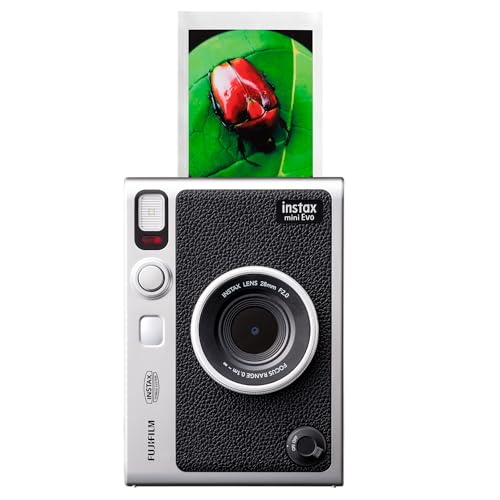
instax mini Evo review
The camera these five are being measured against.
The best hybrid instant cameras
Every camera with a screen between the shot and the print.
instax mini Evo vs instax mini 99
Digital effects against dials, on the same film.
The best instant cameras under $150
The bracket the Evo sits above, and what the money buys there.
Sources
- Google Autocomplete, read 24 November 2026 — Query evidence for the two alternatives pages in this round, read live rather than recalled. The suggestion set for canon selphy alternative includes canon selphy alternatives, canon selphy cp1500 alternative, canon selphy qx20 alternative and canon selphy cheaper alternative; the set for alternatives to instax mini evo includes similar to instax mini evo, cameras similar to instax mini evo and fujifilm instax mini evo cheaper alternative
- Fujifilm instax mini Evo specifications — 3.0 in LCD, 28 mm equivalent F2.0 lens, 10 lens effects x 10 film effects, about 45 images of internal storage plus microSD, 16 second print time, Bluetooth 4.2 phone printing, about 100 prints a charge, 285 g
- Pro Photo Supply — instax mini film twin pack — $16.99 for 20 exposures on 13 October 2026 — the basis of the 85-cents-a-shot figure
- Kodak — Mini Shot 2 Retro product page — 4PASS dye sublimation with a laminate pass at 291 x 300 dpi, 2.1 x 3.4 in prints, 13MP sensor with a 1.7 in LCD, 25.4 mm lens, ISO 100-1600, autofocus from 30 cm, Bluetooth and USB-C phone printing, 255 g
- Kodak — cartridge collection — 4PASS media pricing read 13 October 2026: 60 sheets of 2.1 x 3.4 in or 3 x 3 in for $24.99, 80 sheets of 4 x 6 in for $31.99 — the basis of the 42-cent and 40-cent per-print figures
- Kodak Photo Printer store — Range and listed-price reference for the Mini 3 Retro, Mini Shot 3 Retro and Dock Plus Retro, read 10 November 2026. Kodak publishes no prints-per-charge or charging-time figure for these three, which is why none is quoted
- Fujifilm instax mini 99 specifications — Retractable 60 mm f/12.7 lens, shutter 1.8 to 1/400 sec plus bulb to 10 sec, color-effect dial, manual vignette switch, double exposure, exposure compensation -5/3EV to +1EV, rechargeable NP-70S good for about 10 packs, 340 g
- instax — WIDE Evo specifications — Manufacturer specification page, fetched 27 October 2026: 3.5 in LCD, 16 mm equivalent F2.4 lens, single and face-detection AF from 10 cm, shutter 1/4 to 1/8000 sec, ISO 100-1600, 10 lens effects x 10 film effects plus 6 film styles, 1600 x 1260 dot print, Bluetooth 5.1, about 100 prints a charge, 490 g
- Pro Photo Supply — instax WIDE film — $21.99 for 20 exposures on 13 October 2026 — the basis of the $1.10-a-shot figure
- Pro Photo Supply — instax SQUARE film, 2 pack — $22.99 for 20 exposures on 13 October 2026 — the basis of the $1.15-a-shot figure
- Fujifilm instax mini Link 3 specifications — 318 dpi onto real instax mini film, about 15 seconds a print, Bluetooth 5.1, JPEG / PNG / HEIF / DNG, about 100 prints a charge, 1.5 to 2 hours to charge, 210 g without a cartridge
- Polaroid Flip product page (US) — Sonar autofocus across four zones from 0.4 m, viewfinder scene-analysis exposure warning, flash range 4.5 m at f8, up to 15 film packs a charge, 648 g
- Polaroid — Color i-Type film — $18.99 for 8 photos — the basis of the $2.37-a-shot figure
- Fujifilm instax mini 12 specifications — 60 mm f/12.7 lens, no self-timer, selfie mirror, flash effective 0.3-2.2 m, two AA cells good for about 100 exposures, 306 g
- Fujifilm instax mini 13 specifications — The same 60 mm f/12.7 optics as the mini 12 plus a 2 sec / 10 sec self-timer; two AA cells good for about 10 film packs, 327 g
- Engadget — the best instant cameras — Third-party hands-on judgments quoted on this site rather than made by us. Engadget calls the mini Evo a camera that marries the vintage charm of instant photography with digital shooting, the mini 99 one that offers far more control and features, the mini 12 a basic instant camera ideal for newbies, the Polaroid Go basic and relatively cheap but it offers a lot, and the Polaroid Flip the most advanced modern instant camera to date
- TechRadar — Fujifilm instax WIDE Evo review — Hands-on review; TechRadar calls it one of the most stylish instant hybrid cameras the reviewer had seen
- Tech Advisor — instax WIDE Evo review — Hands-on review; Tech Advisor's verdict is that this camera-printer hybrid has a high price tag that most people will find hard to justify
Found something out of date or wrong? Tell us and we will correct it with a dated note. Our picks are re-checked quarterly — see our editorial policy.