Polaroid Flip review
This is the most capable instant camera Polaroid currently sells short of the I-2, and the only one that tells you a frame is about to be wasted before you waste it.
The Polaroid Flip is Polaroid's best camera for most buyers: sonar autofocus across four zones, a 4.5 m flash and a viewfinder warning before an over- or under-exposed frame, on the full-size 4.2 x 3.5 inch print. It was listed at $219.99, and its i-Type film still costs about $2.37 a shot.
How this page is funded. Shake & Print earns a commission when you buy through our links, at no extra cost to you. It does not change which products we pick or the order we rank them in, and we do not state prices we have not verified — the buy buttons send you to the current listing instead. Full disclosure.
1. Verdict: the best Polaroid for most people
Polaroid Flip
Everything Polaroid has learned about not wasting a frame, in one body — at a price that buys 40 photographs of film.
- Buy it for
- A buyer who already wants the full-size Polaroid print and would rather spend once on the camera than lose frames to soft focus and bad light.
- Skip it if
- Anyone cost-sensitive, anyone who wants a pocket camera, and anyone buying for a child. It is 648 g, it costs more than any instax, and every photograph it takes costs about $2.37.
- **Sonar autofocus**, measuring distance with sound rather than light, so it focuses in the dark. Four zones: 0.4-0.77 m, 0.77-1.03 m, 1.03-1.68 m and 1.68 m to infinity.
- **A scene-analysis LED in the viewfinder** that warns of under- or overexposure before the shutter. On film at $2.37 a frame, this is the feature that pays for itself.
- **A 4.5 m flash at f8** from a vacuum discharge tube strobe — the longest reach of any Polaroid camera.
- **Up to 15 film packs per charge** from a lithium-ion polymer battery, with an LED readout for mode, film count and battery level.
- **Takes i-Type and 600 film**, so older stock is not wasted, and it still makes the full 4.2 x 3.5 inch print.
Running cost: Polaroid i-Type works out at $2.37 a shot, so a hundred photographs in the first year puts the real total at about $466.86 including the camera. See every format’s cost.
How it scores8.1/10 overall
- Focus accuracy9
- Not wasting film10
- Print size10
- Portability3
- Running cost2
Our editorial scoring, built from published specifications and reviews by outlets that test hardware — see how we pick. We have not handled these products, so these are not test results.
Engadget, which publishes hands-on reviews, calls it “most advanced modern instant camera to date”.
#ad · we earn a commission at no extra cost to you
What it is
The Flip is Polaroid's answer to the one thing that has always been wrong with instant photography: you find out whether the photograph worked after you have already paid for it. Film has no latitude, no preview and no second attempt, and at eight exposures a pack a single bad frame is more than 12 percent of the pack.
So the Flip is built around not wasting frames rather than around new picture-taking abilities. It brings back sonar autofocus, a technology Polaroid first shipped on the SX-70 in 1978, which fires an inaudible pulse and times the echo. That means focus works in a dark room, where a light-based system has nothing to measure. On top of it sits what Polaroid calls an auto-switching hyperfocal optical system: a two-lens structure that selects between four focus zones depending on how far away the subject is.
The second half of the idea is the warning. A scene-analysis LED in the viewfinder tells you the frame is going to be over- or under-exposed before you press the shutter. No other Polaroid camera does this, and it is the single most useful thing on the camera.
Specifications
| Film | Polaroid i-Type and Polaroid 600 (sold separately) |
|---|---|
| Print size | 4.2 x 3.5 in (107 x 88 mm), image area 79 x 77 mm |
| Exposures per pack | 8 |
| Focus | Sonar autofocus, two-lens structure, 4 zones |
| Focus zones | 0.4-0.77 m (best at 0.65 m), 0.77-1.03 m, 1.03-1.68 m, 1.68 m to infinity |
| Exposure warning | Viewfinder scene-analysis LED for under- and overexposure |
| Flash | Vacuum discharge tube strobe, range 4.5 m (14.76 ft) at f8 |
| Display | LED readout for mode, film count and battery level |
| Connectivity | Bluetooth, for the Polaroid app |
| Power | Rechargeable lithium-ion polymer, USB-C |
| Battery life | Up to 15 film packs per charge |
| Dimensions, lid closed | 163.5 x 117.2 x 89.7 mm (6.44 x 4.61 x 3.53 in) |
| Dimensions, lid open | 163.5 x 117.2 x 121.6 mm |
| Weight | 648 g (22.86 oz) |
| In the box | Camera, neck strap, quick start guide, safety leaflet |
| Listed price | $219.99 on polaroid.com, 20 October 2026 ($199.99 at launch) |
What it costs to own
This is the part that decides most Polaroid purchases, and the Flip does nothing to change it. Polaroid color i-Type film was $18.99 for eight photographs when we checked — about $2.37 a shot, the most expensive mainstream instant film sold anywhere.
| Format | Print size | Pack | Pack price | Cost per shot | Checked at |
|---|---|---|---|---|---|
| instax mini | 2.4 x 1.8 in (62 x 46 mm) | 20 | $16.99 | $0.85 | Pro Photo Supply |
| instax SQUARE | 2.4 x 2.4 in (62 x 62 mm image on 86 x 72 mm film) | 20 | $22.99 | $1.15 | Pro Photo Supply |
| Polaroid Go | 2.6 x 2.1 in (66.6 x 53.9 mm) | 16 | $21.99 | $1.37 | Polaroid |
| Polaroid i-Type | 4.2 x 3.5 in (107 x 88 mm) | 8 | $18.99 | $2.37 | Polaroid |
| Polaroid 600 | 4.2 x 3.5 in (107 x 88 mm) | 8 | $20.99 | $2.62 | Polaroid |
At a hundred photographs a year the film costs about $237 — more than the camera. At two hundred it is about $475. Buying Polaroid's own five-pack brings the figure to roughly $2.12 a shot rather than $2.37, an 11 percent saving, which is worth taking but does not change the category the number sits in.
| Camera or printer | 40 shots | 100 shots | 200 shots |
|---|---|---|---|
| Polaroid Flip$219.99 listed on polaroid.com | $314.945 packs of Polaroid i-Type | $466.8613 packs of Polaroid i-Type | $694.7425 packs of Polaroid i-Type |
| Polaroid Now Generation 3$119.99 MSRP at launch, March 2025 | $214.945 packs of Polaroid i-Type | $366.8613 packs of Polaroid i-Type | $594.7425 packs of Polaroid i-Type |
| Fujifilm instax SQUARE SQ40Hardware price not published — film cost only | $45.982 packs of instax SQUARE | $114.955 packs of instax SQUARE | $229.9010 packs of instax SQUARE |
There is an argument that the Flip is the cheapest Polaroid to run, and it is not a joke. If the sonar autofocus and the exposure warning save you one frame in ten against a fixed-focus camera, that is about 24 cents a shot back — roughly $24 across a hundred photographs. It will not pay off the $100 difference against a Polaroid Now Generation 3 quickly, but on this film the direction of the argument is real. Why Polaroid film is so expensive explains where the money goes.
What it is good at
- Focusing in bad light. Sonar does not need light to measure distance, so a dim room, a restaurant or a night street is where the Flip pulls away from every other Polaroid.
- Telling you not to take the photograph. The viewfinder warning is unglamorous and it is the best feature on the camera. Nothing else in the range has it.
- Flash reach. 4.5 m at f8 covers a group across a room, where most instant cameras give up at 2 to 3 m.
- The photograph itself. The full 4.2 x 3.5 inch print with a 79 x 77 mm image area — the object people mean when they say Polaroid.
- Control, if you want it. Digital Camera World's hands-on review lists manual exposure control, image quality and flash power among its reasons to buy, and rates it the best Polaroid for anyone not spending Polaroid I-2 money.
- Battery life. Up to 15 film packs per charge is 120 photographs, which in practice means you charge it a few times a year.
Where it falls short
- $2.37 a shot, eight to a pack. The camera costs $219.99 and a hundred photographs costs more. Amateur Photographer's review lists expensive film and only eight photos a pack among its cons, and it is right.
- It is heavy. 648 g and 163 x 117 x 90 mm closed. TechRadar notes it is about 200 g heavier than the Polaroid Now+ and heavier again than the I-2 — a bag camera, not a coat-pocket one.
- Development is slow. Polaroid film takes 10 to 15 minutes against about 90 seconds for instax, and the print needs shielding from light while it happens. At a party that is a genuine nuisance.
- Film reliability is not perfect. Amateur Photographer reported losing 2 photographs out of 16 to film errors in testing. That is their result on their packs, not a specification, but it is the kind of thing worth knowing before you spend $18.99 on eight frames.
- Four zones, not continuous autofocus. Sonar picks between four fixed positions. It is a large improvement on fixed focus and it is not the same thing as a focusing lens.
- TechRadar found the automation limiting for experienced photographers, while praising it for beginners. If you want full manual control on Polaroid film, the I-2 is the camera Polaroid sells for that, at a considerably higher price.
- No published shutter or aperture figures from Polaroid itself. Specifications exist only via the outlets that measured them, which is an odd gap on a flagship.
Alternatives
| Polaroid Flip | Polaroid Now Generation 3 | Polaroid Go Generation 3 | Fujifilm instax SQUARE SQ40 | |
|---|---|---|---|---|
| Film or media | Polaroid i-Type | Polaroid i-Type | Polaroid Go | instax SQUARE |
| Print size | 4.2 x 3.5 in (107 x 88 mm) | 4.2 x 3.5 in (107 x 88 mm) | 2.6 x 2.1 in (66.6 x 53.9 mm) | 2.4 x 2.4 in (62 x 62 mm image on 86 x 72 mm film) |
| Cost per shot | $2.37 | $2.37 | $1.37 | $1.15 |
| Shots per pack | 8 per $18.99 pack | 8 per $18.99 pack | 16 per $21.99 pack | 20 per $22.99 pack |
| Rough first-year cost | $466.86 at 100 shots | $366.86 at 100 shots | $243.92 at 100 shots | Hardware price not published |
| Power | Rechargeable, USB-C | Rechargeable, USB-C | Built-in rechargeable battery | Two CR2 lithium batteries |
| Prints from a phone? | No | No | No | No |
| Flash | Vacuum discharge tube strobe, range 4.5 m at f8 | Not published | Vacuum discharge tube flash | Constant firing, automatic; effective 0.3-2.2 m |
| Selfie mirror | No | No | Yes | Yes |
| Easy for a beginner? | Very easy — effectively one button | Moderate — there are dials to learn | Moderate — there are dials to learn | Very easy — effectively one button |
| Best for | Polaroid's most capable modern camera, with sonar autofocus and a warning when the shot is going to be over- or under-exposed. Priced accordingly. | The full-size Polaroid, with a twin-lens autofocus system that picks the right lens for the shot. The classic big white-bordered print. | A real Polaroid, shrunk. The white-framed square print is unmistakable and the camera genuinely fits in a coat pocket. | The square frame people mean when they say 'Polaroid', on film that costs half as much. Leatherette body, one button, nothing to learn. |
- [Polaroid Now Generation 3](/instant-cameras/polaroid-now-gen-3-review), $119.99 MSRP — the same print and the same film cost, with two-lens autofocus in two zones instead of four, no exposure warning and a shorter flash. It is $100 cheaper and it is the right buy if the extras do not matter to you.
- [Polaroid Go Generation 3](/instant-cameras/polaroid-go-gen-3-review) — much smaller, much cheaper to buy, and a small print. Still about $1.37 a shot.
- [instax SQUARE SQ40](/instant-cameras/instax-square-sq40-review) — a square print at about $1.15 a shot rather than $2.37. Not a Polaroid, and less than half the running cost.
- Polaroid I-2 — Polaroid's manual-control flagship, above the Flip in price. Worth comparing directly if manual exposure is the reason you are shopping.
- If the film cost is the problem, the honest alternative is not another Polaroid. A simple instax mini runs at about 85 cents a shot — the two current models are set against each other in instax mini 12 vs mini 13.
Who should buy it
Buy the Flip if you have already decided you want the full-size Polaroid photograph and you shoot in real conditions — indoors, in the evening, at gatherings — where focus and exposure are the things that ruin frames. Spending $100 more than the Now Generation 3 to lose fewer $2.37 frames is a defensible trade, and the viewfinder warning is the feature you will actually notice.
Do not buy it as a general-purpose gift for someone who has not asked for a Polaroid, do not buy it for a child, and do not buy it for someone who will shoot a lot. For a first instant camera it is the wrong end of the range — see are instant cameras worth it and best instant cameras before committing. And if you are buying it, buy film with it: a camera with no film in the box is an unfinished gift.
Questions people ask
Is the Polaroid Flip worth it?
Yes if you want the full-size Polaroid print and shoot indoors or at night. Sonar autofocus across four zones, a 4.5 m flash and a viewfinder warning before a badly exposed frame all exist to stop you wasting film that costs about $2.37 a shot. It is not worth it as a first instant camera or for anyone shooting in volume.
How much does the Polaroid Flip cost?
It was listed at $219.99 on polaroid.com for the camera alone when we checked on 20 October 2026, with a Starter Set including a film pack at $229.99 and a Travel Set at $269.99. It launched in April 2025 at $199.99. Use the buy link for today's price.
What film does the Polaroid Flip use?
Polaroid i-Type and Polaroid 600 film, eight photographs per pack, making the full 4.2 x 3.5 inch print. Color i-Type was $18.99 for eight when we checked, about $2.37 a shot. It does not take Polaroid Go film or any instax film.
What is the difference between the Polaroid Flip and the Polaroid Now?
The Flip has sonar autofocus across four zones, a 4.5 m flash and a viewfinder LED that warns of under- or overexposure. The Now Generation 3 has two-lens autofocus across two zones, a shorter flash and no warning, at $119.99 MSRP against $219.99. Both use the same film at the same cost per shot.
Does the Polaroid Flip have autofocus?
Yes — sonar autofocus, which measures distance with an inaudible sound pulse rather than light, so it works in the dark. A two-lens structure then switches between four zones: 0.4 to 0.77 m, 0.77 to 1.03 m, 1.03 to 1.68 m, and 1.68 m to infinity. It is zone focusing, not a continuously focusing lens.
How long does the Polaroid Flip battery last?
Polaroid states up to 15 film packs per charge, which is 120 photographs. It charges over USB-C and the LED display shows the battery level along with the mode and the remaining film count.
Read these next
Best Polaroid cameras
Where the Flip sits in the range, and the cheaper options.
Polaroid Now Generation 3 review
The $100-cheaper camera that makes the same print.
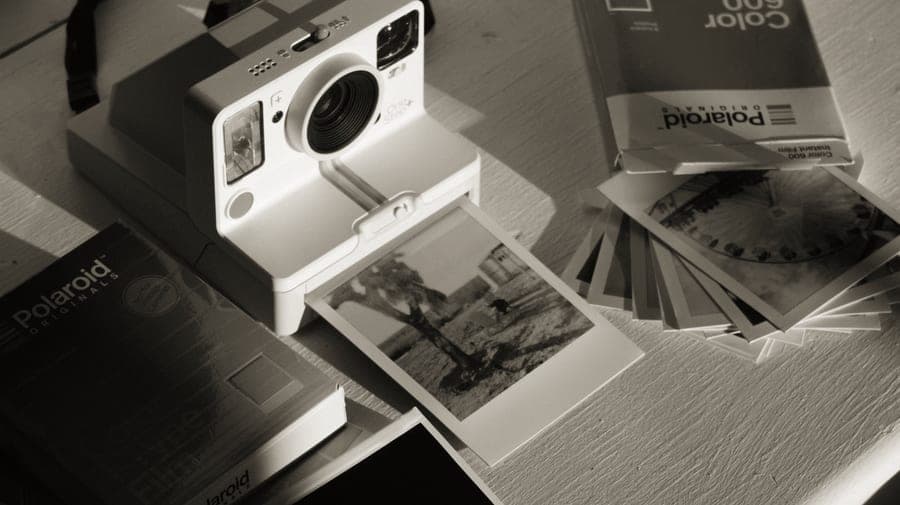
What Polaroid film costs per shot
All four films, with the multipack savings.
Instax vs Polaroid
Whether to buy Polaroid at all.
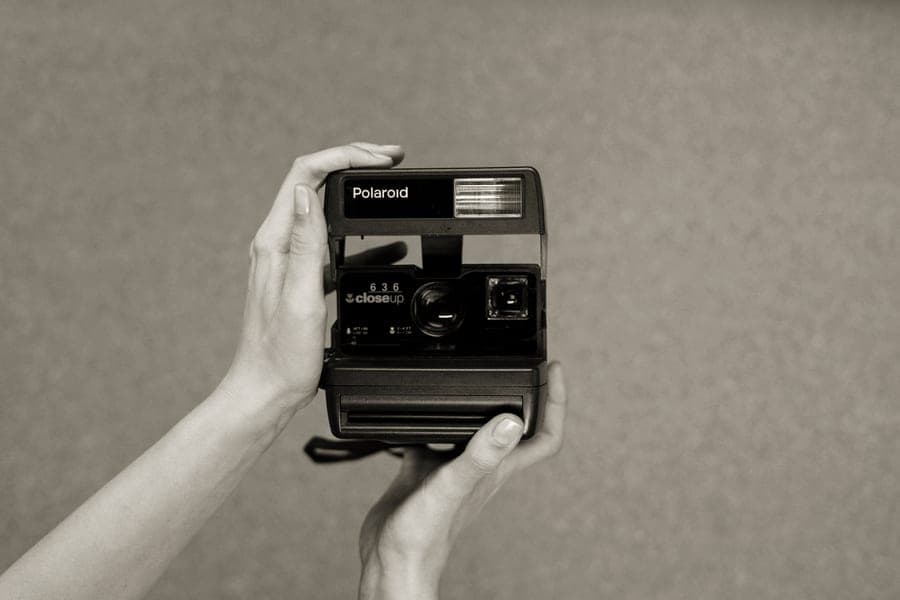
instax mini 12 vs mini 13
The cheap-to-run alternative, if the film bill is the problem.
Sources
- Polaroid Flip product page (US) — Manufacturer specification, fetched 20 October 2026: sonar autofocus with four zones, two-lens structure, strobe range 4.5 m at f8, up to 15 film packs per charge, 648 g, i-Type and 600 film, under and overexposure warning LED in the viewfinder
- Polaroid Flip camera page and bundles (polaroid.com US) — Listed at $219.99 for the camera alone on 20 October 2026, with a Starter Set at $229.99 and a Travel Set at $269.99. Some variants showed a back-in-stock form
- Polaroid press — Introducing the Polaroid Flip — Launch announcement, April 2025: sonar autofocus traced to the 1978 SX-70, paired with a hyperfocal four-lens system
- Polaroid — Color i-Type film — $18.99 for 8 photos, image area 79 x 77 mm, ASA 640
- Amateur Photographer — Polaroid Flip review — Hands-on review. Publishes a 1/200 to 30 sec shutter plus Bulb and an f/8.5 to f/66.6 aperture range, and reports losing 2 photographs out of 16 to film errors
- TechRadar — Polaroid Flip review — Hands-on review. Reports a $199.99 launch price, a 1/200 to 30 sec shutter with Bulb, 648 g, and that the Flip is about 200 g heavier than the Polaroid Now+
- Digital Camera World — Polaroid Flip review — Hands-on review. Rates it the best Polaroid for a buyer not spending Polaroid I-2 money
- Engadget — the best instant cameras — Cited for published hands-on verdicts. We do not test hardware
Found something out of date or wrong? Tell us and we will correct it with a dated note. Our picks are re-checked quarterly — see our editorial policy.